
#CellCare Ritual | The Nighttime Release Ritual
“When the body lets go, the nervous system remembers how to rest.”
~ Dr. Monisha Bhanote, MD
WEEKLY WELLNESS PRACTICE | #CELLCARE RITUAL
Hey there, Wellkulå Friend,
Every week, I invite you to reconnect with your body through a ritual that feels grounded, restorative, and biologically intelligent.
This week’s ritual centers on something most of us think we’re doing—but rarely complete:
Letting go.
Your nervous system doesn’t reset just because the day ends.
It resets when the body receives a clear signal that effort is no longer required.
This week’s #CellCare Ritual is The Nighttime Release Ritual— a science-backed practice rooted in progressive muscle relaxation, designed to discharge stored tension, quiet stress hormones, and guide the body into true rest.
Modern life trains us to carry stress in the body:
Clenched jaws
Tight shoulders
Braced abdomens
Held breath
Guarded hips
Even when you lie down, your muscles may still be working.
But your nervous system reads muscle tension as unfinished business.
When muscles soften deliberately, the brain receives a powerful message:
The threat has passed. The day is complete.
So let’s begin.

#HOW TO DO IT | THE NIGHTTIME RELEASE RITUAL
This is not stretching.
It’s not an effort.
It's an intentional muscular release.
The practice takes 10–15 minutes and is best done:
30–60 minutes before sleep
After travel
During stress overload
When your mind feels tired but your body feels wired
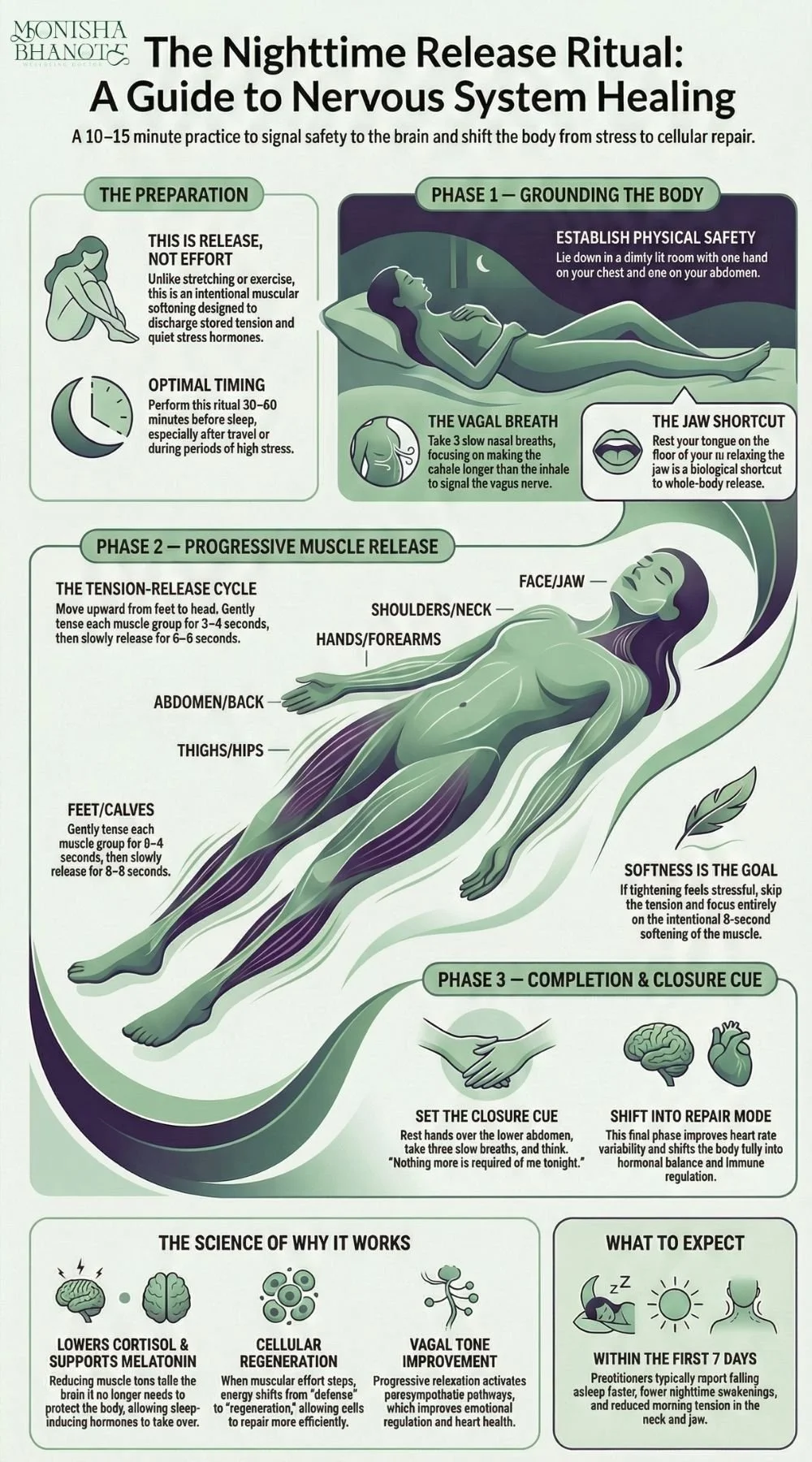
Phase 1: Grounding the Body
The Practice:
Lie down or recline comfortably
Dim the lights
Place one hand on your chest and one on your abdomen
Take 3 slow nasal breaths
Inhale gently
Exhale longer than you inhale
Cellular Signal:
This establishes safety at the level of the vagus nerve. Before release can happen, the nervous system must feel oriented and supported.
Pro Tip:
If your jaw is tight, let your tongue rest on the floor of your mouth. Jaw relaxation is a shortcut to whole-body release.
Phase 2: Progressive Muscle Release
The Practice:
Starting at your feet, move upward through the body.
For each muscle group:
Gently tense for 3–4 seconds
Slowly release for 6–8 seconds
Pause and feel the softness before moving on
Sequence:
Feet and calves
Thighs and hips
Abdomen and lower back
Chest and upper back
Hands and forearms
Shoulders and neck
Jaw, lips, and forehead
As you release, imagine tension draining downward and out.
Cellular Signal:
Progressive muscle relaxation lowers cortisol, reduces sympathetic tone, and sends feedback to the brain that muscular vigilance is no longer needed—allowing parasympathetic dominance to take over.
Pro Tip:
Release is more important than tension. If tightening feels stressful, skip it and focus only on slow, intentional softening.
Phase 3: Completion & Closure Cue
The Practice:
Rest both hands over your lower abdomen
Take three slow breaths
Whisper or think:
“Nothing more is required of me tonight.”
Remain still for 30–60 seconds before sleep.
Cellular Signal:
This phase completes the stress cycle. Muscle tone drops, heart rate variability improves, and the nervous system shifts fully into repair mode—supporting sleep depth, hormonal balance, and immune regulation.
Pro Tip:
If you wake at night with tension or racing thoughts, repeat one release cycle (shoulders → jaw → abdomen). This retrains your nervous system to trust rest.
EXPLORE FURTHER | DEEPENING THE RELEASE
The Nighttime Release Ritual reflects a deeper biological truth:
The body must feel finished before it can heal.
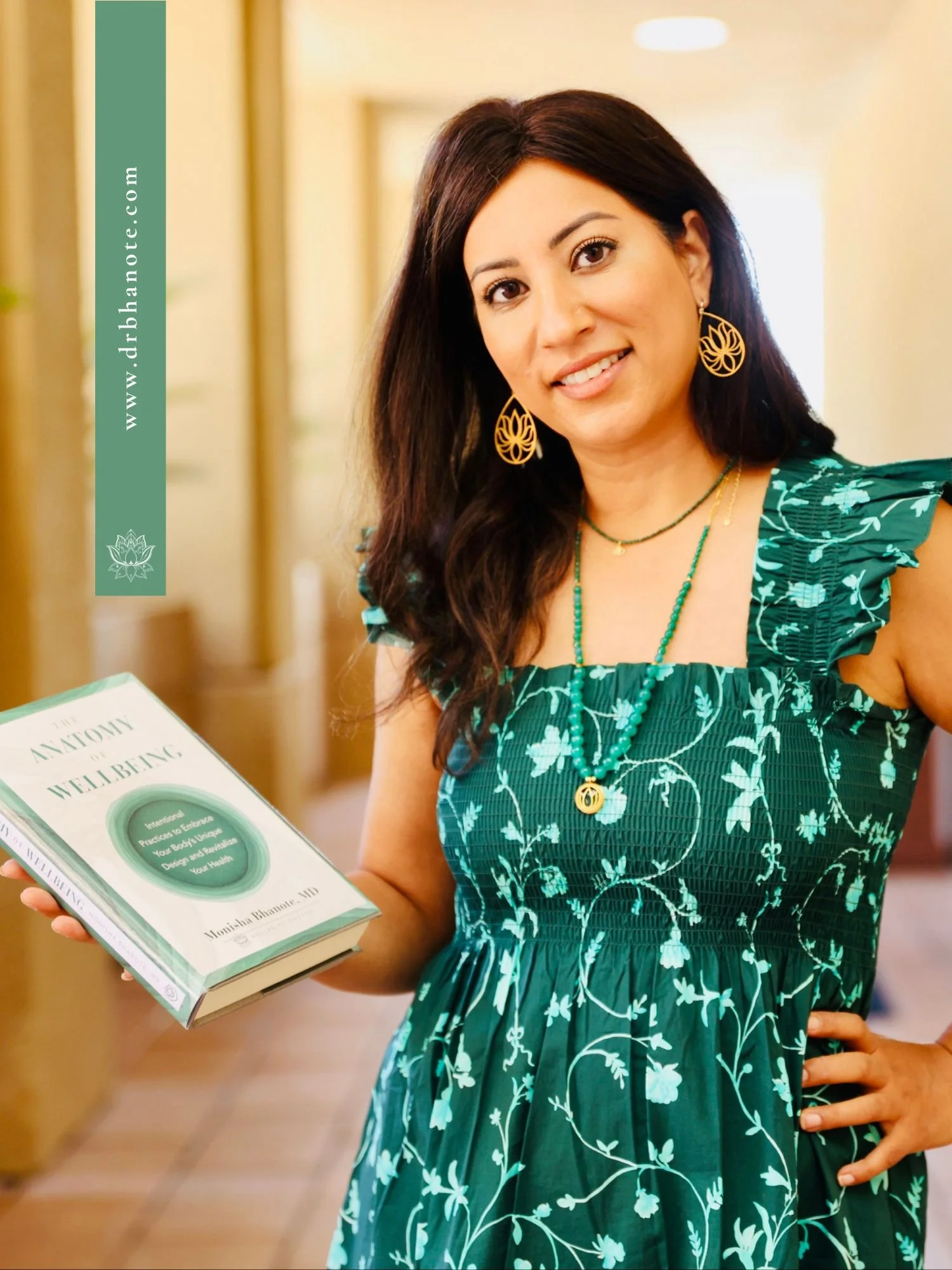
This principle is explored throughout The Anatomy of Wellbeing by Dr. Monisha Bhanote, where muscular tension, nervous system signaling, and cellular stress responses are shown to directly impact sleep quality, inflammation, digestion, and longevity.
In the book, you’ll learn how intentional release—through breath, muscle softening, rhythm, and ritual—guides the body out of survival mode and into restoration, especially during periods of chronic stress, hormonal shifts, or travel.
👉 Book Reference:
The Anatomy of Wellbeing
This ritual is one practical expression of that science:
When the body releases, the nervous system stands down— and healing can finally begin.
WHY IT WORKS | THE SCIENCE BEHIND THE NIGHTTIME RELEASE RITUAL
Muscle Tension & Nervous System Load
Chronic muscle contraction signals ongoing threat. Releasing muscle tone tells the brain it no longer needs to protect.
Vagal Tone & Stress Recovery
Progressive relaxation activates parasympathetic pathways, improving heart rate variability and emotional regulation.
Hormonal & Circadian Support
Lower muscular tension reduces cortisol and supports melatonin release—essential for deep, restorative sleep.
Cellular Repair & Longevity
When muscular effort stops, energy shifts from defense to regeneration. Cells repair more efficiently. Sleep deepens. Aging slows.
REALIZATION | YOUR #CELLCARE TIP OF THE WEEK
Within the first week of practicing the Nighttime Release Ritual, most people notice:
Falling asleep faster
Fewer nighttime awakenings
Reduced jaw, neck, and shoulder tension
Calmer thoughts at bedtime
Deeper rest and clearer mornings
Not because the ritual is complex— but because your nervous system understands release immediately.
Your Commitment This Week:
For the next 7 days:
Practice the Nighttime Release Ritual nightly
Observe changes in sleep, tension, digestion, and mood
Let release become a signal of safety
You don’t need to force rest.
You need to complete the stress cycle.
When the body lets go,
the nervous system softens.
When the nervous system feels safe,
cells remember how to heal.
Until next time,
Dr. Monisha
The information on this website has not been evaluated by the Food & Drug Administration or any other medical body. We do not aim to diagnose, treat, cure or prevent any illness or disease. Information is shared for educational purposes only. You must consult your doctor before acting on any content on this website, especially if you are pregnant, nursing, taking medication, or have a medical condition. Our content may have affiliate links, through which we earn a small commission at no extra cost to you. We only recommend products we sincerely love and believe will benefit your wellbeing. Thank you for supporting #CellCare Wellness!




by Dr. Monisha Bhanote
✅ EVIDENCE-INFORMED REVIEWED ARTICLE