
#CellCare Ritual | When Busyness Becomes a Biological Stressor
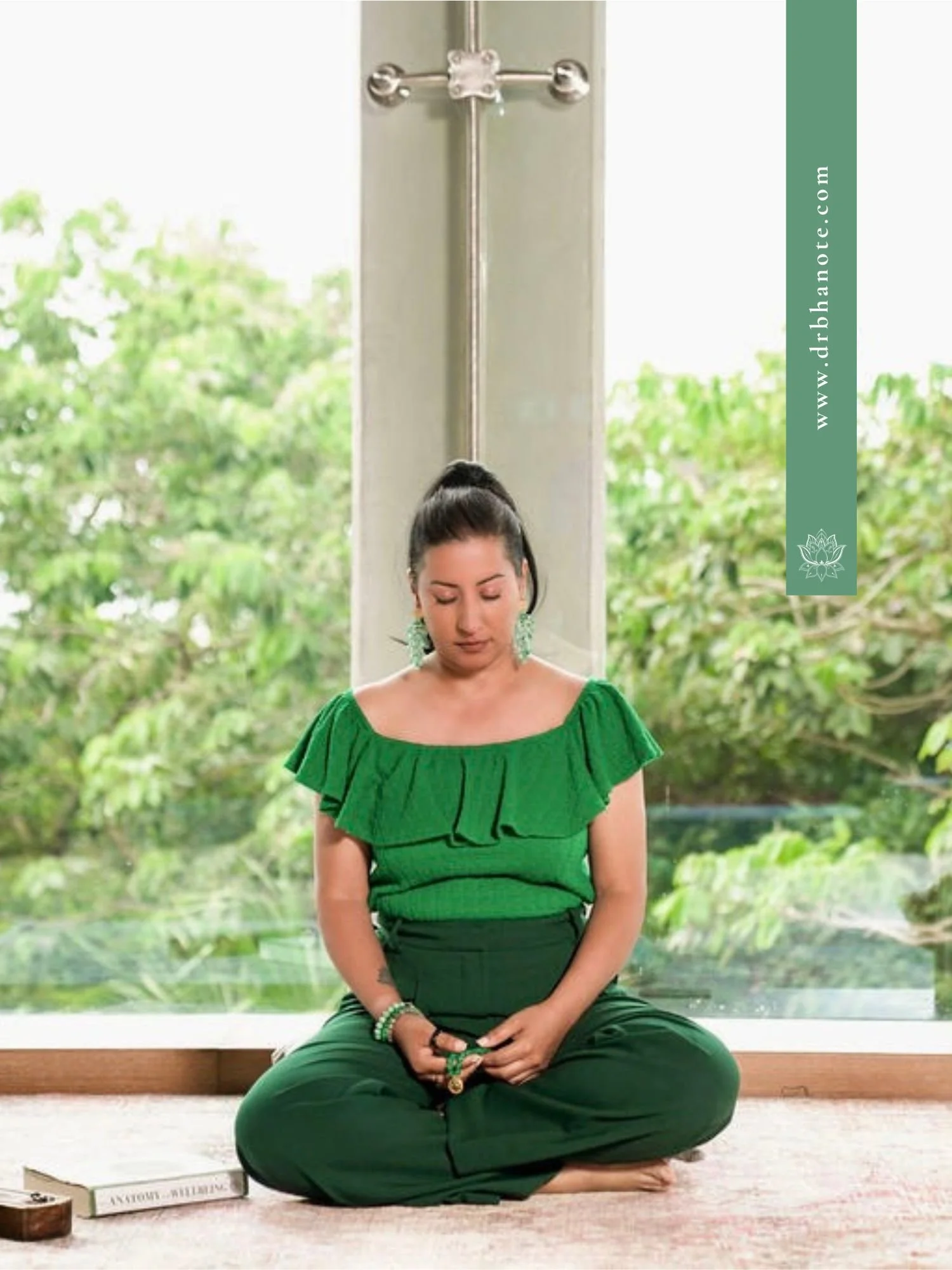
"Three pauses recalibrate your nervous system."
~ Dr. Monisha Bhanote, MD
WEEKLY WELLNESS PRACTICE | #CELLCARE RITUAL
Hey there, Wellkulå Friend—
Every week, I invite you to reconnect with your body in a way that feels simple, grounded, and genuinely transformative. Today's ritual addresses something I see affecting nearly everyone I work with—something that's so normalized we rarely question it.
Busyness.
This week's #CellCare Ritual is the 3-Pause Reset.
A practice designed to interrupt biological overwhelm and restore the signal your cells need most: safety.
Busyness has quietly become one of the most normalized threats to our health. It's praised. It's rewarded. And for many, it's worn as a badge of honor.
But from a cellular perspective, busyness is not neutral.
When your body is constantly rushing, multitasking, and reacting, it receives one dominant signal: stay on alert. Over time, that signal reshapes your digestion, sleep, immunity, hormonal balance, and even how your cells repair themselves.
You may not feel "stressed" in the traditional sense. But your body feels unavailable for repair.
Busyness doesn't always show up as anxiety. It often shows up as bloating, fatigue, brain fog, poor sleep, or a sense of disconnection from your own body.
This is where #CellCare begins—not by doing more, but by restoring biological permission to slow down.
So let's step into the ritual.

#HOW TO DO IT | YOUR 3-PAUSE RESET
This ritual is not about productivity. It is about interrupting biological overwhelm.
Three intentional pauses per day. Each lasting 60–90 seconds.
That's it.

Pause 1: Before Your First Input
Before your phone.
Before conversation.
Before coffee.
The Practice:
Sit or stand still
Place one hand on your chest, one on your abdomen
Take 5 slow breaths, lengthening the exhale
Notice the contact between your hands and body
Cellular signal: Safety before stimulation
This first pause tells your nervous system that today begins with presence, not reaction. You're giving your body permission to transition from sleep to wakefulness with intention—not by immediately flooding it with information, demands, and cortisol.
Pro Tip:
Keep your phone in another room overnight. The simple act of not reaching for it first thing recalibrates your morning biology.
Pause 2: Before Eating
Even if you're busy. Especially then.
The Practice:
Pause before the first bite
Breathe slowly for 3 breaths
Let your jaw unclench
Notice the food in front of you
Cellular signal: Digestion is allowed to begin
Your digestive system cannot function optimally in fight-or-flight mode. This pause activates your parasympathetic nervous system—the "rest and digest" state—allowing your body to produce the enzymes, acids, and rhythmic contractions needed for proper digestion.
Eating while stressed, rushed, or distracted isn't just uncomfortable—it's biologically inefficient.
Pro Tip:
If you eat at your desk, take three breaths before opening your meal. This micro-pause can reduce bloating and improve nutrient absorption.
Pause 3: Before Sleep
Not a meditation. A nervous system closure.
The Practice:
Sit at the edge of your bed
Place both feet flat on the floor
Name one thing your body carried you through today
Take one long, slow exhale
Cellular signal: Repair mode may now activate
Sleep is when your cells repair, detoxify, and regenerate. But if your nervous system is still processing the day's busyness, your body struggles to enter deep restorative sleep.
This final pause isn't about gratitude for the sake of positivity—it's about signaling closure to your nervous system so your cells can shift from survival to repair.
Pro Tip:
Dim the lights 30 minutes before this pause. Light signals wakefulness to your cells. Darkness signals repair.
WHY IT WORKS | THE SCIENCE BEHIND THE 3-PAUSE RESET
Autonomic Nervous System Recalibration
Your autonomic nervous system has two branches: sympathetic (fight-or-flight) and parasympathetic (rest-and-digest). Chronic busyness keeps you locked in sympathetic dominance—even when there's no actual threat.
These three pauses create brief windows of parasympathetic activation, allowing your nervous system to remember what regulation feels like. Over time, this improves your baseline nervous system tone, making you more resilient to stress.
Improved Vagal Signaling
The vagus nerve is your body's primary communication highway between your brain and gut. Slow, intentional breathing—especially with a lengthened exhale—stimulates the vagus nerve, improving digestion, reducing inflammation, and enhancing emotional regulation.
These pauses aren't just calming—they're physiologically activating the pathways your body needs for cellular repair.
Digestive Enzyme Coordination
When you eat in a state of busyness, your body diverts resources away from digestion. Blood flow shifts to muscles (for action), enzyme production decreases, and gut motility becomes inconsistent.
Pausing before eating signals your body that it's safe to digest. This improves enzyme secretion, nutrient absorption, and reduces the bloating, gas, and discomfort that come from eating in sympathetic mode.
Mitochondrial Efficiency
Your mitochondria—the energy-producing organelles in every cell—shift their function based on nervous system signals. In chronic busyness, mitochondria prioritize immediate energy output over repair and regeneration.
These pauses signal to your mitochondria that it's safe to shift from survival mode to optimization mode, improving energy production efficiency and cellular longevity.
Sleep Onset Readiness
Your body doesn't have an on-off switch. It needs transition time to move from wakefulness to sleep. The evening pause creates that transition, helping your nervous system wind down and your circadian rhythm align properly.
This improves sleep latency (how quickly you fall asleep), sleep depth, and the quality of cellular repair that happens overnight.
REALIZATION | YOUR #CELLCARE TIP OF THE WEEK
Here's what you'll likely feel when you practice the 3-Pause Reset:
More stable, grounded energy
You're not constantly running on adrenaline and cortisol—your energy becomes predictable and sustainable.
Improved digestion
Less bloating, more regularity, and a gut that feels calm instead of reactive.
Better sleep quality
You fall asleep more easily and wake feeling more restored.
Reduced brain fog
Your nervous system has space to process and clear—mental clarity returns.
A sense of being present in your own body
You're no longer living five steps ahead. You're here.
Not because these pauses are magic—
but because your cells thrive when they receive consistent signals of safety.
Your Commitment This Week
For the next 7 days, practice the 3-Pause Reset.
Notice how your body responds.
Notice what shifts in your digestion, your sleep, your clarity.
Notice the steadiness that begins to build.
This ritual isn't about perfection—it's about recalibration.
Three small moments each day that tell your cells: you are safe, you can slow down, repair is allowed.
Busyness may feel unavoidable—but how your body experiences it is not.
Your cells are listening.
Your nervous system is responding.
Your biology is designed to heal when given permission.
Until next time,
Dr. Monisha
The information on this website has not been evaluated by the Food & Drug Administration or any other medical body. We do not aim to diagnose, treat, cure or prevent any illness or disease. Information is shared for educational purposes only. You must consult your doctor before acting on any content on this website, especially if you are pregnant, nursing, taking medication, or have a medical condition. Our content may have affiliate links, through which we earn a small commission at no extra cost to you. We only recommend products we sincerely love and believe will benefit your wellbeing. Thank you for supporting #CellCare Wellness!




by Dr. Monisha Bhanote
✅ EVIDENCE-INFORMED REVIEWED ARTICLE