
Your Gut Is Writing Your Estrogen Story

“Your hormones do not work in isolation. They are part of a conversation between your gut, your cells, and the choices you make each day.”
Elena is 43. She swims three mornings a week, cooks most of her meals at home, and still watched her jeans get tighter through the hips and waist over the last year for no reason she could name. Her doctor ran the standard panel. Thyroid normal. Fasting glucose normal. “Everything looks fine,” he said. She left relieved and unseen at the same time, because fine did not explain the 3pm fog, the breast tenderness that showed up like clockwork before her period, or the fatigue that eight hours of sleep no longer touched.
What Elena was living through has a name, even if her labs never mentioned it. Somewhere between her liver and her large intestine, a population of bacteria was deciding, quite literally, how much estrogen stayed in circulation and how much got shown the door.

The Estrogen Your Body Already Handled
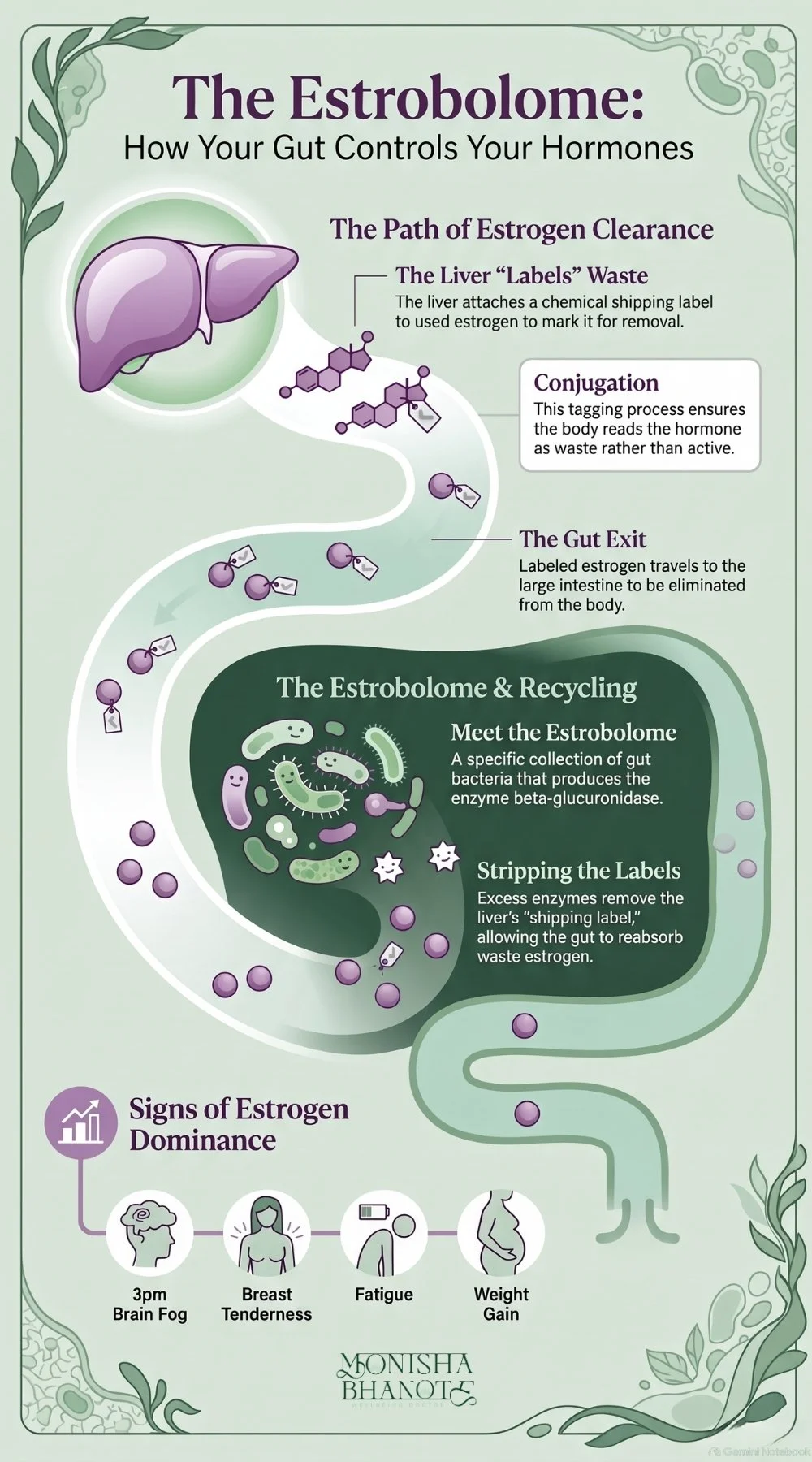
Your body does not just make estrogen. It also has to get rid of it, at the end of every cycle, month after month, decade after decade. That job belongs first to the liver, which tags used estrogen for removal, and second to the gut, which is supposed to carry that tagged estrogen out with everything else you eliminate.
The tagging step is called conjugation. Think of it as your liver attaching a shipping label to estrogen that has already done its work, so your body reads it as waste headed for the door rather than a hormone still in play.
That is where things get interesting, and where the gut earns a seat at a conversation most people assume belongs to the ovaries alone.
Meet the Estrobolome
Researchers have a name for the specific collection of gut bacteria that interacts with estrogen: the estrobolome. It is not a single organism. It is a shared function, carried out by many different bacterial species, that produces an enzyme called beta-glucuronidase.
Beta-glucuronidase does one very specific thing. It can remove the liver's shipping label from estrogen while that estrogen is still sitting in your gut, on its way out. Once the label comes off, your gut lining can reabsorb that estrogen back into your bloodstream instead of letting it leave with everything else.
A small amount of this recycling is normal, and even useful. Estrogen genuinely needs to be produced, used, and communicated to cells throughout the body, so some degree of enterohepatic circulation, the back-and-forth between liver and gut, is built into how hormones work.
The trouble starts when that recycling runs too high for too long. When gut bacteria produce excess beta-glucuronidase, more estrogen gets pulled back into circulation than your body intended to keep. Over months and years, that steady oversupply is one of the mechanisms researchers now associate with estrogen-dominant symptoms, from fibroids and heavy periods to breast tenderness and, in more established disease states, hormone-sensitive cancers.
How This Gets Tested, If You Want Data
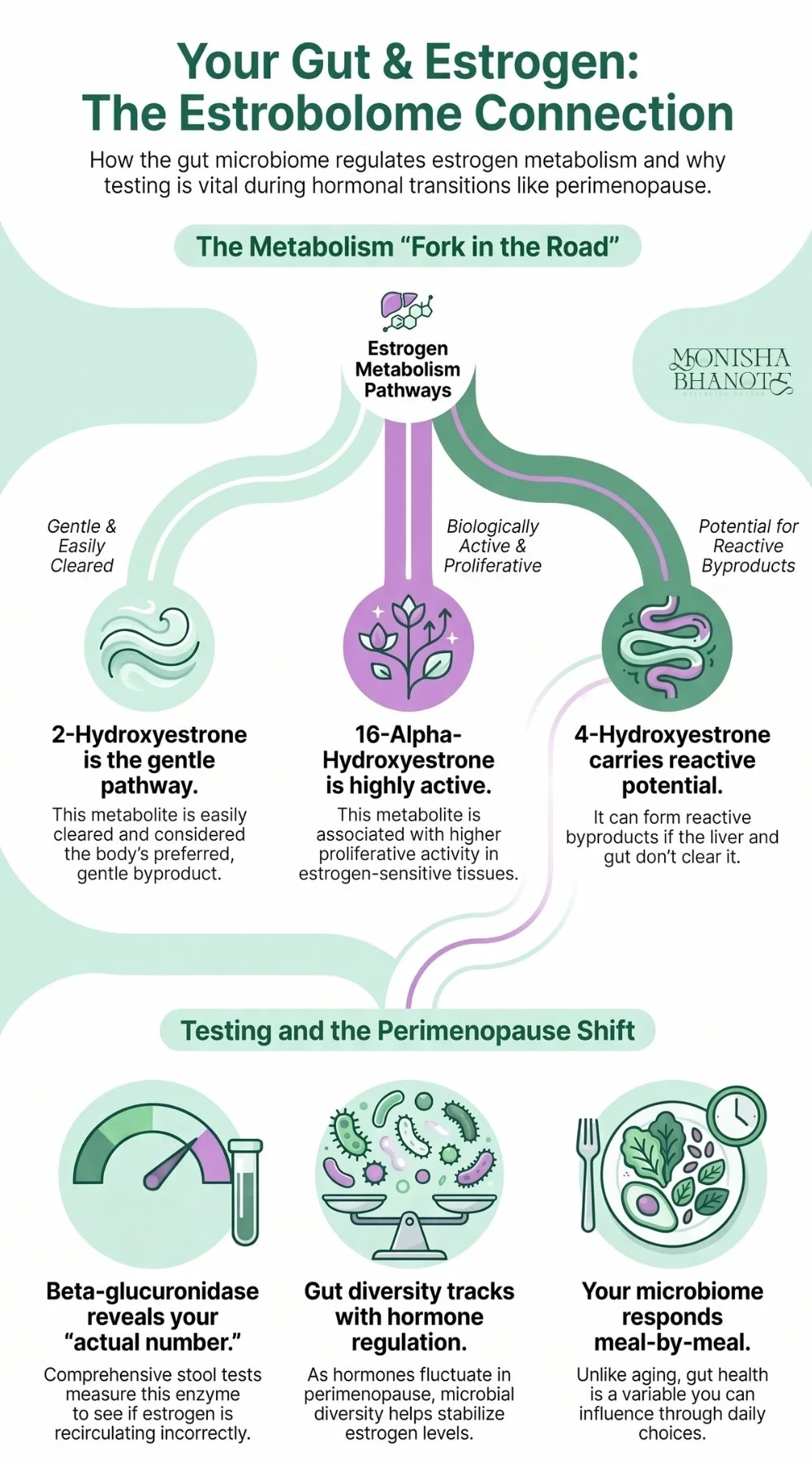
If you want more than a guess, a comprehensive stool test can measure beta-glucuronidase activity directly, giving you and your physician an actual number rather than an assumption. Elevated levels point toward exactly the pattern described above: more estrogen being pulled back into circulation than your body meant to keep. This is not a routine test most primary care visits include, so it typically requires a conversation with a functional medicine practitioner or an integrative physician who works with gut-hormone testing regularly. It is not necessary to begin the habits below. It is useful if you want to confirm what is actually happening in your gut rather than working from symptoms alone.
Not All Estrogen Metabolites Are Created Equal
Here is where the story gets more specific than high estrogen or low estrogen. Once your liver starts breaking estrogen down, it does not produce one single byproduct. It produces several, and they do not behave the same way in your body.
Two of the main pathways produce what researchers call 2-hydroxyestrone and 16-alpha-hydroxyestrone. The first is considered a comparatively gentle, easily cleared metabolite. The second is more biologically active and has been associated with higher proliferative activity in estrogen-sensitive tissue. A third pathway produces 4-hydroxyestrone, which researchers have flagged for its potential to form reactive byproducts if it is not cleared efficiently.
Which pathway your body favors depends on genetics, on liver function, and, notably, on what is happening in your gut. This is not a fixed trait. It is closer to a fork in the road your body encounters constantly, one your daily choices genuinely influence.

The Perimenopause Shift
For a woman like Elena, in her 40s, this becomes more consequential, not less. As ovarian hormone production becomes less predictable through perimenopause, researchers have observed that the gut microbiome itself shifts alongside it, and that microbial diversity tracks with how well estrogen gets regulated during this transition. The estrobolome is not a side note to perimenopause. It is one of the more active variables in it, and one of the few a woman actually has some say over.
That reframe matters. Most of what changes in perimenopause is not something anyone chose or can simply reverse. The state of your gut microbiome is different. It responds, meal by meal, to what you feed it.
What You Can Do Today
None of this requires an elimination diet or a supplement cabinet. It requires feeding the bacteria that do this work well, and giving your body the raw materials it needs to finish the job the liver started.
Eat Cruciferous Vegetables, and Eat Them Often
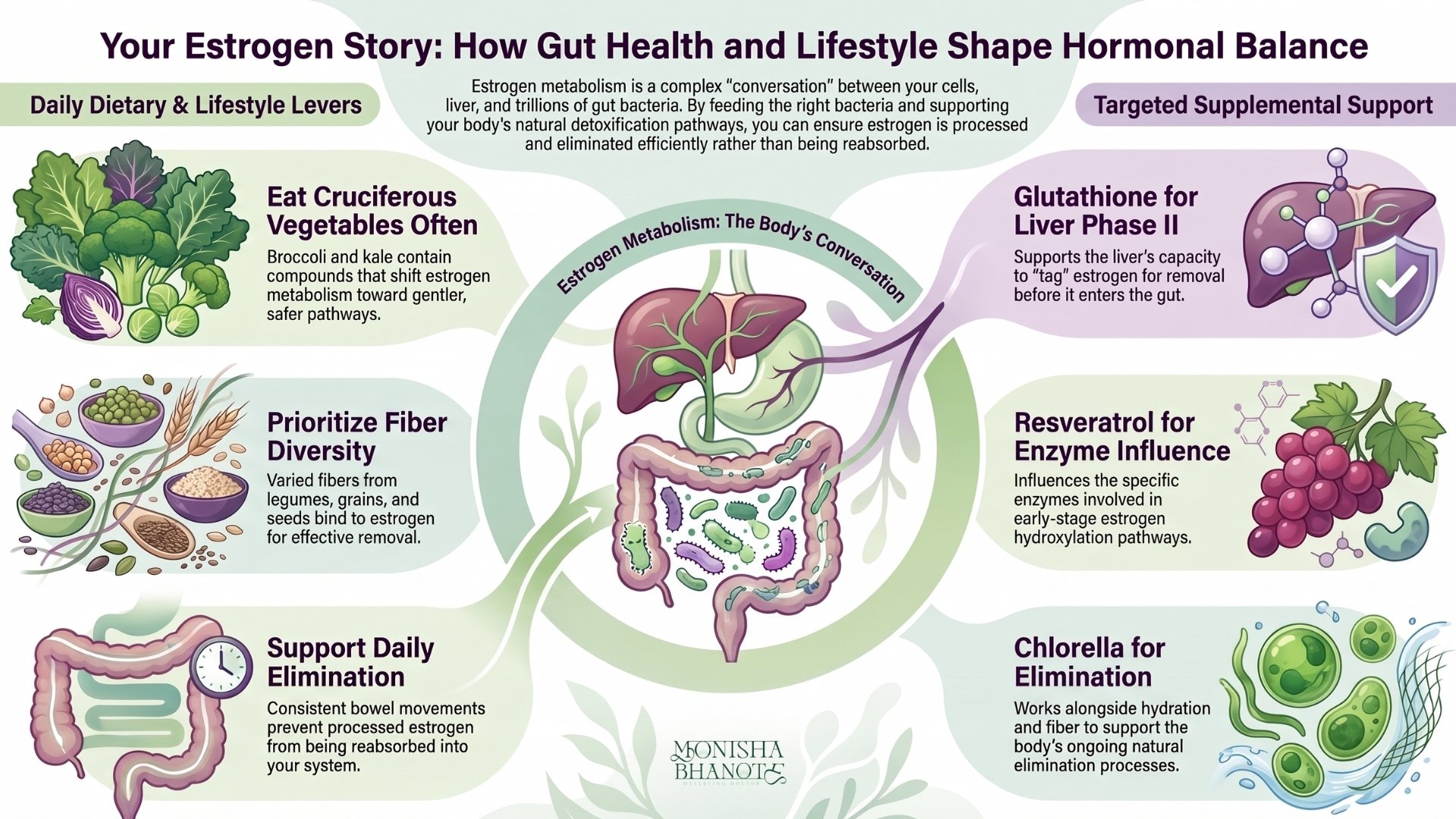
Broccoli, Brussels sprouts, cauliflower, and kale contain compounds called glucosinolates, which break down into indole-3-carbinol when you chew or cook them. In a controlled human study, short-term intake of indole-3-carbinol measurably shifted estrogen metabolism toward the gentler 2-hydroxyestrone pathway. Broccoli sprouts carry a notably higher concentration of these compounds than mature broccoli, so a small daily handful can go further than you would expect.
Build Meals Around Fiber Diversity, Not Just Fiber Quantity
Fiber binds to estrogen in the digestive tract and helps carry it out before beta-glucuronidase gets the chance to intervene. Different fibers feed different bacterial populations, so the goal is variety across the week: vegetables, legumes, whole grains, and seeds, not one fiber source on repeat.
Include Flaxseed, With Realistic Expectations
Flaxseed lignans are metabolized by gut bacteria into compounds with mild estrogen-modulating activity, and larger population studies have linked higher lignan intake to a meaningfully lower incidence of breast cancer. The research on precisely which estrogen pathway flax shifts is more mixed than wellness culture often suggests, so I recommend it as one supportive habit among several, not a single fix. A tablespoon of ground flaxseed on oatmeal or in a smoothie is enough to start.
Support Elimination, Literally
If you are not having a bowel movement daily, tagged estrogen has more time sitting in your gut for beta-glucuronidase to intervene. Adequate water, consistent movement, and enough fiber are unglamorous, and they are also some of the most direct levers you have.
Slow Down at Meals
Digestion, and the bacterial fermentation that depends on it, works better when your nervous system is not in a hurry. A few slower breaths before you eat, and actually chewing your food, is not a wellness cliché. It changes how well your gut can do this specific job.

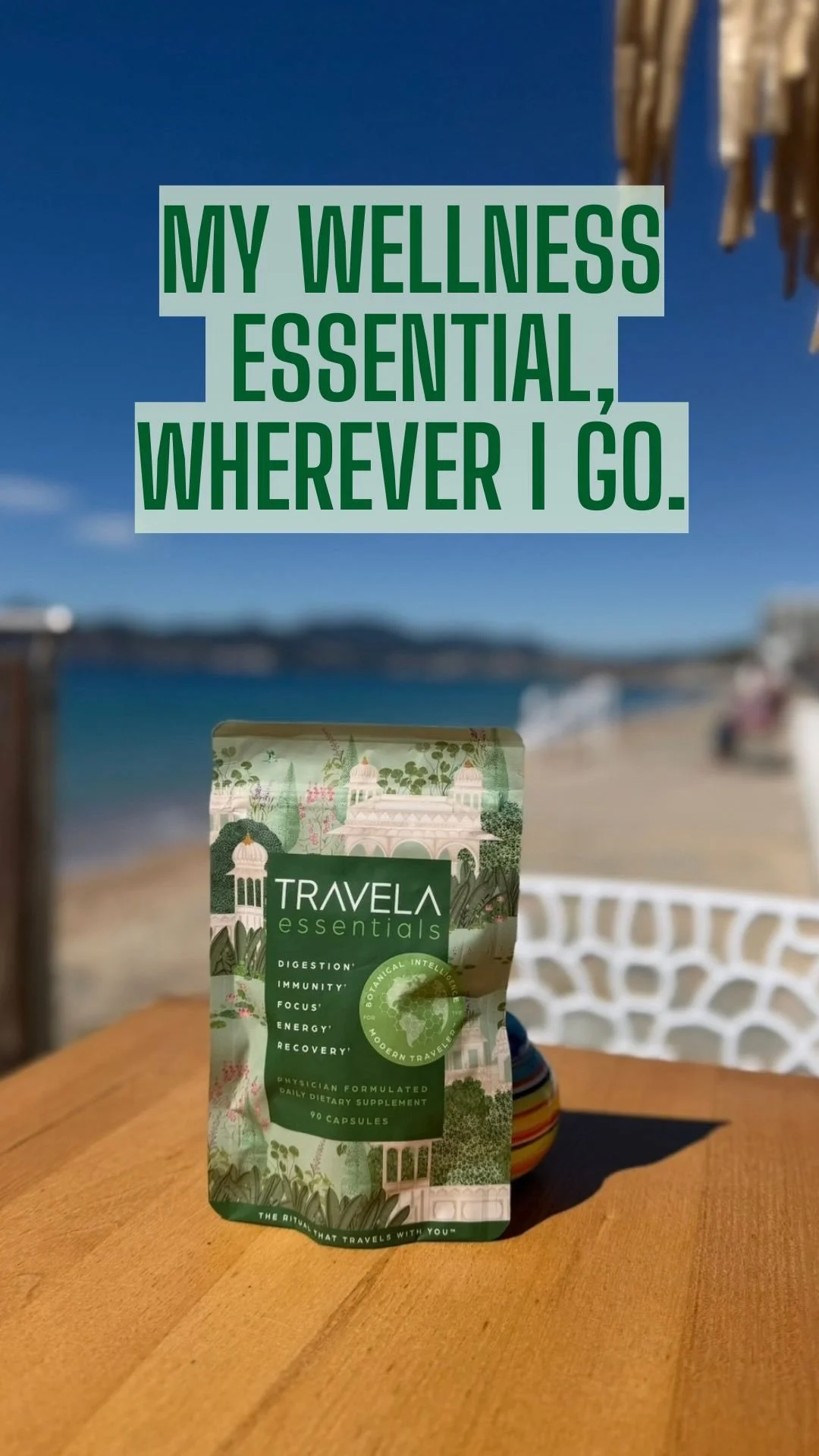
Where Travela Essentials Fits

I built Travela Essentials around a simple observation from my own practice and my own travel-heavy life: the body's detoxification and elimination systems are working constantly, whether or not we are supporting them, and they work harder under stress, poor sleep, and inconsistent food access, which is most people's actual life.
Three ingredients in the formula speak directly to what I have described here. Glutathione supports the liver's broader Phase II detoxification capacity, the conjugation step that has to function well before estrogen can be tagged for removal in the first place. Resveratrol has been studied in cell-based research for its influence on the enzymes involved in estrogen's hydroxylation pathways, an early but genuinely interesting thread in this field. Chlorella is included to support the body's ongoing elimination processes, working alongside the fiber and hydration habits above rather than replacing them.
I want to be honest about what this is and is not. Travela Essentials is not a treatment for estrogen dominance, and no supplement replaces the vegetables, fiber, and sleep this article just walked through. What it is designed to do is support the systems already doing this work every day, so that the changes you make show up more fully. The most meaningful shifts here are often what you stop noticing: less bloating that used to derail your week, less afternoon fog, one fewer thing your body is fighting against. It is a daily ritual that travels with you, built for the reality of a full life, not a controlled one.
#CellCare Reflection
Every cell in Elena's body, and in yours, is in constant conversation with the estrogen circulating through it. That conversation is shaped less by your ovaries alone than by trillions of bacterial decisions made in your gut, decisions that respond directly to what lands on your plate. You do not need to overhaul your life to change that conversation. You need one more serving of cruciferous vegetables this week, one glass of water before your morning coffee, one slower breath before your first bite.
Your gut is writing your estrogen story today. Feed it accordingly.


MAKE A DIFFERENCE BY SHARING THIS ARTICLE WITH OTHERS TO ENCOURAGE WELLBEING ⤵
References:
Ervin, Samantha M., Hongwei Li, Lindsey Lim, Lewis R. Roberts, Xu Liang, Sridhar Mani, and Matthew R. Redinbo. "Gut Microbial β-Glucuronidases Reactivate Estrogens as Components of the Estrobolome." Journal of Biological Chemistry 294, no. 49 (2019)
Larnder, Ashley H., Amee R. Manges, and Rachel A. Murphy. "The Estrobolome: Estrogen-Metabolizing Pathways of the Gut Microbiome and Their Relation to Breast Cancer." International Journal of Cancer (2025).
Hu, Shuai, Qian Ding, Wenjun Zhang, Meng Kang, Junli Ma, and Ling Zhao. "Gut Microbial Beta-Glucuronidase: A Vital Regulator in Female Estrogen Metabolism." Gut Microbes 15, no. 1 (2023)
Michnovicz, Jon J., and H. Leon Bradlow. "Altered Estrogen Metabolism and Excretion in Humans Following Consumption of Indole-3-Carbinol." Nutrition and Cancer 16, no. 1 (1991)
"Diet, the Gut Microbiome, and Estrogen Physiology: A Review in Menopausal Health and Interventions." Nutrients (2026).
Patterson, Ruth E., et al. "Flaxseed and Breast Cancer: What Should We Tell Our Patients?" Journal of Clinical Oncology 29, no. 28 (2011).
Lu, Fang, et al. "Resveratrol Inhibits TCDD-Induced Expression of CYP1A1 and CYP1B1 and Catechol Estrogen-Mediated Oxidative DNA Damage in Cultured Human Mammary Epithelial Cells." Carcinogenesis 25, no. 10 (2004)
The information on this website has not been evaluated by the Food & Drug Administration or any other medical body. We do not aim to diagnose, treat, cure or prevent any illness or disease. Information is shared for educational purposes only. You must consult your doctor before acting on any content on this website, especially if you are pregnant, nursing, taking medication, or have a medical condition. Our content may include products that have been independently chosen and recommended by Dr. Monisha Bhanote and our editors. We may earn a small commission if you purchase something mentioned in this article.
YOU MAY ALSO LIKE:



by Dr. Monisha Bhanote
✅ EVIDENCE-INFORMED REVIEWED ARTICLE