
The Surprising Conversation Between Your Gut and Your Eyes
“Caring for your vision means supporting the cellular environment behind it, from the microbes in your gut to the mitochondria working continuously within your retina.”
Elena had blamed the screens. Three back-to-back trips in six weeks, each one ending with the same late-night glow of a laptop in a hotel room, and by the time she landed home her eyes felt sanded, dry in a way that no amount of blinking fixed. She had also, somewhere over the Atlantic, stopped being able to read the fine print on a menu without holding it at arm's length. Her stomach had been its own kind of unpredictable lately too, bloated after meals that never used to bother her, sluggish most mornings. She filed both complaints under "getting older" and made an appointment with her optometrist, not her gastroenterologist, because it had genuinely not occurred to her that the two might be the same conversation.
It is a conversation I have been having more and more, both in my own clinical work and, most recently, on stage at our Gut Health and Longevity Summit, where I sat down with Claudia Muehlenweg, known as the Holistic Vision Coach and founder of the Naturally Clear Vision Institute, and Dr. Radka Toms, an ophthalmologist and functional medicine practitioner pioneering the field of nutritional ophthalmology. What emerged from that conversation was not a tidy list of eye vitamins. It was something closer to a map, one that traces a direct line from the state of your gut lining to the health of your retina, by way of your immune system, your nervous system, and your mitochondria.

What Is the Gut-Eye Axis, Really?
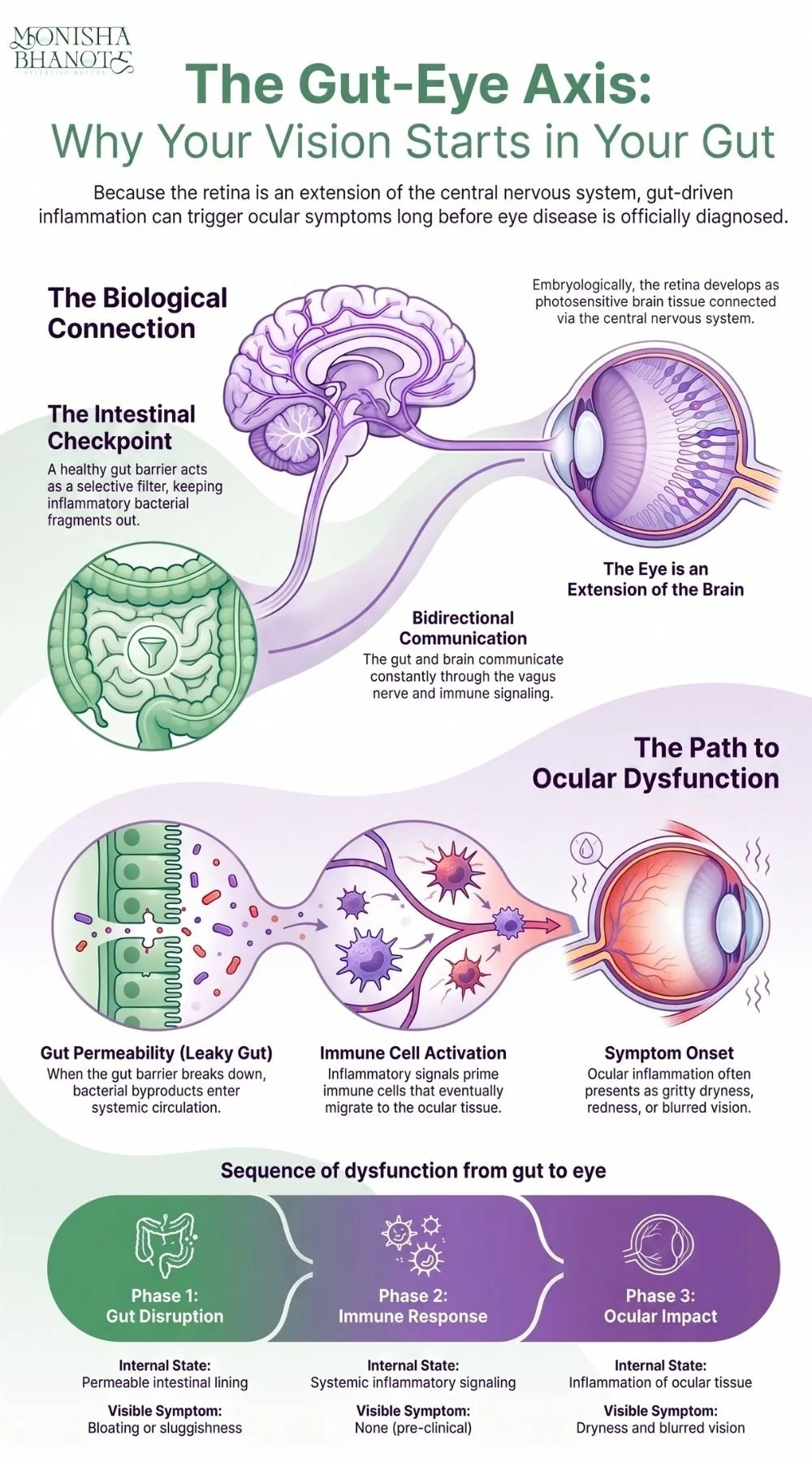
For most of modern medicine, the eye has been treated as its own island, a specialty unto itself with its own doctors, its own exam chairs, its own vocabulary. The gut-eye axis is the growing body of research that says otherwise. The retina is not simply connected to the rest of the body through blood vessels. Embryologically, it develops as an extension of the central nervous system, which means the eye you look through every day is, in a very real sense, brain tissue that happens to be photosensitive.
That matters because your gut and your brain are in constant, bidirectional communication, largely through the vagus nerve and the immune signaling that originates in your intestinal lining. When the gut barrier is intact, that lining acts as a highly selective checkpoint, letting nutrients through and keeping bacterial fragments out. When the barrier becomes permeable, what researchers at the National Eye Institute have described as a disruption in intestinal homeostasis, bacterial byproducts and inflammatory signals can enter systemic circulation and prime immune cells that eventually make their way to ocular tissue.1 In experimental models, this sequence, gut permeability first, then immune activation, then ocular inflammation, has been observed to precede the visible onset of eye disease.
In other words, by the time a person notices blurred vision, redness, or that gritty, unrelenting dryness Elena was experiencing, the underlying gut disruption may have already been building for some time.
The Retina Is One of the Hungriest Tissues in Your Body
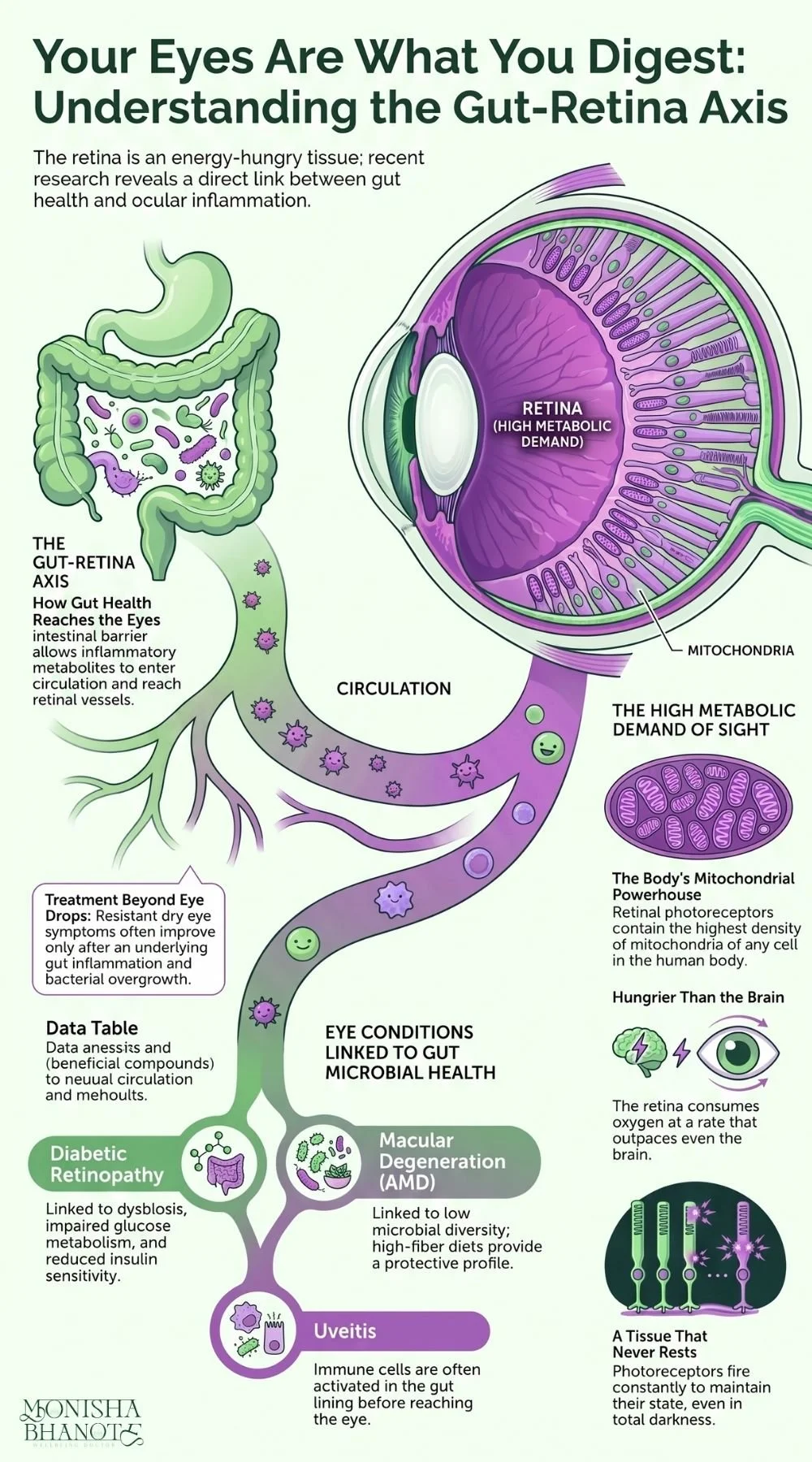
Here is the detail that changed how I think about vision entirely, the one I found myself returning to long after that summit conversation ended. Photoreceptors, the light-sensing cells of the retina, contain the highest density of mitochondria of any cell in the human body.2 The retina as a whole is one of the most metabolically active tissues we have, consuming oxygen at a rate that outpaces even the brain.3 It never really rests. Photoreceptors are actively firing in the dark just to maintain their resting state, and the energetic cost of processing light, regenerating visual pigments, and clearing cellular debris runs continuously, day and night.
This is, at its core, a #CellCare story. A tissue this energy-hungry needs an extraordinary volume of functioning mitochondria and an equally extraordinary antioxidant defense to manage the reactive oxygen species that high-output cellular respiration inevitably generates. Coenzyme Q10, a key mitochondrial cofactor shown to protect retinal cells in laboratory models of oxidative and glaucomatous stress, is known to decline with age in ocular and systemic tissue.4 Glutathione, the body's master antioxidant, follows a similar pattern. In a study comparing older and younger adults, plasma glutathione was measurably lower and more oxidized in people over sixty, a pattern seen across those with age-related macular degeneration, diabetes, and healthy aging alike.5 None of this happens in isolation from the rest of your cellular terrain. The same oxidative and inflammatory pressures that show up in an aging gut, a stressed nervous system, or a glucose-dysregulated metabolism are showing up, simultaneously, in the tissue behind your eyes.
When the Gut Falls Out of Balance, the Eyes Often Show It First
Diabetic Retinopathy
Of every eye condition studied through this lens, diabetic retinopathy has the deepest evidence base. Multiple systematic reviews have found consistent alterations in gut microbial composition among people with diabetic retinopathy compared with those who have diabetes alone, with dysbiosis linked to impaired glucose metabolism, reduced insulin sensitivity, and inflammatory metabolites that appear to influence how the retinopathy progresses.6,7 Researchers now describe a "gut-retina axis," in which a compromised intestinal barrier allows metabolic byproducts into systemic circulation, activating inflammatory pathways that reach the retinal microvasculature.

Age-Related Macular Degeneration
Studies comparing the gut microbiota of people with AMD to age-matched controls have found consistent differences in microbial diversity, with dysbiosis implicated in the retinal inflammation, oxidative stress, and drusen formation, the yellow deposits that mark early disease, that characterize the condition.8,9 Diet appears to be one of the more actionable levers here. High-fat, high-glucose dietary patterns have been shown to worsen the gut microbial changes associated with AMD progression, while diets rich in fiber and plant diversity favor a more protective microbial profile.
Dry Eye and Ocular Rosacea
This was Dr. Toms' area of clinical focus, and it may be the most relatable for readers who, like Elena, are dealing with dryness rather than a diagnosed retinal disease. In her practice, patients with treatment-resistant dry eye and ocular rosacea frequently present with a shared, often unaddressed pattern: small intestinal bacterial overgrowth, sluggish digestion, and elevated markers of gut inflammation. Once the gut is treated as part of the picture rather than a separate system entirely, dry eye symptoms that had not responded to drops, lubricants, or steroid treatment often begin to shift.
Uveitis
Uveitis, an inflammatory condition affecting the middle layer of the eye, was among the first ocular diseases to be formally linked to gut dysbiosis. Research from the National Eye Institute has shown that in autoimmune uveitis, immune cells appear to be activated in the gut lining itself before they ever reach the eye, and that depleting gut microbiota in animal models measurably reduces disease severity. It is some of the clearest evidence we have that ocular inflammation can, quite literally, begin in the intestine.
Nutrition as the Bridge Between Gut Repair and Visual Resilience
If there is one framework I would want every reader to walk away with, it is this: eat to feed your gut microbiome, and you are, by extension, feeding your retina's mitochondria. The two are not separate projects.
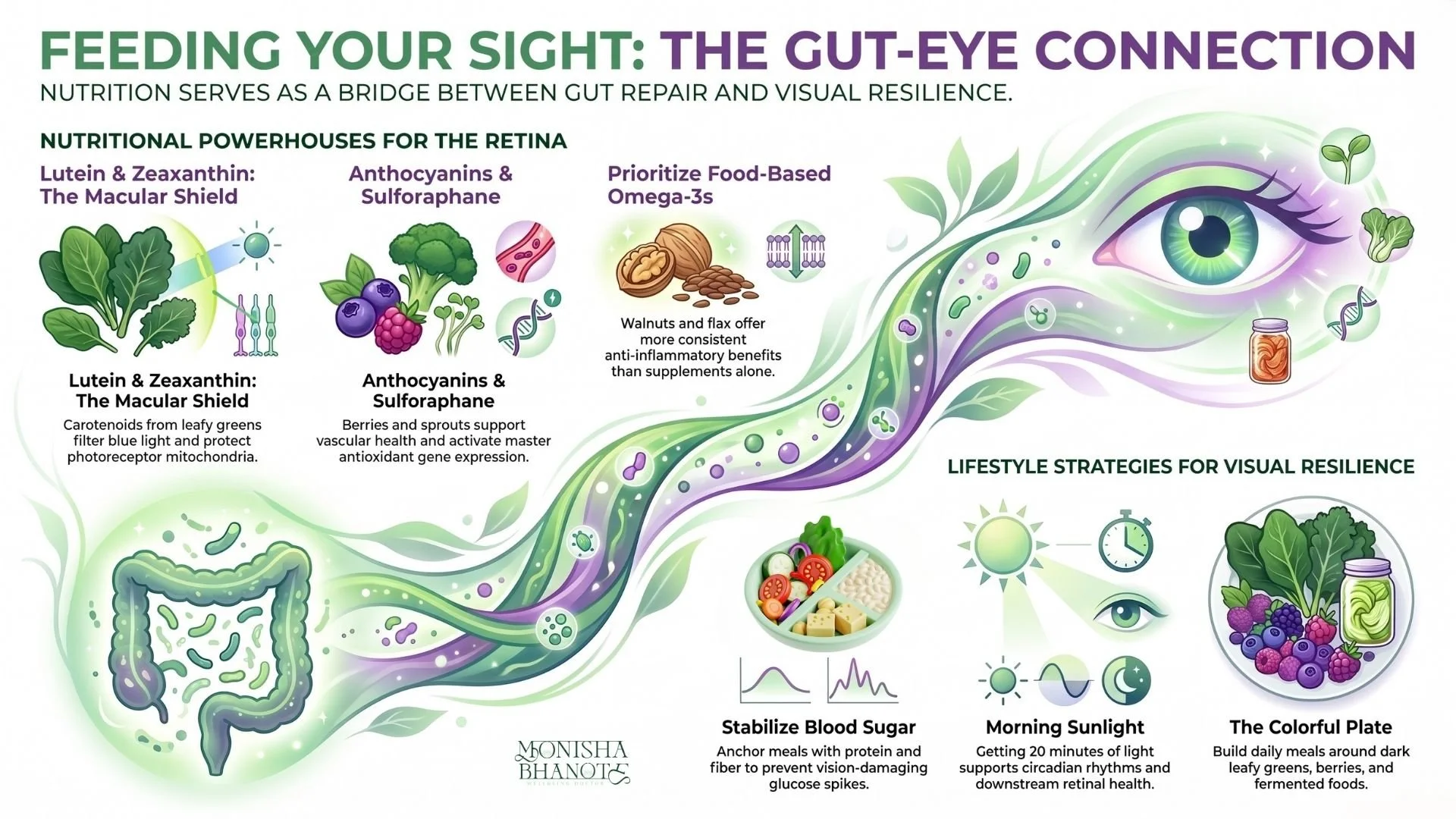
Lutein and zeaxanthin, the carotenoids found in dark leafy greens, are selectively transported to the macula, where they function as both a blue-light filter and a direct antioxidant shield. In laboratory research, lutein and zeaxanthin have been shown to preserve mitochondrial membrane potential in photoreceptors under oxidative stress, protecting the very organelles responsible for keeping those cells alive. Anthocyanins, the pigments that give berries their deep color, support vascular health and add another layer of oxidative defense. Sulforaphane, concentrated in broccoli sprouts and other cruciferous vegetables, activates the Nrf2 pathway, the body's master switch for antioxidant gene expression, and has shown protective effects on retinal tissue in preclinical research, though this evidence is still early and largely limited to animal and cell-culture models.
Omega-3 fatty acids deserve a more nuanced mention than they usually get. A 2019 meta-analysis of seventeen randomized trials found that omega-3 supplementation modestly improved dry eye symptoms and tear film stability compared with placebo. But the picture is not unanimous. A large multicenter trial published in the New England Journal of Medicine found that a high daily dose of fish-derived omega-3s did not outperform placebo for moderate to severe dry eye. My honest read of this body of evidence is that omega-3s are worth prioritizing through food, walnuts, flax and chia, both for their broader anti-inflammatory role and because dietary sources rarely come with the same variability seen across supplement trials.
And then there is blood sugar, which may be the single most underappreciated lever of all. Even without a diabetes diagnosis, glucose spikes generate oxidative stress and drive the same inflammatory pathways implicated in diabetic retinopathy, dry eye, and AMD alike. Stabilizing blood sugar through protein-forward meals, fiber, and mindful timing is, quietly, one of the more powerful things you can do for your long-term vision.

What You Can Do Today
Build one large, colorful plate daily around protein, fat, fiber, and fermented food, with dark leafy greens and berries as non-negotiables rather than garnish.
Get outside within an hour of waking. Twenty minutes of natural light supports circadian rhythm and blood sugar regulation, both of which show up downstream in retinal and gut health.
Prioritize whole-food omega-3 sources, oily fish, walnuts, chia, flax, alongside any supplementation, rather than relying on supplements alone.
Notice how your eyes feel after a stretch of close, screen-heavy focus, and build in deliberate breaks to look toward the middle distance.
Treat consistent blood sugar as a vision strategy, not just a metabolic one, by anchoring meals with protein and fiber rather than starting the day with refined carbohydrates.
If dry eye, bloating, or fatigue are showing up together, bring both symptoms to the same conversation, whether that is with your gastroenterologist, your ophthalmologist, or a functional medicine practitioner who can look at the whole picture.
A Daily Ritual That Travels With You

Because the retina's mitochondria carry such an outsized workload, and because that workload only intensifies with age, jet lag, and cumulative oxidative stress, this is one of the clearer places where a daily foundational ritual can matter. Travela Essentials was formulated around exactly this kind of cellular terrain: CoQ10 and PQQ to support mitochondrial energy production and biogenesis, resveratrol and glutathione to help manage oxidative load, alongside the digestive and nervous-system support that keeps the gut barrier itself resilient, especially during travel, when routine, sleep, and food quality are hardest to control.
I want to be precise about what this can and cannot promise. No supplement reverses macular degeneration or replaces a comprehensive eye exam. What a steady, physician-formulated mitochondrial and gut-support ritual can offer is subtler than that, and often more meaningful over time. The most meaningful changes are often what you stop noticing. Less end-of-flight eye fatigue. Fewer digestive disruptions that used to follow you home from every trip. A slower accumulation of the small, cumulative stresses that otherwise compound year after year. Travela Essentials is not the centerpiece of this article's protocol. It is one layer of a much larger lifestyle strategy, positioned, as it should be, after the food, the light, and the sleep.
#CellCare Reflection
There is something quietly humbling about learning that the cells behind your eyes are among the hardest-working in your entire body, and that they are listening, in real time, to what is happening in your gut. It reframes vision not as something that simply declines with the years, but as a living record of how well you have been feeding your cellular terrain all along. Elena's story is not a cautionary tale. It is an invitation, the same one I would extend to you: the next time your eyes feel tired, dry, or strained, let that be a prompt to ask a wider question. Not just what your eyes need, but what your whole body, gut included, has been trying to tell you.
Every plate of leafy greens, every walk in the morning light, every steadier blood sugar curve is a message sent all the way to your retina. That is the science, and it is also, I think, the hope.



MAKE A DIFFERENCE BY SHARING THIS ARTICLE WITH OTHERS TO ENCOURAGE WELLBEING ⤵
References:
Horai, Reiko, and Rachel R. Caspi. "Microbiome and Autoimmune Uveitis." Frontiers in Immunology 10 (2019): 232.
Fu, Zhongjie, Chuck T. Chen, Gael Cagnone, Emilie Heckel, Ye Sun, Bertan Cakir, Yohei Tomita, Shuo Huang, Qian Li, William Britton, Steve S. Cho, Timothy S. Kern, Ann Hellström, Jean-Sébastien Joyal, and Lois E. H. Smith. "Dyslipidemia in Retinal Metabolic Disorders." EMBO Molecular Medicine 11, no. 10 (2019): e10473.
Damsgaard, Christian, and Michael W. Country. "The Opto-Respiratory Compromise: Balancing Oxygen Supply and Light Transmittance in the Retina." Physiology 37, no. 3 (2022): 101–113.
Davis, Benjamin M., Kailin Tian, Milena Pahlitzsch, Jonathan Brenton, Nivedita Ravindran, Denise Stampoulis, Gibran Butt, Giulia Malaguarnera, Eduardo M. Normando, Li Guo, and M. Francesca Cordeiro. "Topical Coenzyme Q10 Demonstrates Mitochondrial-Mediated Neuroprotection in a Rodent Model of Ocular Hypertension." Mitochondrion 36 (2017): 114–123.
Samiec, Paula S., Carolyn Drews-Botsch, Elaine W. Flagg, Joanne C. Kurtz, Paul Sternberg Jr., Robyn L. Reed, and Dean P. Jones. "Glutathione in Human Plasma: Decline in Association with Aging, Age-Related Macular Degeneration, and Diabetes." Free Radical Biology and Medicine 24, no. 5 (1998): 699–704.
Zhang, Hong, and Yuqin Mo. "The Gut-Retina Axis: A New Perspective in the Prevention and Treatment of Diabetic Retinopathy." Frontiers in Endocrinology 14 (2023): 1205846.
Serban, Dragos, Ana Maria Dascalu, Andreea Letitia Arsene, et al. "Gut Microbiota Dysbiosis in Diabetic Retinopathy: Current Knowledge and Future Therapeutic Targets." Life 13, no. 4 (2023): 968.
Lima-Fontes, Mário, Luís Meira, Pedro Barata, Manuel Falcão, and Ângela Carneiro. "Gut Microbiota and Age-Related Macular Degeneration: A Growing Partnership." Survey of Ophthalmology 67, no. 4 (2022): 883–891.
Rinninella, Emanuele, Maria Cristina Mele, Nicolò Merendino, et al. "The Role of Diet, Micronutrients and the Gut Microbiota in Age-Related Macular Degeneration: New Perspectives from the Gut-Retina Axis." Nutrients 10, no. 11 (2018): 1677.
Chucair, Ana J., Nora P. Rotstein, John Paul SanGiovanni, Alexandrine During, Emily Y. Chew, and Luis E. Politi. "Lutein and Zeaxanthin Protect Photoreceptors from Apoptosis Induced by Oxidative Stress: Relation with Docosahexaenoic Acid." Investigative Ophthalmology & Visual Science 48, no. 11 (2007): 5168–5177.
Pan, Hong, Meihua He, Ruixing Liu, Nicholas C. Brecha, Albert Cheung Hoi Yu, and Mingliang Pu. "Sulforaphane Protects Rodent Retinas Against Ischemia-Reperfusion Injury Through the Activation of the Nrf2/HO-1 Antioxidant Pathway." PLOS ONE 9, no. 12 (2014): e114186.
Giannaccare, Giuseppe, Alessandro Pellegrini, Federico Sebastiani, et al. "Efficacy of Omega-3 Fatty Acid Supplementation for Treatment of Dry Eye Disease: A Meta-Analysis of Randomized Clinical Trials." Cornea 38, no. 5 (2019): 565–573
Asbell, Penny A., Maureen G. Maguire, Meraf Eyassu Pistilli, et al. "n-3 Fatty Acid Supplementation for the Treatment of Dry Eye Disease." New England Journal of Medicine 378, no. 18 (2018): 1681–1690.
Oganov, Anthony C., Ian Seddon, Mike Zein, Ghasem Yazdanpanah, Hossein Fonoudi, and Sayena Jabbehdari. "Composition of the Gut Microbiome, Role of Diet, Lifestyle, and Antioxidant Therapies in Diabetes Mellitus and Diabetic Retinopathy." International Journal of Ophthalmology 16, no. 5 (2023): 789–801.
The information on this website has not been evaluated by the Food & Drug Administration or any other medical body. We do not aim to diagnose, treat, cure or prevent any illness or disease. Information is shared for educational purposes only. You must consult your doctor before acting on any content on this website, especially if you are pregnant, nursing, taking medication, or have a medical condition. Our content may include products that have been independently chosen and recommended by Dr. Monisha Bhanote and our editors. We may earn a small commission if you purchase something mentioned in this article.
YOU MAY ALSO LIKE:


by Dr. Monisha Bhanote
✅ EVIDENCE-INFORMED REVIEWED ARTICLE