
Akkermansia and Your Gut Lining: What the Science Shows

“Your gut lining renews itself every day. Fiber-rich plants help shape the microbial environment guiding that renewal.”
Daniel noticed it when he sat down at his sister's Thanksgiving table and his belt asked for the notch he had retired in April.
He had earned that notch. Last winter, at 58, he followed a structured low-calorie plan for three months and lost 30 pounds. He walked every morning, learned to like lentils, and stepped on the bathroom scale with something close to pride. Then summer came, then a busy fall at work, and the plan loosened the way plans do. He never went back to his old habits. Even so, the scale has crept up eight pounds since July.
Across the table, his niece asked which diet he had used, because she wanted to try it. Daniel laughed and told her the diet was the easy part.
He is right, and the research agrees with him. Losing weight is hard. Keeping it off is harder, and the reasons go well beyond willpower: appetite hormones, energy expenditure, inflammation and, more clearly every year, the community of microbes living in your gut. One of those microbes has become among the most closely studied organisms in metabolic research. Its name is Akkermansia muciniphila, and it lives somewhere most of us never think about, in the thin layer of mucus that lines your intestines.

Meet Akkermansia, the Bacterium That Lives in Your Gut Lining
Akkermansia muciniphila was first described in 2004 by microbiologists at Wageningen University in the Netherlands, who isolated it from human stool. The second half of its name means "mucin-loving," and it fits. Mucin is the main protein in the mucus that coats your intestinal wall, and Akkermansia feeds on it.
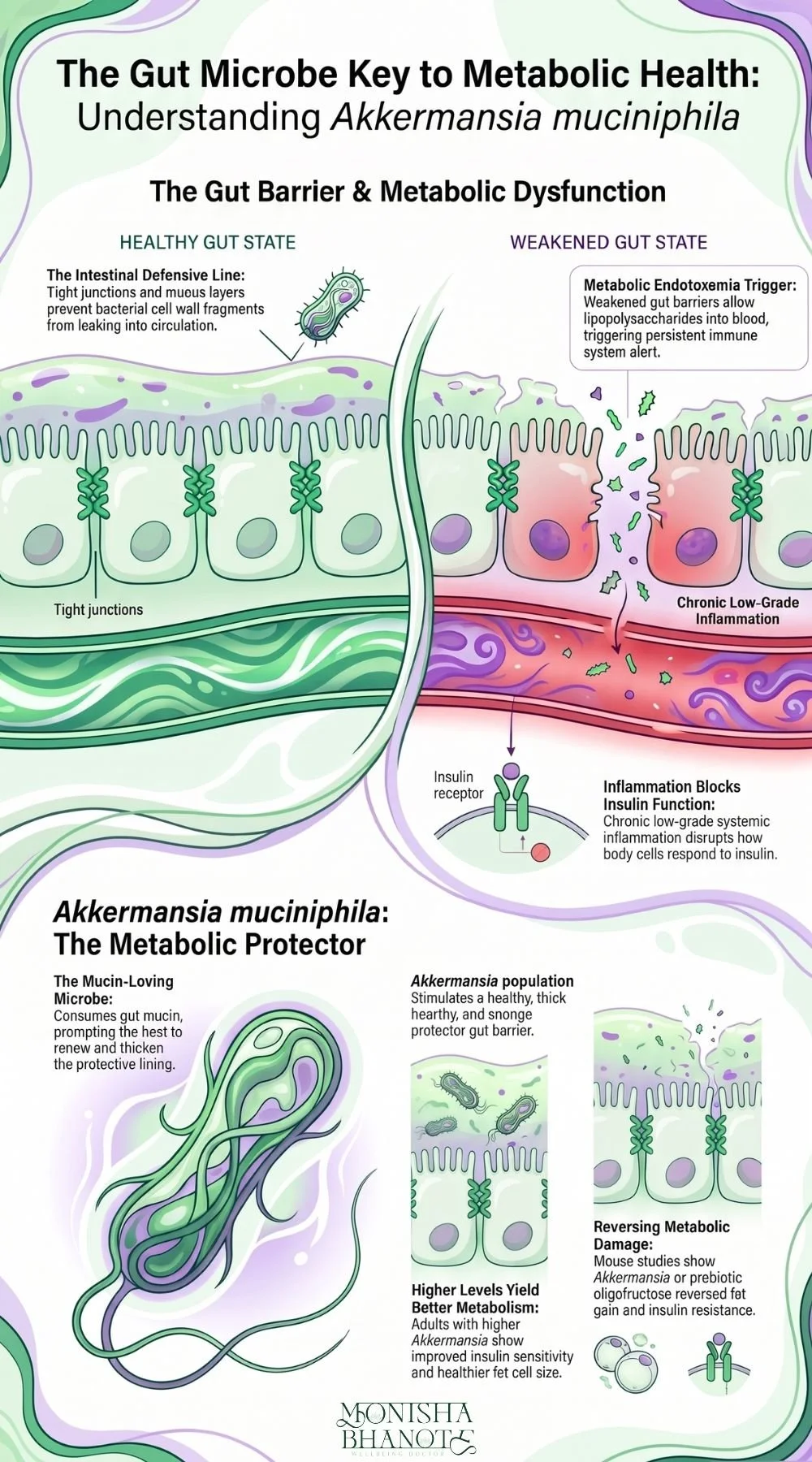
That sounds like trouble until you look at what happens next. In animal studies, Akkermansia is associated with a thicker, healthier mucus layer, because the host responds by renewing what the bacterium consumes. Picture a gardener who trims a hedge and keeps it growing dense. Akkermansia is a normal resident of most human guts, and this quiet exchange goes on in you every day.
What first caught researchers' attention was a pattern. People living with obesity, untreated type 2 diabetes or high blood pressure tend to carry less of it. In a French study of 49 adults with overweight or obesity who went through six weeks of calorie restriction, those who started with more Akkermansia had healthier fasting glucose, waist-to-hip ratio and fat-cell size. They also saw greater improvements in insulin sensitivity after the diet.
Correlation is where science starts. The real question was whether Akkermansia actually does something.
Why Your Gut Lining Shapes Your Metabolism
Your intestinal barrier works in layers. Closest to the contents of your gut is mucus. Beneath it sits a single sheet of epithelial cells, stitched together by proteins called tight junctions. When this system holds, nutrients pass through and bacterial fragments stay where they belong.
When it weakens, pieces of bacterial cell walls called lipopolysaccharides can slip into circulation. Researchers call this metabolic endotoxemia, and it keeps the immune system in a low, constant state of alert. That low-grade inflammation interferes with how cells respond to insulin, which is one reason gut barrier health and blood sugar are so closely linked.
In 2013, a team in Belgium and the Netherlands tested this in mice fed a high-fat diet. Giving them live Akkermansia reversed fat-mass gain, metabolic endotoxemia, inflammation in fat tissue and insulin resistance, and it restored the thickness of the mucus layer. In the same study, feeding the mice oligofructose, a prebiotic fiber, brought their Akkermansia levels back to normal.
As a pathologist, I have spent years looking at colon biopsies under the microscope. A colonoscopy is an extraordinary tool for finding polyps and cancers, and I want everyone to stay current with screening. It is designed to examine structure, though. It cannot tell you how much Akkermansia you carry or how well your mucus layer is working. Those are questions of function, and they call for a different lens.
How a Pasteurized Bacterium Still Talks to Your Cells
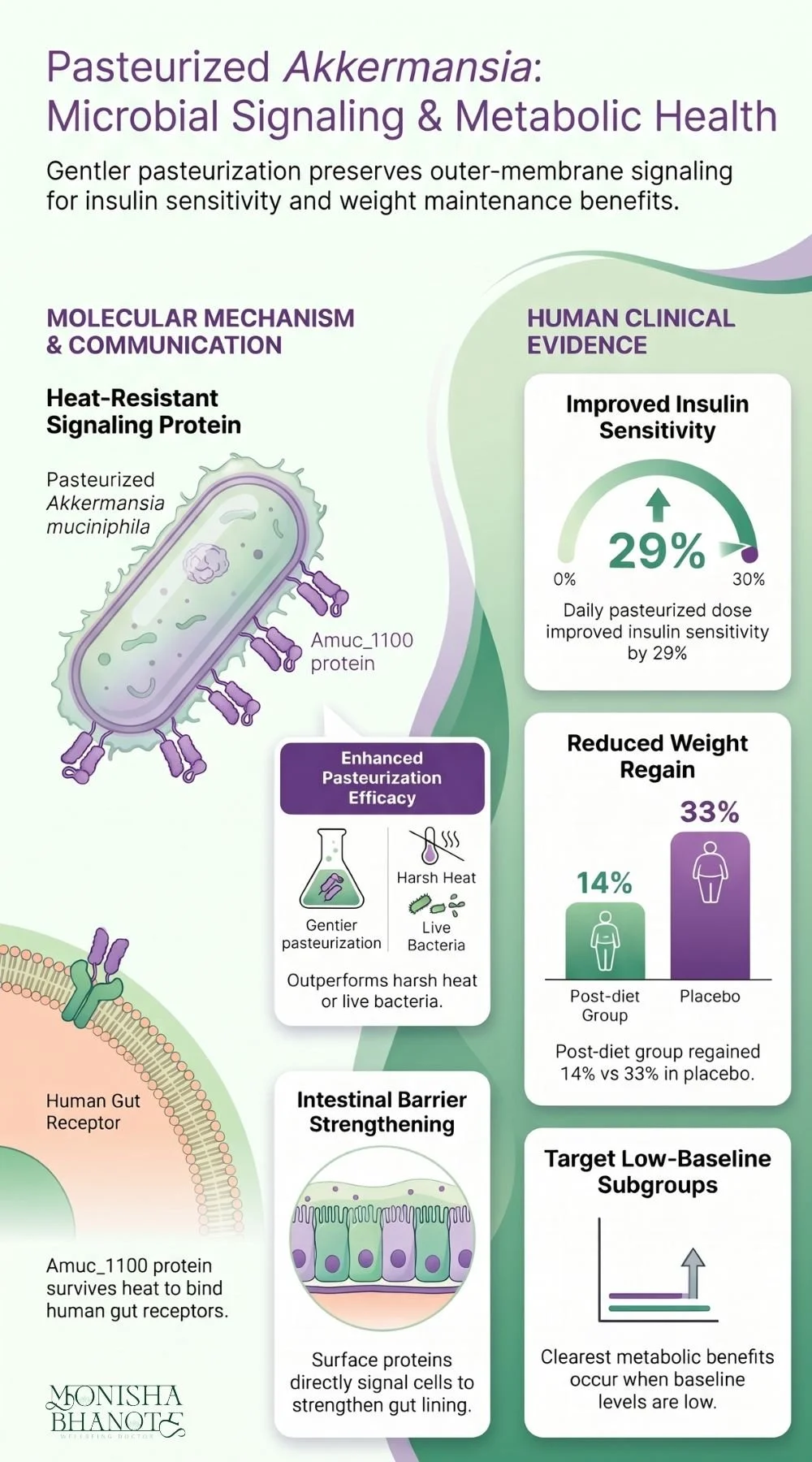
Then the story took an unexpected turn. In that 2013 mouse study, bacteria killed with harsh heat did nothing. In 2017, the same research group tried a gentler process. Pasteurization inactivates the bacterium while leaving its cell intact, and in mice it made Akkermansia even more effective at reducing fat mass, insulin resistance and blood lipids.
The explanation came down to a single protein. Amuc_1100 sits on the bacterium's outer surface and binds to a receptor on our intestinal cells called Toll-like receptor 2. It survives pasteurization temperatures, and on its own it strengthened the gut barrier in mice and reproduced part of the bacterium's benefit.
Anneleen Segers, PhD, head of laboratory and medical affairs at the company that produces the pasteurized strain, described it beautifully when we spoke at the Gut Health & Longevity Summit. Akkermansia lives so close to our cells that it has evolved ways to signal to us directly, and that signal survives even when the bacterium is no longer alive. I love this idea, because it reminds us that some of the most important work in the body happens through communication, molecule to receptor, cell to cell. That is Cell Consciousness at the microbial scale.

What the Human Trials Show So Far
The first study in people
The first randomized trial in humans, published in 2019, enrolled 40 adults with overweight or obesity and insulin resistance, and 32 completed it. Over three months, a daily dose of pasteurized Akkermansia improved insulin sensitivity by about 29 percent compared with placebo and lowered both insulin and total cholesterol. Body weight dipped by an average of a little over two kilograms compared with placebo, a trend that fell short of statistical significance. The live form did not significantly improve insulin sensitivity.
Keeping the weight off
The trial Daniel would care about most was published this spring in Nature Medicine. Researchers in the Netherlands enrolled 90 adults with overweight or obesity, average age 53, nearly half of them women. Everyone first followed an eight-week low-energy diet. Those who lost at least 8 percent of their body weight then spent 24 weeks eating a healthy diet freely, with a daily capsule of either pasteurized Akkermansia or placebo.
The placebo group regained about a third of the weight they had lost. The Akkermansia group regained about 14 percent, an average of 1.2 kilograms compared with 3.2. Participants who began the study with low Akkermansia levels saw the greatest cardiometabolic benefit.
A more mixed result
A second trial, published in Gut Microbes this year, followed 143 adults with metabolic syndrome for 16 weeks. Across the whole group, it did not meet its main goal of improving insulin sensitivity. When researchers looked afterward at participants who started with low Akkermansia, they saw improvements in insulin sensitivity, body weight, abdominal fat and the GLP-1 response to a glucose drink. Findings from an after-the-fact analysis like this one show the next trial where to look.
Read together, these studies suggest pasteurized Akkermansia may matter most for people whose own levels are low, and that the months after weight loss are where it has shown its clearest benefit. Most of this research was led by the scientists who discovered the bacterium and later founded the company that makes the pasteurized form. Independent replication is the next chapter, and I look forward to reading it.
On safety, the European Food Safety Authority reviewed pasteurized Akkermansia in 2021 and concluded it is safe for adults at up to 34 billion cells a day. That assessment did not cover pregnant or breastfeeding women.
The GLP-1 Question
GLP-1 is a hormone made by specialized L-cells in your intestinal lining. It slows digestion, signals fullness and helps your pancreas release insulin. The medications dominating today's headlines work by mimicking it.
Dr. Felice Gersh, an integrative OB-GYN who joined the same conversation, sees the link between Akkermansia and our own GLP-1 as one of the most hopeful threads in this field, particularly for women whose hormonal shifts make weight harder to hold. The early science is intriguing. In mice, researchers in Korea found that live Akkermansia secretes a protein called P9 that stimulates GLP-1 release and improves glucose tolerance. Because P9 is released by living cells, whether pasteurized Akkermansia delivers it remains an open question. In people, the GLP-1 signal so far comes from that subgroup with low starting levels.
If you are taking or tapering a GLP-1 medication, know that no study has yet tested Akkermansia after these drugs. The weight-maintenance trial involved weight lost through diet. Whether the same benefit carries over is a question researchers are now asking, and a good one to bring to your physician.
Midlife, Hormones and Your Microbiome
Hormones shape the gut, and the gut helps shape hormones. In a study of more than 1,300 Hispanic and Latina women, the postmenopausal microbiome was less diverse and slightly more similar to men's than the premenopausal microbiome was. Those shifts tracked with less favorable cardiometabolic markers, and researchers suspect the decline in estrogen and progesterone plays a role.
Polycystic ovary syndrome shows a related pattern. A small study from Shanghai found less Akkermansia in women with PCOS, and its levels moved in the opposite direction from body weight and sex hormones such as testosterone.
These are associations, and no trial has yet tested Akkermansia supplementation specifically in menopause or PCOS. What they do tell us is that midlife is a season when the gut lining deserves extra care.

What You Can Do Today
Start with the ecosystem your Akkermansia lives in.
Feed your gut lining with fiber variety
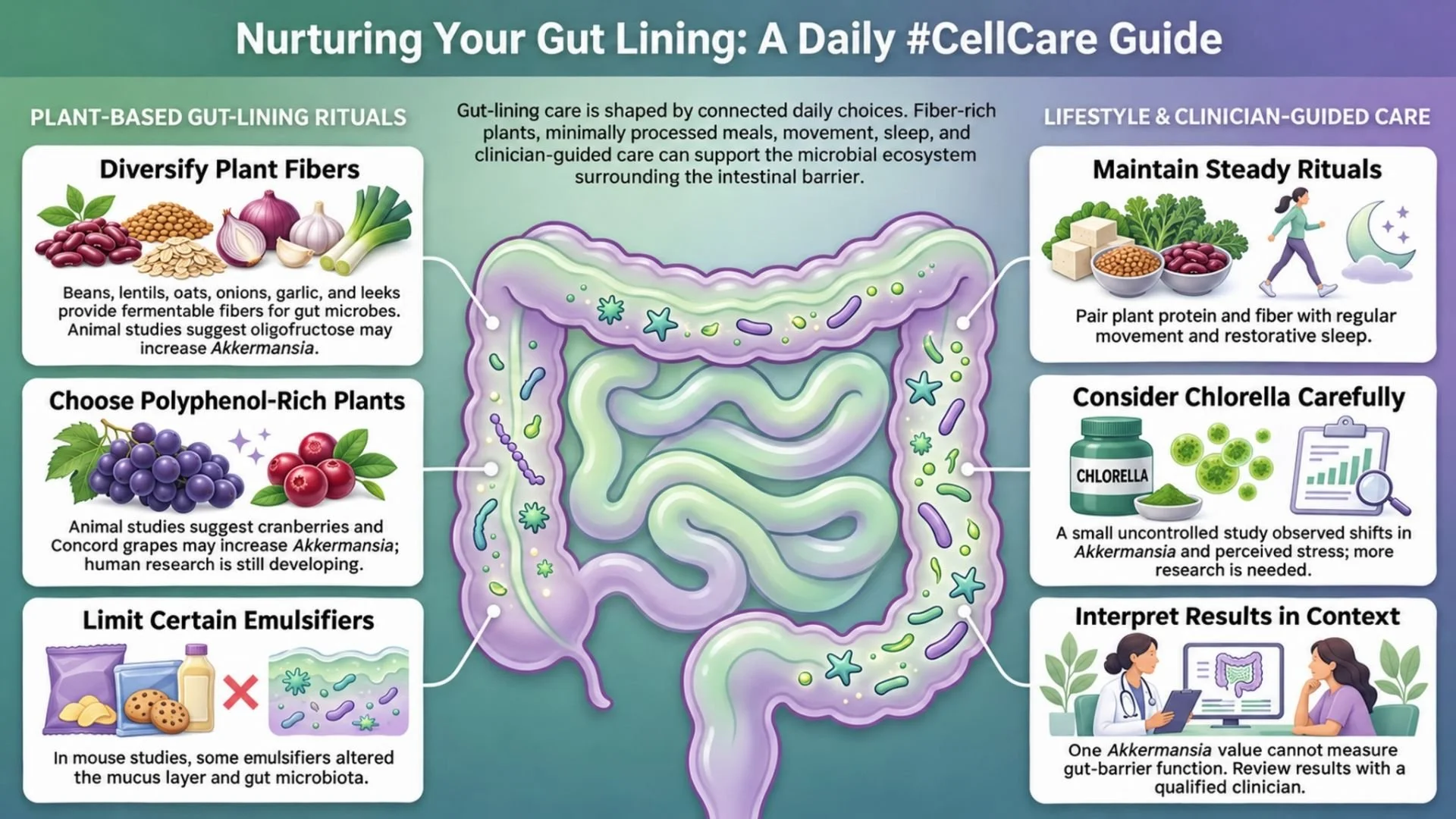
Fermentable fibers from beans, lentils, onions, leeks, garlic and oats feed the microbes that keep your gut lining well supplied. In mice, oligofructose, the type of fiber found in onions, garlic and leeks, restored Akkermansia levels on a high-fat diet. This week, add one new plant to your plate each day.
Bring color to the table
Polyphenol-rich cranberries and Concord grapes have produced dramatic increases in Akkermansia in mice. Human studies are still catching up, so I treat these foods as one more reason to eat what already belongs on a #CellCare plate. This Thanksgiving, try whole cranberries simmered with orange zest and a touch of maple in place of the canned version.
Protect the barrier from what wears it down
Some common food additives, especially emulsifiers, thinned the mucus layer and disturbed gut bacteria in mouse studies. I explored this in detail in my article on ultra-processed foods and the gut microbiome. Cooking from whole ingredients most of the time is one of the kindest things you can do for your gut lining.
Hold your gains with steady habits
If you have lost weight, the months that follow are when support matters most. Build protein and fiber into every meal, keep strength training two or three times a week to protect muscle, take a walk after dinner and guard your sleep. These habits are simple, and they work together.
Read microbiome results in context
If you have had your gut microbiome tested, your Akkermansia level is one useful data point, and the early trials suggest people with low levels may respond most to supplementation. A single number cannot tell you how your mucus layer, barrier and inflammation are actually doing, so interpret it with a clinician who looks at the whole picture.
Check with your physician before adding a supplement
This matters most if you are pregnant, trying to conceive, breastfeeding, managing a chronic condition or taking medication.
A Daily Ritual for Your Gut Lining

Thanksgiving week is also one of the busiest travel weeks of the year, and holiday travel is a true stress test for the gut. Sleep shifts, meals change, we sit for hours, and cortisol hums along in the background. That is exactly when a steady daily ritual earns its place.
One of the plants I chose for Travela Essentials is chlorella, a freshwater green alga. In a small study from Brazil, ten adults with type 2 diabetes took 3 grams of chlorella daily for 30 days. Afterward, the proportion of Akkermansia in their gut microbiota had risen along with several other beneficial groups, and their perceived stress scores had fallen. The study had no placebo group, so it is an early signal. I first wrote about it in my summer gut article, and I return to it here because it fits the larger picture: the plants we take in can shift the community that tends our gut lining.
In the formula, chlorella works alongside botanicals such as ginger, turmeric, holy basil and schisandra, plants with long traditions of supporting digestion and stress resilience. Travela Essentials is a longevity formula, and travel is simply where its value becomes easiest to see. The most meaningful changes are often what you stop noticing: less digestive disruption after a long flight, less of that heavy, inflamed feeling after a holiday weekend, and greater resilience over time. Think of it as a daily ritual that travels with you.
#CellCare Reflection
Back at the Thanksgiving table, Daniel's real question is how to make the work he has already done last. Part of the answer lives in a layer of mucus he will never see, tended by a microbe that has been part of the human gut all along.
You do not need to see Akkermansia to care for it. Every plate rich in fiber and color, every home-cooked meal and every night of real sleep sends a message to the cells lining your gut. They are listening, and they respond.
Choose one small act of #CellCare today. Stir a handful of lentils into tomorrow's leftovers, or take a slow walk after the meal. Your gut lining is renewing itself right now, and your choices help decide what it renews with.




MAKE A DIFFERENCE BY SHARING THIS ARTICLE WITH OTHERS TO ENCOURAGE WELLBEING ⤵
References:
Anhê, Fernando F., Denis Roy, Geneviève Pilon, et al. "A Polyphenol-Rich Cranberry Extract Protects from Diet-Induced Obesity, Insulin Resistance and Intestinal Inflammation in Association with Increased Akkermansia spp. Population in the Gut Microbiota of Mice." Gut 64, no. 6 (2015): 872–83.
Chassaing, Benoit, Omry Koren, Julia K. Goodrich, et al. "Dietary Emulsifiers Impact the Mouse Gut Microbiota Promoting Colitis and Metabolic Syndrome." Nature 519, no. 7541 (2015): 92–96.
Dao, Maria Carlota, Amandine Everard, Judith Aron-Wisnewsky, et al. "Akkermansia muciniphila and Improved Metabolic Health during a Dietary Intervention in Obesity: Relationship with Gut Microbiome Richness and Ecology." Gut 65, no. 3 (2016): 426–36.
Depommier, Clara, Amandine Everard, Céline Druart, et al. "Supplementation with Akkermansia muciniphila in Overweight and Obese Human Volunteers: A Proof-of-Concept Exploratory Study." Nature Medicine 25, no. 7 (2019): 1096–1103.
Derrien, Muriel, Elaine E. Vaughan, Caroline M. Plugge, and Willem M. de Vos. "Akkermansia muciniphila gen. nov., sp. nov., a Human Intestinal Mucin-Degrading Bacterium." International Journal of Systematic and Evolutionary Microbiology 54, no. 5 (2004): 1469–76.
EFSA Panel on Nutrition, Novel Foods and Food Allergens (NDA), Dominique Turck, Torsten Bohn, et al. "Safety of Pasteurised Akkermansia muciniphila as a Novel Food Pursuant to Regulation (EU) 2015/2283." EFSA Journal 19, no. 9 (2021): e06780.
Everard, Amandine, Clara Belzer, Lucie Geurts, et al. "Cross-Talk between Akkermansia muciniphila and Intestinal Epithelium Controls Diet-Induced Obesity." Proceedings of the National Academy of Sciences 110, no. 22 (2013): 9066–71.
Liu, Rui, Chenhong Zhang, Yu Shi, et al. "Dysbiosis of Gut Microbiota Associated with Clinical Parameters in Polycystic Ovary Syndrome." Frontiers in Microbiology 8 (2017): 324. https://doi.org/10.3389/fmicb.2017.00324.
Martins, Fernanda, Tamara C. Lopes de Castro, Andrey Santos, et al. "Chlorella Modulation of Gut Microbiota Dysbiosis in Patients with Type-2 Diabetes." Fundamental Toxicological Sciences 10, no. 2 (2023): 45–58.
Mount, S., et al. "Pasteurized Akkermansia muciniphila MucT for Weight Loss Maintenance in People with Overweight and Obesity: A Controlled Randomized Trial." Nature Medicine 32 (2026): 2107–16.
Peters, Brandilyn A., Juan Lin, Qibin Qi, et al. "Menopause Is Associated with an Altered Gut Microbiome and Estrobolome, with Implications for Adverse Cardiometabolic Risk in the Hispanic Community Health Study/Study of Latinos." mSystems 7, no. 3 (2022): e00273-22.
Plovier, Hubert, Amandine Everard, Céline Druart, et al. "A Purified Membrane Protein from Akkermansia muciniphila or the Pasteurized Bacterium Improves Metabolism in Obese and Diabetic Mice." Nature Medicine 23, no. 1 (2017): 107–13.
Roopchand, Diana E., Rachel N. Carmody, Peter Kuhn, et al. "Dietary Polyphenols Promote Growth of the Gut Bacterium Akkermansia muciniphila and Attenuate High-Fat Diet–Induced Metabolic Syndrome." Diabetes 64, no. 8 (2015): 2847–58.
Suenaert, Peter, Anneleen Segers, L. Rymenans, et al. "Effect of Pasteurized Akkermansia muciniphila MucT on Insulin Sensitivity, Body Composition, and GLP-1 Production in Subjects with Metabolic Syndrome: Impact of Low Baseline Gut Akkermansia Levels." Gut Microbes 18, no. 1 (2026): 2690689.
Yoon, Hyo Shin, Chung Hwan Cho, Myeong Sik Yun, et al. "Akkermansia muciniphila Secretes a Glucagon-Like Peptide-1-Inducing Protein That Improves Glucose Homeostasis and Ameliorates Metabolic Disease in Mice." Nature Microbiology 6, no. 5 (2021): 563–73. Citation Verification Notes.
The information on this website has not been evaluated by the Food & Drug Administration or any other medical body. We do not aim to diagnose, treat, cure or prevent any illness or disease. Information is shared for educational purposes only. You must consult your doctor before acting on any content on this website, especially if you are pregnant, nursing, taking medication, or have a medical condition. Our content may include products that have been independently chosen and recommended by Dr. Monisha Bhanote and our editors. We may earn a small commission if you purchase something mentioned in this article.
YOU MAY ALSO LIKE:



by Dr. Monisha Bhanote
✅ EVIDENCE-INFORMED REVIEWED ARTICLE