
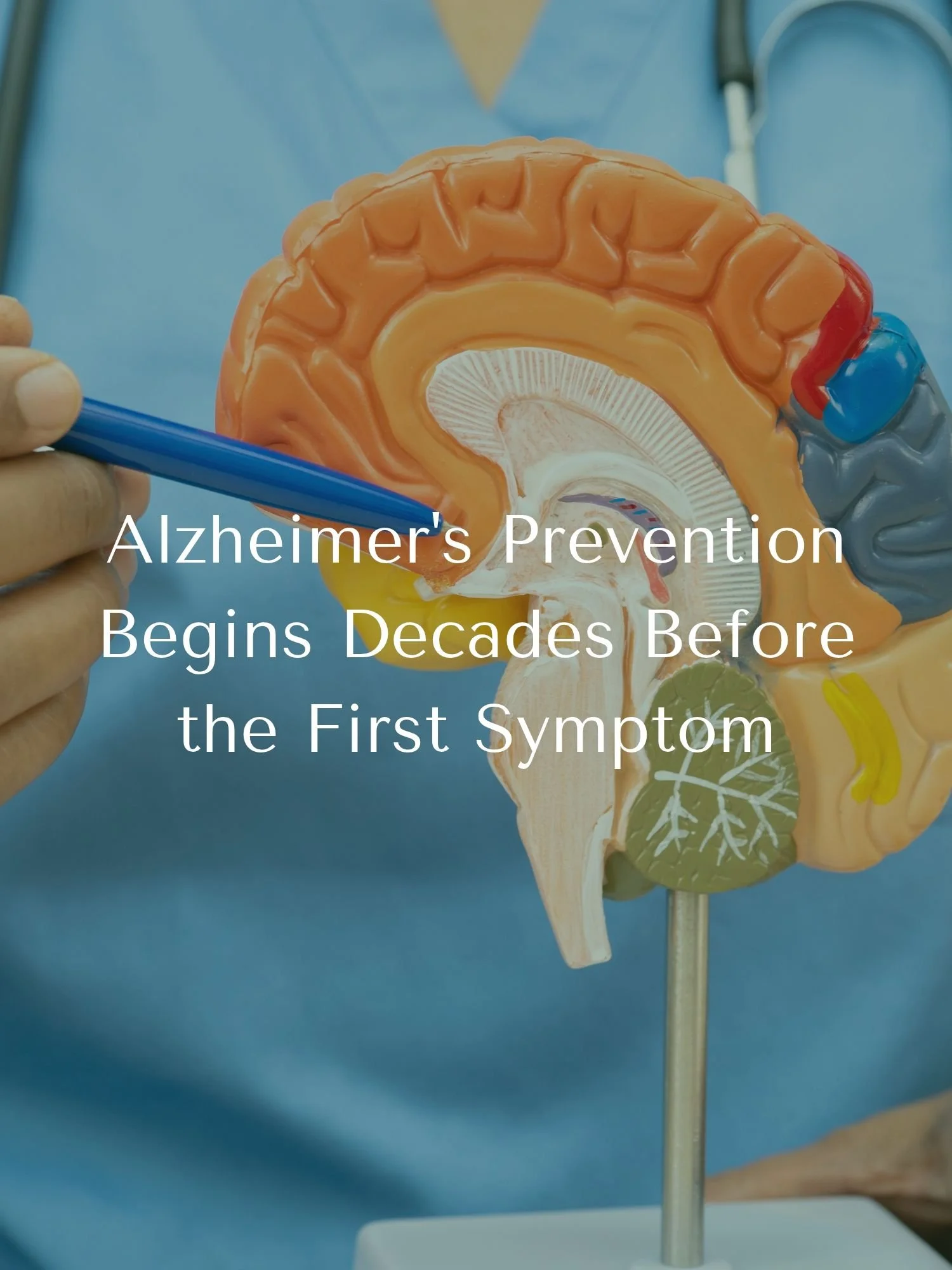
Alzheimer's Prevention Begins Decades Before the First Symptom

“Brain health is shaped long before memory changes appear. Daily choices can help protect cognitive resilience for the years ahead.”
Claire is 54, and the word that slipped away was "calendar." She was standing in her kitchen on a Tuesday morning, phone in one hand, coffee cooling in the other, telling her husband she needed to check the... the... thing on the wall. She pointed at it. He said the word for her, gently, and went back to his eggs.
It took three seconds to recover. She thought about it for three days.
Claire's mother was diagnosed with Alzheimer's at 79. Claire remembers the early years more clearly than the diagnosis: misplaced keys that became misplaced afternoons, a drive to the pharmacy that suddenly needed directions. So when she walks into the pantry and forgets why, a quiet question follows her around. Is this starting for me too?
Her friends say it's menopause. Her doctor says everyone forgets words. Both may be right. What nobody has told Claire is that the brain she will have at 75 is being shaped now, by the habits of her fifties, and much of it is within her reach.
I hear some version of Claire's question almost every week. It was also at the center of a conversation on brain health I hosted at the Gut Health & Longevity Summit, one that left me more hopeful about Alzheimer's than I have felt in years. Here is what the science shows, and what you can begin this week.

Alzheimer's Starts Long Before the First Forgotten Word
For most families, an Alzheimer's diagnosis feels sudden. Biologically, it rarely is.
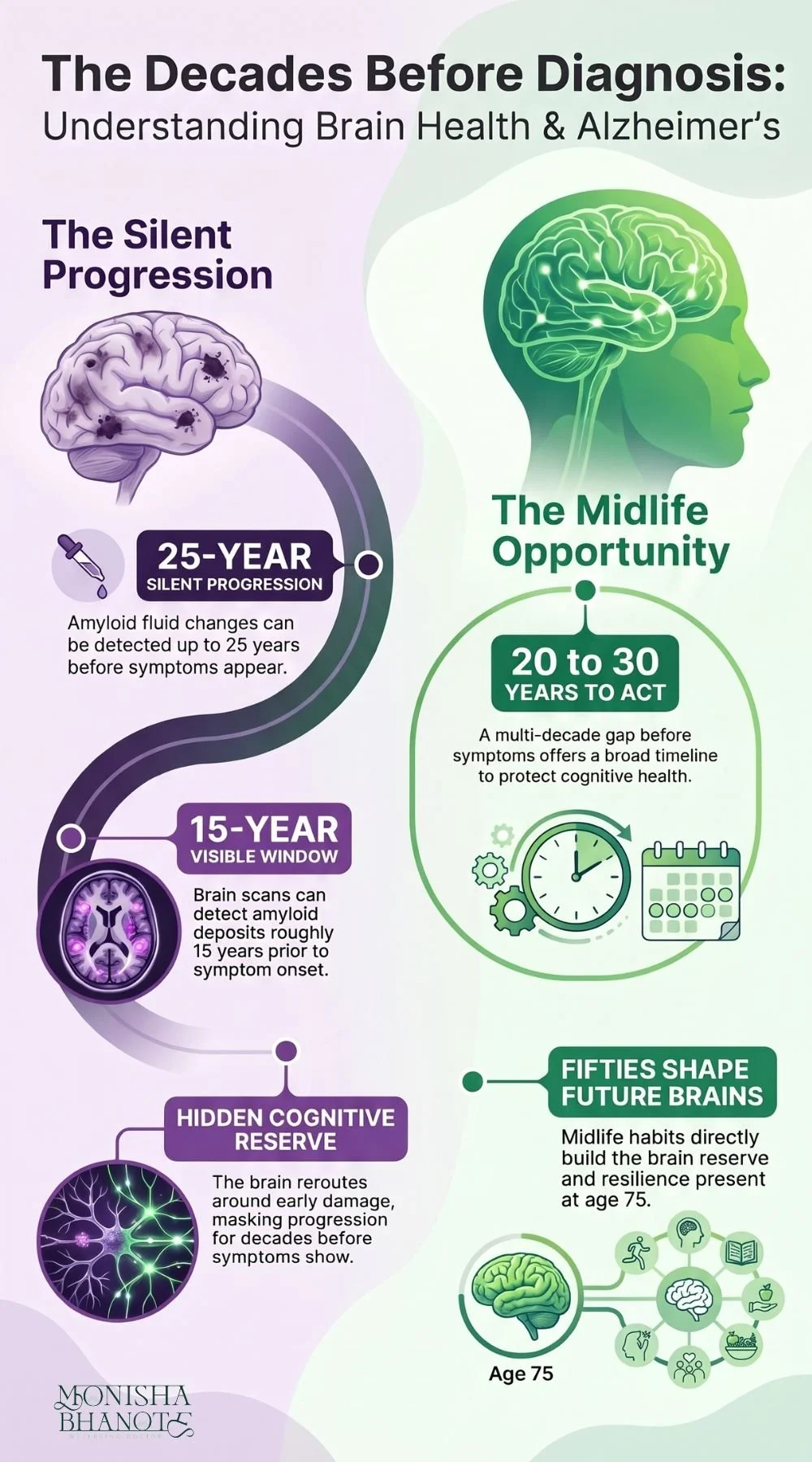
When researchers studied families who carry rare genes that cause early-onset Alzheimer's, they could detect changes in amyloid in the spinal fluid roughly 25 years before symptoms were expected, with amyloid deposits visible on brain scans about 15 years before onset. These families are unusual, but a large analysis of more than 7,500 people without dementia pointed in the same direction, estimating a 20- to 30-year gap between the first appearance of amyloid in the brain and the onset of dementia.
A healthy brain has enormous reserve. It reroutes around trouble the way traffic finds side streets around a closed road. That reserve is a gift, and it is also why damage can build quietly for years before anyone notices a forgotten word.
If Alzheimer's takes two or three decades to develop, there are two or three decades in which to change its course. For a woman in her fifties, that window is open right now.
Amyloid, Reconsidered
For decades, Alzheimer's has been told as a one-villain story: a sticky protein called amyloid-beta builds up between neurons, and memory fails. Amyloid matters, but the story has grown more complicated.
A Protein With a Protective Job
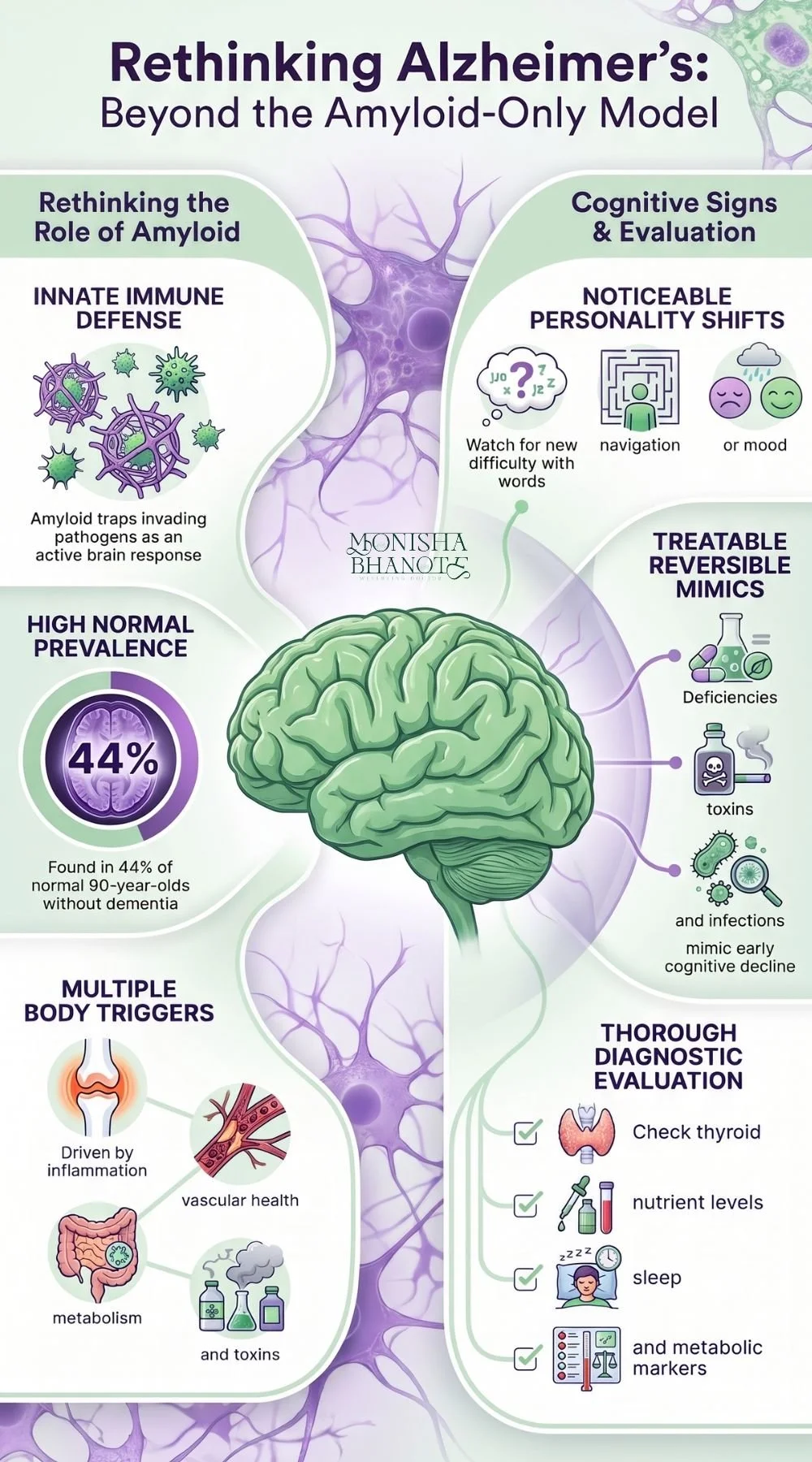
Researchers at Massachusetts General Hospital found that amyloid-beta behaves like an antimicrobial peptide, part of the body's innate immune defense. In mice and worms, it trapped invading bacteria and yeast. This was animal and cell research, far from the final word in humans, but it raises the possibility that the brain makes amyloid in response to a threat, as a defense that can tip into damage over time.
That idea fits a well-established observation. Many people carry significant amyloid without ever developing dementia. In that same large analysis, amyloid was present in roughly 10 percent of cognitively normal people at age 50 and about 44 percent by age 90.
Why One Pill Was Never Likely to Be Enough
If amyloid is partly a response, the useful question becomes: a response to what? Chronic inflammation. Blood vessel health and blood pressure. Blood sugar and metabolism. The energy output of your mitochondria. Infections. Environmental exposures, including heavy metals. Each can strain the brain, and they rarely travel alone.
That is why I think of Alzheimer's as a whole-body problem that shows up in the brain, and why the most promising research changes several things at once.
Brain Fog or Something More?
Most forgetfulness is ordinary. If you have lost your keys since college, that is a personality trait.
What deserves attention is change. New trouble finding familiar words. Getting turned around on a route you have driven for years. Losing the plot of a show you once followed easily. New anxiety, low mood, or loss of interest in things you love. None of these alone means Alzheimer's. Together, and especially as a shift from your usual self, they are worth a careful evaluation.
Careful is the important word, because many things can mimic early cognitive decline. Some time ago, a woman who had traveled with me on retreat came to see me frightened. Another doctor had raised the possibility of Alzheimer's. I had watched her sharp mind at work for a week, and something didn't fit. Underneath, we found metabolic strain, nutritional deficiencies, a heavy toxin burden, and an intestinal parasite. Every one of those is something we can work on.
Her story is a reason to insist on a thorough look: thyroid function, B12 and other nutrient levels, blood sugar, inflammation markers, medication side effects, hearing, mood, and sleep, alongside a proper cognitive assessment.
What Your Genes Do and Don't Decide
If a parent had Alzheimer's, you have probably heard of APOE4. Carrying one copy of this gene variant raises your risk, and carrying two raises it further. It also appears to shift the timeline: in the large amyloid analysis, carriers developed amyloid at younger ages than non-carriers.
Still, APOE4 tilts the odds without settling them. Plenty of carriers never develop Alzheimer's, and many people with Alzheimer's carry no copies at all.
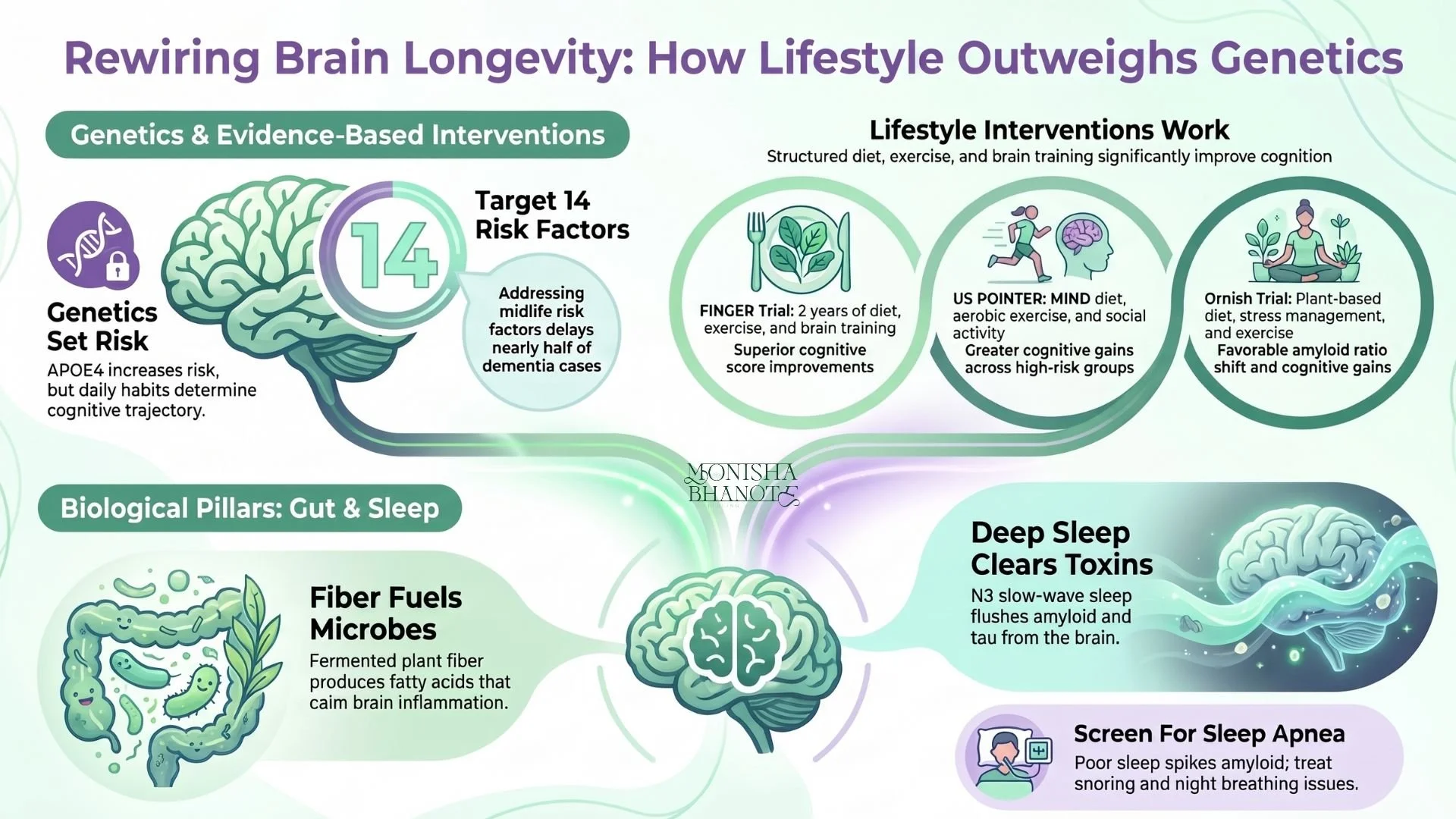
The most encouraging news for families like Claire's comes from the US POINTER trial, published in JAMA in 2025. More than 2,100 older adults at higher risk spent two years in a lifestyle program, and the added benefit of the more structured version held for APOE4 carriers just as it did for non-carriers. Your genes describe your starting point. Your daily choices still shape the path.

The Risk Factors Within Reach
In 2024, the Lancet Commission on dementia, an international panel of experts, identified 14 modifiable risk factors across the lifespan and estimated that addressing all of them could, in theory, prevent or delay nearly half of dementia cases worldwide. That figure assumes each factor is fully causal, but the direction is clear.
Many items on the list are things a woman in her fifties can act on now:
Hearing loss and untreated vision loss
High blood pressure and high LDL cholesterol
Diabetes, excess weight, and physical inactivity
Smoking and heavy drinking
Depression and social isolation
Head injury and air pollution
Hearing loss surprises people most. The strain of decoding sound, and the way it quietly pulls people out of conversation, both appear to take a toll. If you have been putting off a hearing test, book it.
Environmental exposures belong here too. In Florida, I regularly see high mercury in patients who eat a lot of fish and shrimp, often because they assume local seafood is automatically the healthiest choice. More than once, the Florida Department of Health has called my office to ask why a patient's mercury level was so high. Heavy metals are toxic to the nervous system, and mercury is one more reason I lean toward a plant-forward plate.
What the Lifestyle Trials Actually Show
For years, the link between lifestyle and dementia rested on observational studies. Now we have randomized trials.
The Finnish FINGER trial assigned 1,260 adults aged 60 to 77 at higher dementia risk to either two years of diet guidance, exercise, cognitive training, and vascular risk monitoring, or general health advice. Cognitive scores improved more in the intervention group.
US POINTER brought that model to a larger and more diverse American population. Its 2,111 participants, aged 60 to 79, were sedentary and ate a less-than-ideal diet. Both lifestyle programs improved overall cognition over two years, and the structured version, with regular aerobic and strength exercise, the MIND diet, brain training, social engagement, and health monitoring, produced greater gains.
Then there is the study that speaks most directly to people already noticing changes. In a small randomized trial led by Dr. Dean Ornish, 51 adults with mild cognitive impairment or early Alzheimer's followed an intensive program for 20 weeks: a whole-food, minimally processed plant-based diet, daily exercise, stress management, and group support. Compared with a usual-care group, they improved on several standard measures of cognition and function. Their blood amyloid ratio moved in a favorable direction, their gut microbiome shifted toward organisms linked to lower risk, and the more they changed, the more they improved. The trial was small and short, and the authors call for larger studies, but the direction is striking.
None of these studies offers a cure. They show that a brain's trajectory responds to ordinary daily choices, in midlife and beyond.
The Gut-Brain Connection to Memory
When you eat fiber from plants, your gut microbes ferment it into short-chain fatty acids: acetate, propionate, and butyrate. These small molecules help maintain the gut lining, temper inflammation, and send signals to the brain through the bloodstream, the immune system, and the vagus nerve. Much of the mechanistic detail still comes from animal studies, but the outline is consistent: a well-fed microbiome supports a calmer immune system, and the brain benefits.
I've written more about the gut-brain axis elsewhere in this series.
In practice, I ask patients for two things. First, fiber from a wide variety of plants: vegetables, legumes, whole grains, nuts, seeds, and fruit. Second, a probiotic-rich food with each meal, three servings a day as a starting point. Unsweetened yogurt or kefir, sauerkraut, kimchi, miso, tempeh. The sugary yogurt in most refrigerators doesn't count. Start with one you enjoy.
Sleep: Where Brain Longevity Begins
If I could ask Claire to change only one thing this month, I would ask her to protect her deep sleep.
Deep sleep, the slow-wave stage known as N3, appears to be when the brain does much of its housekeeping. In a landmark 2013 study in mice, the space between brain cells expanded by about 60 percent during sleep, allowing cerebrospinal fluid to wash through and clear amyloid faster than during waking hours. That was animal research, and the human picture is still being worked out.
Human studies point the same way. When researchers deliberately disrupted slow-wave sleep in healthy adults aged 35 to 65 for a single night, their spinal fluid amyloid rose the next morning, and people who had slept poorly over the preceding week showed higher levels of tau, the protein that forms tangles inside neurons. In older adults who were mostly cognitively normal, less slow-wave activity went hand in hand with more tau in the brain. The relationship likely runs in both directions: poor sleep may feed Alzheimer's changes, and those changes disrupt sleep.
Most of us can't tell how much deep sleep we get, and a partner can only report snoring. If you snore, wake unrefreshed, or have been told you stop breathing at night, ask your doctor about a formal sleep study. Sleep apnea becomes more common in women after menopause, and it is treatable.

What You Can Do Today
You don't need to overhaul your life by Friday. Choose one or two of these and let them become rituals.
Guard Your Deep Sleep
Keep a consistent bedtime and wake time, weekends included. Dim the lights an hour before bed and keep screens out of the bedroom. Go easy on alcohol, which fragments sleep. Give your nervous system a cue to downshift with a warm shower, slow breathing, or a few pages of a paper book. If anything in the section above sounds familiar, schedule a sleep evaluation.
Build a Plant-Forward Plate
Make plants the center of every meal, and add a probiotic-rich food to each one. Reach often for leafy greens, berries, beans, and walnuts, the foods at the heart of the MIND diet used in POINTER. If you eat seafood, favor smaller, lower-mercury fish and keep large predatory fish occasional.
Move Every Day
In a year-long trial in older adults, aerobic exercise increased the size of the hippocampus, the brain's memory hub, by about 2 percent, while it shrank in a stretching-only group. Those gains tracked with higher levels of BDNF, a protein that supports the growth of new neural connections. A brisk daily walk counts. Add strength work twice weekly.
Stay Connected
Social isolation is one of the Lancet Commission's risk factors. Put standing dates on your calendar: a weekly walk with a friend, a class, a volunteer shift. Connection also means people close enough to notice if something changes.
Know Your Numbers
Check your blood pressure, LDL cholesterol, and blood sugar, and treat them if they are high. Have your hearing and vision tested. These appointments are unglamorous and deeply protective.
Consider Omega-3s
The brain is rich in omega-3 fats. If you eat plant-based, an algae-based omega-3 supplement provides DHA and EPA without relying on fish. Ask your doctor whether checking your omega-3 level makes sense for you.

A Daily Ritual for Cognitive Resilience
Bacopa monnieri, known in Ayurveda as Brahmi, has been used for centuries to support memory and focus. A meta-analysis of placebo-controlled trials lasting 12 weeks or longer found that standardized Bacopa extract improved speed of attention, and a separate systematic review found its most consistent benefit in free recall, the ability to retrieve information without prompts. The effects are modest, build over weeks, and no study has shown that Bacopa prevents dementia. I value it as daily support for focus and recall.
That is why Bacopa is part of Travela Essentials, the physician-formulated daily ritual I created to support cellular resilience, alongside ingredients chosen for mitochondrial energy and a steadier stress response. I designed it to travel with you, because travel is where strain on sleep and focus shows up fastest. The most meaningful changes are often what you stop noticing: less afternoon brain fog, less mental fatigue at the end of a long day, steadier focus on the days that ask the most of you.
#CellCare Reflection
Claire's mother didn't have the information Claire has now. For her generation, Alzheimer's arrived like a door closing.
Claire's story can unfold differently. Every night of deep sleep, every plate built around plants, every walk with a friend sends a message to the billions of cells that make up her brain. This is what I mean by Cell Consciousness. Your cells respond to how you live, and they keep responding at 54, at 64, and well beyond.
Alzheimer's is a puzzle you can start solving now. You don't have to solve all of it tonight. Choose one piece. Go to bed half an hour earlier. Add a forkful of sauerkraut to dinner. Call the friend you've been meaning to call.
For more on this work, join my #CellCare Newsletter, where I share the research and rituals I use in my practice.



MAKE A DIFFERENCE BY SHARING THIS ARTICLE WITH OTHERS TO ENCOURAGE WELLBEING ⤵
References:
Baker, Laura D., Mark A. Espeland, Rachel A. Whitmer, et al. "Structured vs Self-Guided Multidomain Lifestyle Interventions for Global Cognitive Function: The US POINTER Randomized Clinical Trial." JAMA, published online July 28, 2025.
Bateman, Randall J., Chengjie Xiong, Tammie L. S. Benzinger, et al. "Clinical and Biomarker Changes in Dominantly Inherited Alzheimer's Disease." New England Journal of Medicine 367, no. 9 (2012).
Erickson, Kirk I., Michelle W. Voss, Ruchika Shaurya Prakash, et al. "Exercise Training Increases Size of Hippocampus and Improves Memory." Proceedings of the National Academy of Sciences 108, no. 7 (2011).
Jansen, Willemijn J., Rik Ossenkoppele, Dirk L. Knol, et al. "Prevalence of Cerebral Amyloid Pathology in Persons Without Dementia: A Meta-analysis." JAMA 313, no. 19 (2015).
Ju, Yo-El S., Sharon J. Ooms, Courtney Sutphen, et al. "Slow Wave Sleep Disruption Increases Cerebrospinal Fluid Amyloid-β Levels." Brain 140, no. 8 (2017).
Kongkeaw, Chuenjid, Piyameth Dilokthornsakul, Phurit Thanarangsarit, Nanteetip Limpeanchob, and C. Norman Scholfield. "Meta-analysis of Randomized Controlled Trials on Cognitive Effects of Bacopa monnieri Extract." Journal of Ethnopharmacology 151, no. 1 (2014).
Kumar, Deepak Kumar Vijaya, Se Hoon Choi, Kevin J. Washicosky, et al. "Amyloid-β Peptide Protects against Microbial Infection in Mouse and Worm Models of Alzheimer's Disease." Science Translational Medicine 8, no. 340 (2016).
Livingston, Gill, Jonathan Huntley, Kathy Y. Liu, et al. "Dementia Prevention, Intervention, and Care: 2024 Report of the Lancet Standing Commission." The Lancet 404, no. 10452 (2024): 572–628.
Lucey, Brendan P., Austin McCullough, Eric C. Landsness, et al. "Reduced Non-Rapid Eye Movement Sleep Is Associated with Tau Pathology in Early Alzheimer's Disease." Science Translational Medicine 11, no. 474 (2019).
Ngandu, Tiia, Jenni Lehtisalo, Alina Solomon, et al. "A 2 Year Multidomain Intervention of Diet, Exercise, Cognitive Training, and Vascular Risk Monitoring versus Control to Prevent Cognitive Decline in At-Risk Elderly People (FINGER): A Randomised Controlled Trial." The Lancet 385, no. 9984 (2015).
Ornish, Dean, Catherine Madison, Miia Kivipelto, et al. "Effects of Intensive Lifestyle Changes on the Progression of Mild Cognitive Impairment or Early Dementia Due to Alzheimer's Disease: A Randomized, Controlled Clinical Trial." Alzheimer's Research & Therapy 16 (2024).
Pase, Matthew P., James Kean, Jerome Sarris, Chris Neale, Andrew B. Scholey, and Con Stough. "The Cognitive-Enhancing Effects of Bacopa monnieri: A Systematic Review of Randomized, Controlled Human Clinical Trials." Journal of Alternative and Complementary Medicine 18, no. 7 (2012).
Silva, Ygor Parladore, Andressa Bernardi, and Rudimar Luiz Frozza. "The Role of Short-Chain Fatty Acids From Gut Microbiota in Gut-Brain Communication." Frontiers in Endocrinology 11 (2020).
Xie, Lulu, Hongyi Kang, Qiwu Xu, et al. "Sleep Drives Metabolite Clearance from the Adult Brain." Science 342, no. 6156 (2013).
The information on this website has not been evaluated by the Food & Drug Administration or any other medical body. We do not aim to diagnose, treat, cure or prevent any illness or disease. Information is shared for educational purposes only. You must consult your doctor before acting on any content on this website, especially if you are pregnant, nursing, taking medication, or have a medical condition. Our content may include products that have been independently chosen and recommended by Dr. Monisha Bhanote and our editors. We may earn a small commission if you purchase something mentioned in this article.
YOU MAY ALSO LIKE:


by Dr. Monisha Bhanote
✅ EVIDENCE-INFORMED REVIEWED ARTICLE