The GLP-1: Your Gut Already Makes, and the Foods That Turn It Up

“Fiber-rich plants support your natural GLP-1 response and steadier blood sugar over time.”
Claire found out on a Tuesday, in the patient portal, before her doctor called. Hemoglobin A1C: 6.2. A small flag beside the number. Prediabetes.
She is 52, she walks most mornings, and she thought she ate well: grilled chicken over greens with olive oil at lunch, Greek yogurt and granola at her desk, a few slices of aged cheddar with crackers at night because that felt reasonable. When the doctor called back, one word came up before she had even hung up. Semaglutide.
That evening she sat at her kitchen counter and searched "GLP-1," the way millions of people have this year. She found plenty about injections, monthly costs, and side effects. She did not find the thing I most wanted her to know.
Your gut already makes GLP-1. It has made it after every meal of your life. And what you put on your plate has a real say in how much of it you get.

What Insulin Resistance Actually Means
Insulin works like a key. Your pancreas releases it after a meal, it travels through your blood, and it fits into receptors on your muscle and liver cells. The lock turns, the door opens, and glucose moves out of the bloodstream and into the cell, where it becomes fuel.
In type 1 diabetes, the pancreas has lost the cells that make the key. In type 2 diabetes, and in the prediabetes Claire was just handed, the key is still being made, often in large amounts. The lock is the problem. Insulin arrives and attaches, but the door stays stuck. Glucose lingers in the blood, the pancreas works harder, and over years that strain shows up as a rising A1C.
That stuck lock is insulin resistance. The most important word in that description is "years," because something that builds slowly through daily choices can also move in the other direction through daily choices.
Many women first hear the term in perimenopause and menopause, when the same meals start behaving differently in their bodies. Those hormonal shifts are real (I wrote about how your gut shapes estrogen through midlife), and the cells still respond to food. In a 12-week randomized trial of 84 postmenopausal women, a low-fat vegan diet with half a cup of cooked soybeans a day cut moderate-to-severe hot flashes by 88 percent, compared with 34 percent in a control group, with an average weight loss of about eight pounds.
The Fat Hiding Inside Your Cells

So what jams the lock?
In 1996, a team at Yale ran an experiment that still shapes how we understand type 2 diabetes. They infused a fat emulsion into the veins of healthy volunteers with no sign of diabetes, then measured how their muscles handled glucose. For a few hours nothing changed. By the six-hour mark, the volunteers' bodies were taking up less than half the glucose they normally would. Their pancreas was fine. The fat was interfering with insulin's signal inside the muscle cell.
That is why a diet can look "low sugar" and still drive insulin resistance.
Years later, researchers at the Physicians Committee for Responsible Medicine teamed up with the same Yale investigators to ask the reverse question: could food pull that fat back out? In a 16-week randomized trial of adults with overweight, published in JAMA Network Open, participants who switched to a low-fat, plant-based diet with no calorie limit reduced the fat inside their liver cells by about 34 percent and inside their muscle cells by about 10 percent, measured directly with magnetic resonance spectroscopy. Their insulin sensitivity rose with it.
I see the other side of this often. As a pathologist, I look at liver tissue under the microscope, and fatty change, which we call steatosis, has become a familiar sight in women who are not heavy drinkers. I see it in women who believe they eat a healthy diet, one built around animal protein, dairy, and generous pours of oil. The fat is visible in the cells long before most people feel anything at all.
Your Gut Already Makes GLP-1
GLP-1 stands for glucagon-like peptide-1. Long before it had a brand name, it was a conversation between your gut and your brain.
Your intestinal lining holds specialized cells called L cells. When food reaches them, they release GLP-1, which helps your pancreas release insulin as glucose rises, slows how quickly your stomach empties, and tells your brain you have had enough. GLP-1 medications mimic that signal at higher and longer-lasting levels. The original version belongs to you.
Fiber feeds the signal
When fiber from beans, oats, vegetables, and fruit reaches your colon, your gut bacteria ferment it into short-chain fatty acids. In laboratory and mouse studies, those short-chain fatty acids bind to receptors on L cells and trigger GLP-1 release. Mice bred without those receptors released less GLP-1 and handled glucose less well. That mechanism was mapped in animals and cell cultures, and it is one more reason it matters that most of us still fall short on fiber.
One meal can shift the response
Researchers in Prague gave 60 men, 20 of them with type 2 diabetes, two lunches on separate days, matched for calories and macronutrients. One was a processed meat and cheese burger. The other was a tofu-based plant burger. After the plant-based meal, GLP-1 rose about 30 percent more in the men with diabetes, and men in every group reported feeling fuller. A single meal in men only shows direction, and longer trials will tell us more. Still, it is a vivid picture of how quickly your gut responds to what you feed it.

What the Injections Can and Cannot Do
GLP-1 medications have changed lives, and for many people they are the right tool. You also deserve to know what happens when they stop.
In the STEP 1 trial extension, adults who had lost about 17 percent of their body weight on semaglutide stopped both the drug and the lifestyle program that came with it. One year later, they had regained roughly two-thirds of the weight they had lost, and most of their improvements in blood pressure, blood sugar, and cholesterol had drifted back toward where they started. The authors concluded that ongoing treatment appears necessary to hold the benefit.
These drugs are approved as an addition to a reduced-calorie diet and more physical activity, a part that often gets skipped. If you take a GLP-1 today, the most valuable thing you can build alongside it is the eating pattern that supports your own GLP-1. Any change to the dose, including stopping, belongs in a conversation with the physician who prescribed it, with your blood sugar monitored as you go.

Type 2 Diabetes Can Move in Both Directions
For decades, people newly diagnosed with type 2 diabetes heard some version of the same message: this is progressive, and it only goes one way.
In 2006, a randomized trial funded in part by the National Institutes of Health tested that assumption. Dr. Neal Barnard and colleagues assigned 99 adults with type 2 diabetes to either a low-fat vegan diet or the diet the American Diabetes Association recommended at the time. The vegan group had no portion limits or carbohydrate counting, and exercise stayed the same in both groups.
After 22 weeks, 43 percent of the vegan group had reduced their diabetes medications, compared with 26 percent of the ADA group. Among participants whose medications stayed the same through the study, A1C fell 1.23 points on the plant-based diet and 0.38 points on the ADA diet. The plant-based group also lost about twice as much weight.
Picture a man in his mid-thirties, a few years into his diagnosis, with an A1C well above 9. His grandparents lost their eyesight and their legs to this disease. He changes his plate, sticks with it, and works with his own doctor as his numbers fall. Within a year his medications are gone and his A1C sits in the normal range. Stories like his are why the medical community now uses the word remission. A 2021 international consensus report convened by the American Diabetes Association defines it as an A1C below 6.5 percent, sustained at least three months after stopping glucose-lowering medication.
Remission asks for upkeep. The same habits that bring the numbers down keep them down. And the stakes are real. In the hospital, I still see amputations come through pathology: toes, and also below-knee and above-knee amputations. So much of that is preventable years earlier, while the choice is still on the dinner plate.
Foods That Feed Your Own GLP-1
You do not need a list of forbidden foods. The more useful question is what to bring in, and how to make it feel like more plants, less perfection.
Build on four groups
Beans, peas, and lentils. Black bean soup, red lentil dal, a bean burrito. They are among the richest sources of the fermentable fiber your L cells' microbial partners need.
Vegetables. Leafy greens, crucifers like broccoli and cauliflower, and orange and red vegetables, in generous amounts.
Fruit. Yes, including with prediabetes or diabetes. Whole fruit brings fiber and polyphenols along with its natural sugar.
Whole grains. Oats, brown rice, quinoa, whole-grain bread and pasta. Refined grains are allowed, and the more whole, the better.
Keep added oils low. In the trials above, minimizing added fat, even from healthier oils, was part of the design, because the goal is to clear fat out of muscle and liver cells.
The power foods
Harvard researchers followed more than 133,000 American men and women for up to 24 years, tracking how changes in specific fruits and vegetables related to weight over time. The foods most strongly linked to weight loss were berries, apples and pears, tofu and soy, cauliflower, and cruciferous and leafy green vegetables. Each extra daily serving of berries was associated with about a pound less weight over four years, and each serving of tofu or soy with about two and a half pounds. These are observational findings, and they point the same way as the trials.
My blueberry soy latte
Blueberries are part of my day, every day. When I can't find fresh organic ones, I use frozen, but I don't love their taste straight from the bag. So I blend frozen blueberries with a little water into a simple purée, with nothing added, and stir about a quarter cup into my morning soy latte. Berries and soy in one cup, first thing in the morning, and it's delicious. Frozen produce counts, and buying frozen organic fruit and vegetables in bulk keeps costs down.
Vitamin B12 is non-negotiable
If you eat mostly or entirely plants, you need a reliable source of vitamin B12, from fortified foods or a supplement. This matters even more if you take metformin. In the Diabetes Prevention Program Outcomes Study, long-term metformin use was linked to a higher risk of B12 deficiency, and the researchers recommended considering routine B12 testing for people on the drug. Ask your doctor to check your level.

What You Can Do Today
Add one bean dish this week. Lentil soup, black beans in a burrito bowl, chickpeas over a salad.
Make your first meal plant-based. Oatmeal with cinnamon and berries, soy milk in place of dairy, or scrambled tofu with vegetables.
Explore before you commit. Spend one week listing breakfasts you would enjoy without animal products. The next week, do lunches and dinners. Then eat that way for three weeks, using only meals you already picked out and like.
Look to global kitchens. Marinara over angel hair, veggie fajitas, Indian dal, Thai vegetable curry.
Ease off cheese, fried food, and added oils, the most concentrated sources of the fat that collects in cells, along with the packaged foods covered in what ultra-processed foods do to your microbiome.
Eat berries daily, fresh, frozen, or blended into your morning latte.
Know your numbers. Ask for an A1C and fasting glucose at your next visit, and a B12 level if you take metformin or eat mostly plants.
Tell your doctor before you change your plate if you take a GLP-1, insulin, or other diabetes medication. Blood sugar can drop as the food starts working, and doses may need adjusting. If you want a physician to guide that process, my telehealth practice works with patients on exactly this.

Where Travela Essentials Fits
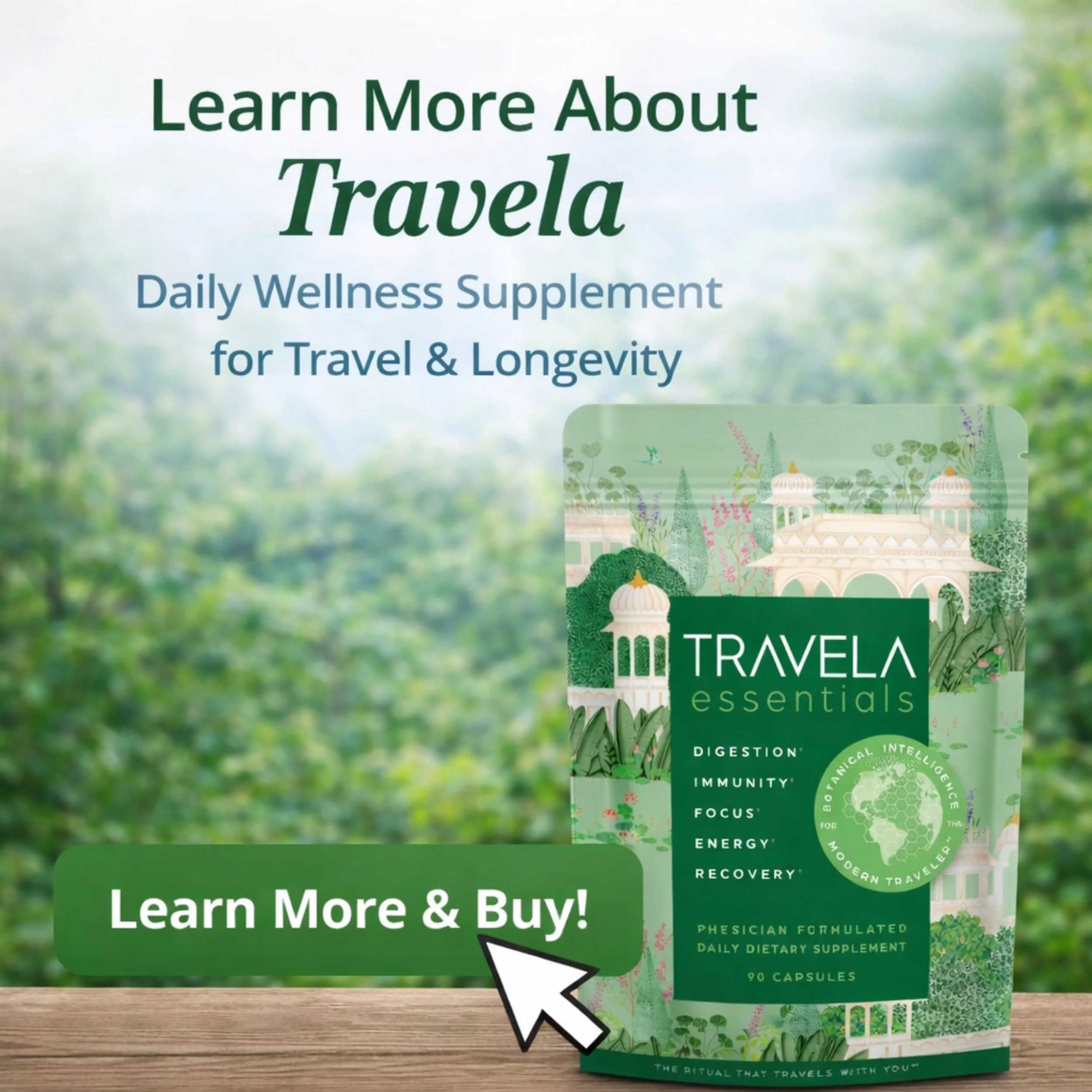
Food does the heavy lifting here, and no capsule stands in for a plate built on beans, greens, berries, and whole grains. A few nutrients do carry particular weight for metabolic health, though, and they are part of why I formulated Travela Essentials as a daily longevity ritual. Travel is the stress test that reveals how resilient your cells really are.
Amla (Emblica officinalis), the Indian gooseberry, is a polyphenol-rich fruit. In a 12-week randomized, double-blind trial in adults with type 2 diabetes, a standardized amla extract improved endothelial function along with markers of oxidative stress, inflammation, and HbA1c. That matters because the health of your blood vessel lining is where many diabetes complications begin.
Magnesium takes part in insulin signaling, and low levels are common in people with insulin resistance. A meta-analysis of randomized trials found that magnesium supplementation improved measures of insulin sensitivity and glucose control, with the clearest benefit in people who start out low. Travela uses magnesium bisglycinate, a chelated form chosen for absorption.
Methylcobalamin, an active form of vitamin B12, is in the formula too, a quiet layer of support for plant-based eaters. Keep your doctor's B12 testing in place alongside it.
The most meaningful changes are often what you stop noticing. Less of the drag after a long travel day. Less of the feeling that your body is working against you. More steadiness, built over months. Travela is a daily ritual that travels with you, and it works best on top of the foundation you build at every meal. It is not a treatment for prediabetes or diabetes and does not replace any medication. You can read the science behind each ingredient.
#CellCare Reflection

Claire's A1C was a number on a screen, and it was also a message from her cells, delivered early enough to act on.
The hormone so many people pay hundreds of dollars a month to inject is one your gut already knows how to make. The question is what you will feed it tonight.
Start small. A pot of lentil soup. A bowl of berries. A plate where plants take up most of the room. Your cells register every one of those choices, and over months they add up to how daily choices shape the way your cells age.
For more, join the #CellCare Wellness Newsletter, visit my YouTube channel, read The Anatomy of Wellbeing, or taste this way of eating in person at my longevity retreats.


MAKE A DIFFERENCE BY SHARING THIS ARTICLE WITH OTHERS TO ENCOURAGE WELLBEING ⤵
References:
Aroda, Vanita R., Sharon L. Edelstein, Ronald B. Goldberg, William C. Knowler, Santica M. Marcovina, Trevor J. Orchard, George A. Bray, et al. "Long-term Metformin Use and Vitamin B12 Deficiency in the Diabetes Prevention Program Outcomes Study." Journal of Clinical Endocrinology and Metabolism 101, no. 4 (2016).
Barnard, Neal D., Joshua Cohen, David J. A. Jenkins, Gabrielle Turner-McGrievy, Lise Gloede, Brent Jaster, Kim Seidl, Amber A. Green, and Stanley Talpers. "A Low-Fat Vegan Diet Improves Glycemic Control and Cardiovascular Risk Factors in a Randomized Clinical Trial in Individuals with Type 2 Diabetes." Diabetes Care 29, no. 8 (2006).
Barnard, Neal D., Hana Kahleova, Danielle N. Holtz, Tatiana Znayenko-Miller, Macy Sutton, Richard Holubkov, Xueheng Zhao, Stephanie Galandi, and Kenneth D. R. Setchell. "A Dietary Intervention for Vasomotor Symptoms of Menopause: A Randomized, Controlled Trial." Menopause 30, no. 1 (2023).
Bertoia, Monica L., Kenneth J. Mukamal, Leah E. Cahill, et al. "Changes in Intake of Fruits and Vegetables and Weight Change in United States Men and Women Followed for Up to 24 Years: Analysis from Three Prospective Cohort Studies." PLOS Medicine 12, no. 9 (2015).
Kahleova, Hana, Kitt Falk Petersen, Gerald I. Shulman, Jihad Alwarith, Emilie Rembert, Andrea Tura, Martin Hill, Richard Holubkov, and Neal D. Barnard. "Effect of a Low-Fat Vegan Diet on Body Weight, Insulin Sensitivity, Postprandial Metabolism, and Intramyocellular and Hepatocellular Lipid Levels in Overweight Adults: A Randomized Clinical Trial." JAMA Network Open 3, no. 11 (2020).
Klementova, Marta, Lenka Thieme, Martin Haluzik, Renata Pavlovicova, Martin Hill, Terezie Pelikanova, and Hana Kahleova. "A Plant-Based Meal Increases Gastrointestinal Hormones and Satiety More Than an Energy- and Macronutrient-Matched Processed-Meat Meal in T2D, Obese, and Healthy Men: A Three-Group Randomized Crossover Study." Nutrients 11, no. 1 (2019).
Riddle, Matthew C., William T. Cefalu, Philip H. Evans, Hertzel C. Gerstein, Michael A. Nauck, William K. Oh, Amy E. Rothberg, et al. "Consensus Report: Definition and Interpretation of Remission in Type 2 Diabetes." Diabetes Care 44, no. 10 (2021): 2438-44.
Roden, Michael, Thomas B. Price, Gianluca Perseghin, Kitt Falk Petersen, Douglas L. Rothman, Gary W. Cline, and Gerald I. Shulman. "Mechanism of Free Fatty Acid-Induced Insulin Resistance in Humans." Journal of Clinical Investigation 97, no. 12 (1996): 2859-65.
Simental-Mendía, Luis E., Amirhossein Sahebkar, Martha Rodríguez-Morán, and Fernando Guerrero-Romero. "A Systematic Review and Meta-Analysis of Randomized Controlled Trials on the Effects of Magnesium Supplementation on Insulin Sensitivity and Glucose Control." Pharmacological Research 111 (2016): 272-82.
Tolhurst, Gwen, Helen Heffron, Yu Shan Lam, Helen E. Parker, Abdella M. Habib, Eleftheria Diakogiannaki, Jennifer Cameron, Johannes Grosse, Frank Reimann, and Fiona M. Gribble. "Short-Chain Fatty Acids Stimulate Glucagon-Like Peptide-1 Secretion via the G-Protein-Coupled Receptor FFAR2." Diabetes 61, no. 2 (2012).
Usharani, Pingali, Nishat Fatima, and Nizampatnam Muralidhar. "Effects of Phyllanthus emblica Extract on Endothelial Dysfunction and Biomarkers of Oxidative Stress in Patients with Type 2 Diabetes Mellitus: A Randomized, Double-Blind, Controlled Study." Diabetes, Metabolic Syndrome and Obesity: Targets and Therapy 6 (2013).
Wilding, John P. H., Rachel L. Batterham, Melanie Davies, Luc F. Van Gaal, Kristian Kandler, Katerina Konakli, Ildiko Lingvay, et al. "Weight Regain and Cardiometabolic Effects after Withdrawal of Semaglutide: The STEP 1 Trial Extension." Diabetes, Obesity and Metabolism 24, no. 8 (2022).
The information on this website has not been evaluated by the Food & Drug Administration or any other medical body. We do not aim to diagnose, treat, cure or prevent any illness or disease. Information is shared for educational purposes only. You must consult your doctor before acting on any content on this website, especially if you are pregnant, nursing, taking medication, or have a medical condition. Our content may include products that have been independently chosen and recommended by Dr. Monisha Bhanote and our editors. We may earn a small commission if you purchase something mentioned in this article.
YOU MAY ALSO LIKE:




by Dr. Monisha Bhanote
✅ EVIDENCE-INFORMED REVIEWED ARTICLE