Can You ‘Youngify’ Your Gut? The Science of Microbial Stem Cell Resets
“Healthy aging is not about stopping time. It’s about creating the cellular environment that allows your body to repair itself well.”
Your chronological age is a fixed number, but your biological age: specifically the age of your gut lining: is surprisingly negotiable.
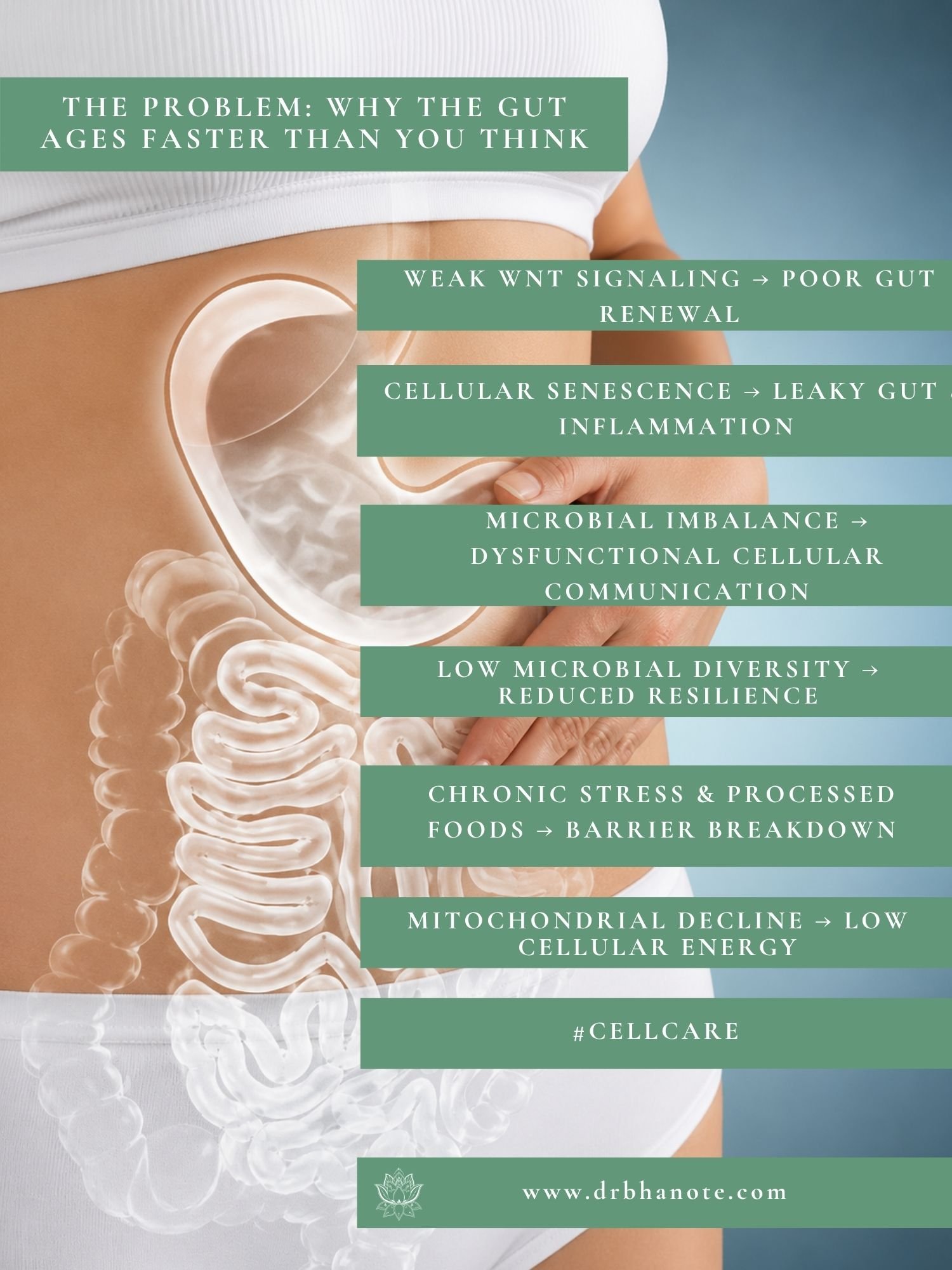
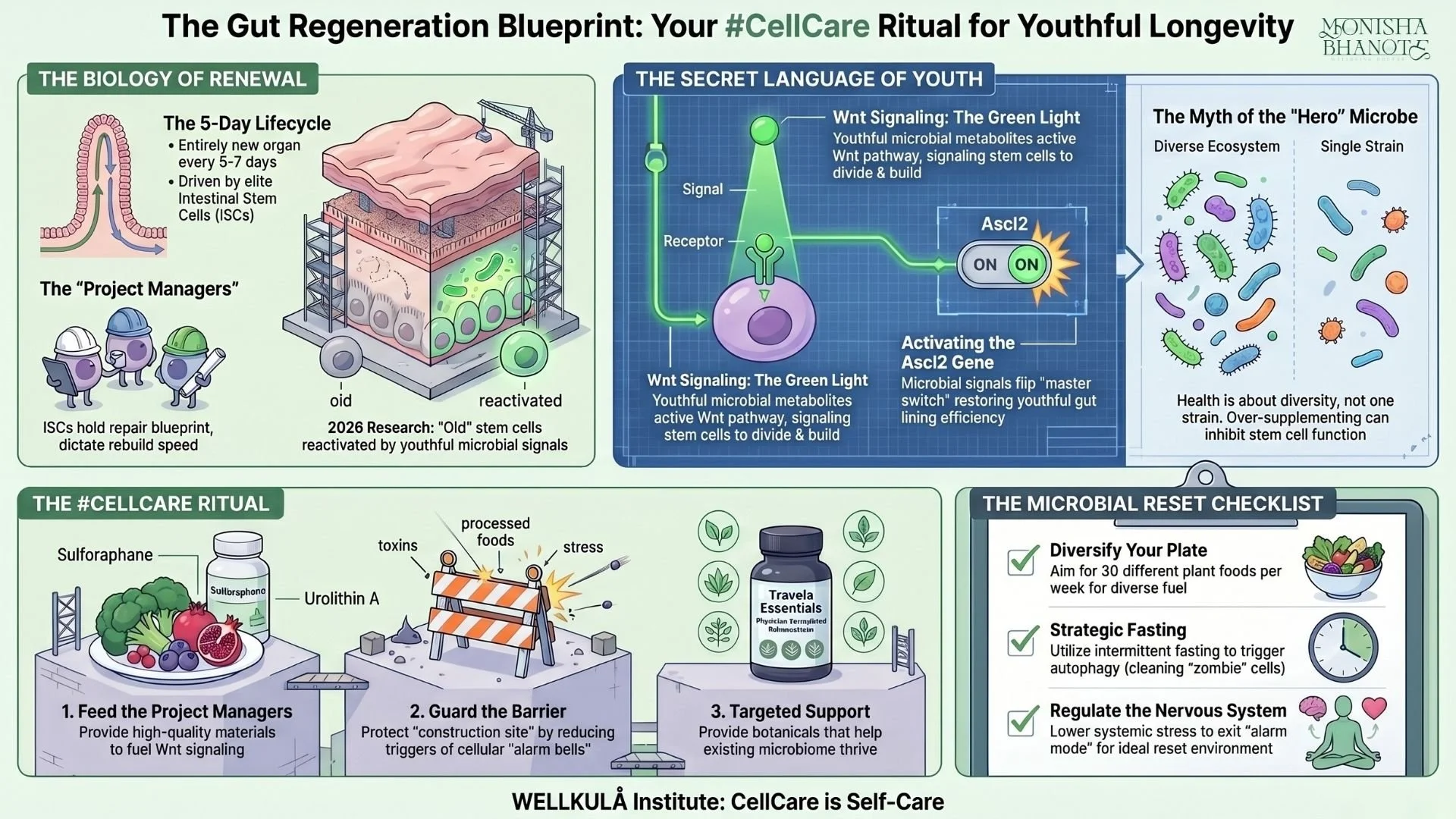
We often talk about the gut as a digestive engine, but it’s actually the fastest-regenerating organ in your body. Every five to seven days, you have an entirely new gut lining. This constant renewal is fueled by a tiny, elite population of intestinal stem cells (ISCs).
As we age, these stem cells start to get "tired." They divide more slowly, respond poorly to injury, and leave the gut barrier vulnerable to the "leaks" and inflammation we associate with aging. But a groundbreaking study published just this year (January 2026) in Stem Cell Reports has revealed a shocking truth: It’s not just the stem cells that are aging; it’s the messages they’re receiving from your microbiome.
What if you could change the message? What if you could "youngify" your gut by simply rebooting the microbial management team?

The Gut as a Busy Construction Site
Think of your gut lining as a high-stakes construction site. To keep the building (your gut barrier) strong and resilient, the "workers" (new cells) must be constantly replaced.
The intestinal stem cells are the project managers. In your 20s and 30s, these managers are high-energy, efficient, and possess a clear blueprint for repair. But as the years go by, the "management team" starts to slack off. The equipment gets rusty, the workers are late, and the repairs are sloppy. We call this cellular senescence.
For a long time, we thought this was just an inevitable part of growing older. But the 2026 research from Cincinnati Children’s Hospital and Ulm University turned this theory on its head.
The researchers took aged mice: whose gut "construction sites" were failing: and performed a microbial reset. They introduced the gut bacteria from young, vibrant mice. The result? The old stem cells suddenly woke up. They started dividing, repairing, and regenerating as if they were years younger.
The "old" management team wasn't broken; they were just listening to the wrong instructions from their microbial environment.
The Secret Language: Wnt Signaling
So, how exactly do bacteria "talk" to stem cells? It comes down to a specific molecular pathway called Wnt signaling.
Think of Wnt signaling as the "green light" on the construction site. When Wnt signaling is high, the stem cells get the signal to divide and build. When it’s low, the site shuts down.
The study found that youthful microbes produce specific metabolites that keep this "green light" flashing. Specifically, they activate a gene called Ascl2, which is the master switch for stem cell identity and activity. When the researchers transferred "young" microbes into an "old" environment:
Wnt signaling was restored.
Ascl2 gene expression increased.
The gut lining began to replenish itself with youthful efficiency.
This is a massive shift in how we view longevity. We are moving away from the idea that our cells have a fixed "expiration date" and toward the concept of CellCare: the intentional design of the cellular environment to promote resilience.

The Nuance: Why "More" Isn't Always Better
In the world of gut health, we often fall into the trap of thinking there is a single "hero" microbe.
Lately, Akkermansia muciniphila has been the poster child for gut health. And while Akkermansia is vital for maintaining the mucus layer, the April 2026 study offers a cautionary note.
The researchers identified that certain bacterial species that become dominant in older age actually inhibit stem cell function. Even "beneficial" microbes need to exist in a delicate balance. If you over-supplement with a single strain without addressing the overall diversity and environment, you might inadvertently send the wrong signals to your stem cells.
True gut dysbiosis: an imbalance of these microbial signals: is what leads to the slow-down of intestinal repair. To "youngify" the gut, we don't just need more of one thing; we need to cultivate a microbial ecosystem that speaks the language of youth.
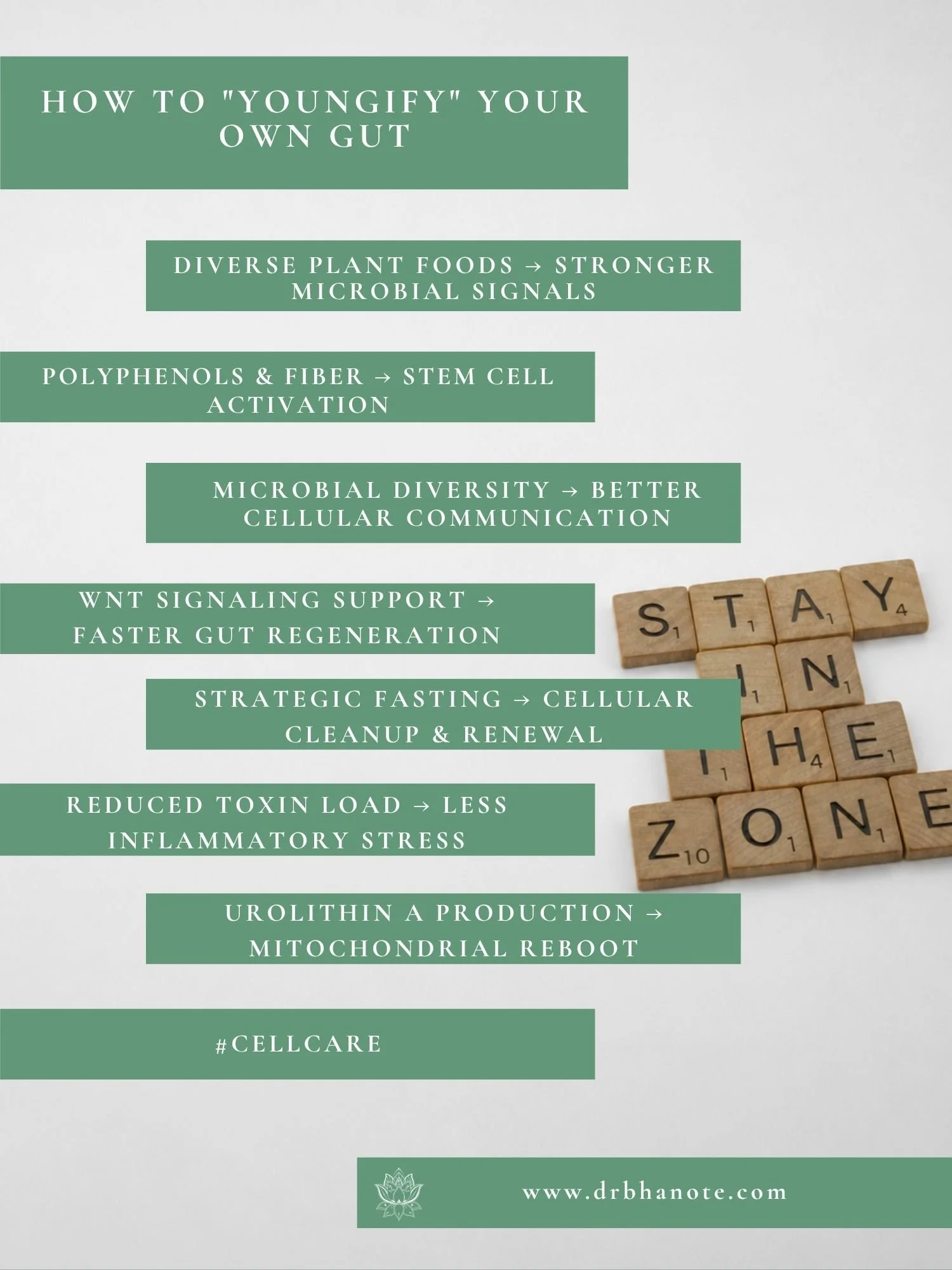
How to "Youngify" Your Own Gut
If you’re a high performer looking to maintain your edge or someone entering your "intentional aging" years, you can’t wait for a clinical fecal transplant. You have to start designing your internal environment now.
1. Feed the "Project Managers"
Your stem cells need specific fuel to keep the Wnt signaling pathway active. This means a diet rich in polyphenols and diverse fibers. Think of these as the high-quality materials delivered to the construction site.
Cruciferous vegetables: Sulforaphane helps protect stem cells from oxidative stress.
Berries and Pomegranates: These support the production of Urolithin A, a metabolite that reboots mitochondrial energy in your gut cells.
2. Guard the Barrier

If the construction site is constantly being hit by "storms" (toxins, ultra-processed foods, chronic stress), the repair work will never get done. This is where we focus on cellular resilience. At the WELLKULÅ Institute, we teach that longevity isn't just about living longer; it's about the quality of your cellular regeneration.
3. Targeted Support
While lifestyle is the foundation, sometimes the "management team" needs a nudge. This is why we developed Travela Essentials.
Travela Essentials is a physician-formulated, plant-based nutraceutical designed specifically to support gut health and cellular resilience. It’s not just about adding "good bacteria"; it’s about providing the botanicals and nutrients that help your existing microbiome thrive, creating that "youthful" environment where your stem cells can finally get back to work.

The WELLKULÅ Philosophy: CellCare is Self-Care
At the WELLKULÅ Institute, we don't believe in quick fixes. We believe in a deep, scientific understanding of how your body works. Our Cell Revive Program is designed to take you beyond generic wellness trends and into the heart of your biology.
We look at how your nervous system, your gut, and your cellular health are all interconnected. When you regulate your nervous system, you lower the "alarm bells" in your gut, allowing the microbial reset to actually take hold.
Think about it: Your body is constantly trying to heal itself. Your stem cells are waiting for the right signal. Are you giving them the instructions to age, or the instructions to thrive?
Next Steps for a Microbial Reset
Ready to start your own "youngifying" journey? Here is your immediate checklist:
Diversify your plate: Aim for 30 different plant foods per week to provide the diverse fuel your "young" microbes need.
Strategic Fasting: Short windows of intermittent fasting (under physician guidance) can actually trigger autophagy: the process where your cells clean out "zombie" components.
Support the Environment: Incorporate a physician-led tool like Travela Essentials to maintain gut resilience, especially during times of travel or high stress.
Join the Conversation: Explore the Cell Revive Program to learn how to master your own cellular longevity.
The science is clear: your gut doesn't have to age as fast as your birthday cake suggests. By focusing on the microbial signals that drive stem cell health, you are taking the ultimate agency over your biology.
Let's start building a more resilient you, one cell at a time!



MAKE A DIFFERENCE BY SHARING THIS ARTICLE WITH OTHERS TO ENCOURAGE WELLBEING ⤵
The information on this website has not been evaluated by the Food & Drug Administration or any other medical body. We do not aim to diagnose, treat, cure or prevent any illness or disease. Information is shared for educational purposes only. You must consult your doctor before acting on any content on this website, especially if you are pregnant, nursing, taking medication, or have a medical condition. Our content may include products that have been independently chosen and recommended by Dr. Monisha Bhanote and our editors. We may earn a small commission if you purchase something mentioned in this article.
YOU MAY ALSO LIKE:



by Dr. Monisha Bhanote
✅ EVIDENCE-INFORMED REVIEWED ARTICLE