
The Forgotten Organ: What Your Gut is Really Doing this Late Summer
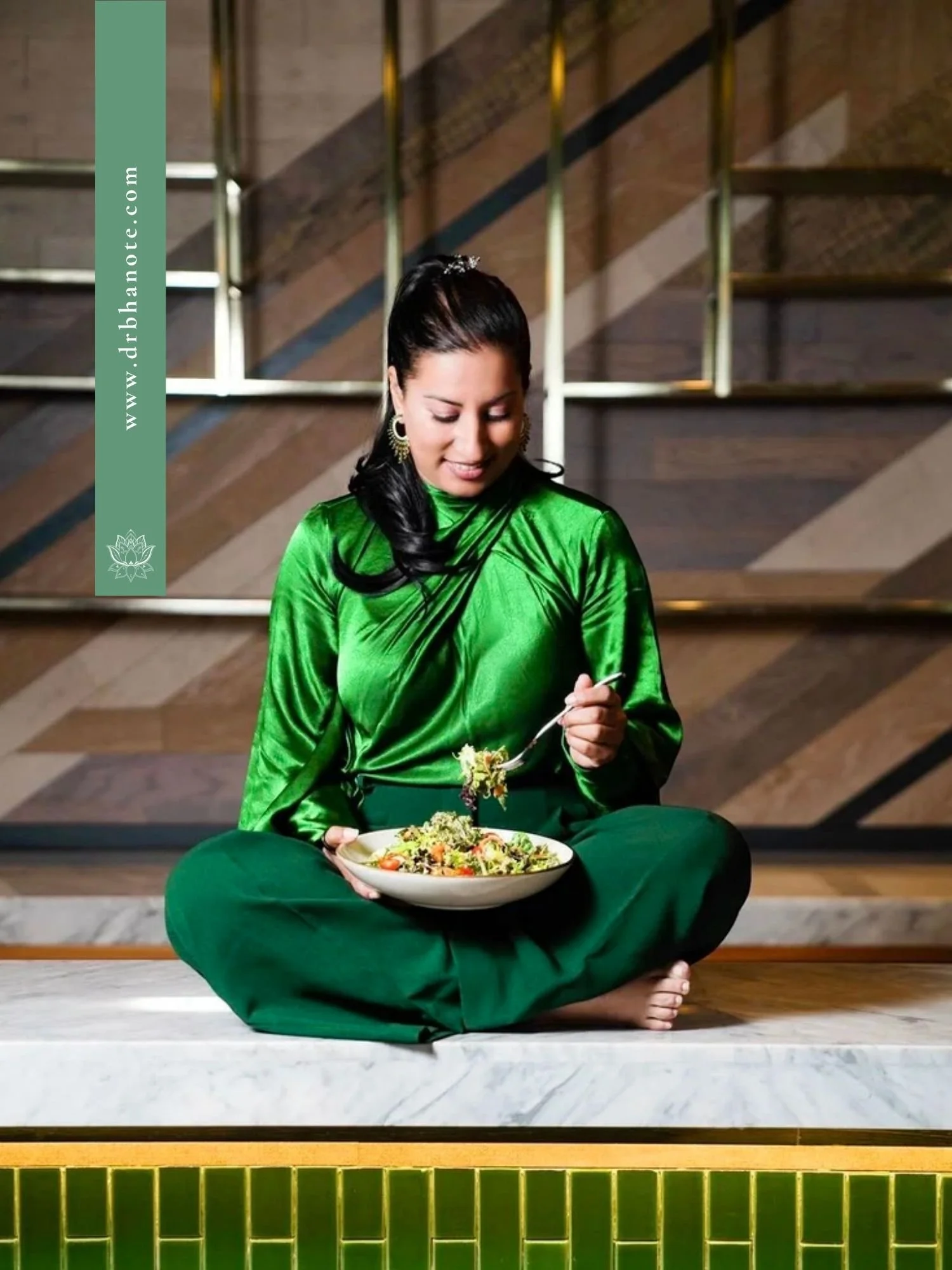
“Your gut is always adapting to the world around you. Lasting health begins when you learn to support that rhythm.”
Maya noticed it on a Tuesday, the kind of ordinary evening that shouldn't have felt like anything. She had eaten what she always eats: grilled fish, a large salad, sparkling water instead of the glass of wine she used to pour without thinking. And still, by the time she sat down to take off her sandals, her rings felt tighter, her stomach sat high and full, as if she had eaten a meal three times its size. She stood in front of the mirror running the quiet inventory so many of us run in late August. What did I do differently? The honest answer, more often than not, is nothing. Nothing has changed except the season.
This is the particular confusion of late summer: a body that feels heavier, slower, and less like itself, arriving without any obvious cause. Wellness culture has trained us to treat every such shift as evidence of a lapse, some hidden indulgence or failure of willpower. But the truth is both simpler and more interesting than that. Your body is not separate from the season. It is in constant conversation with it, and nowhere is that conversation more active than in your gut.

The season your gut already knows about
For most of modern medicine's history, the gut microbiome was treated as a fixed population: a quiet colony of bacteria doing the unglamorous work of breaking down fiber. That picture has changed considerably. We now understand the microbiome as a dynamic, responsive system, one that communicates with the immune system and nervous system, synthesizes compounds the body cannot make on its own, and shifts composition in response to the world around it.
What is discussed far less often is how seasonal that shift actually is. A landmark study of the Hutterites, a communal-living population whose diet and environment are unusually consistent across individuals, found a clear and reproducible pattern: gut microbial composition changed between summer and winter in ways too consistent to be coincidence. Because the Hutterite lifestyle controls for so many of the usual variables, the researchers could attribute the shift specifically to the season itself rather than to differences in individual habits.
More recent research has extended this picture beyond bacteria alone. A 2025 study tracking the same individuals through winter and summer found measurable seasonal shifts not just in gut microbial composition, but in circulating endocannabinoidome mediators, the family of signaling molecules involved in regulating inflammation, appetite, and stress response. In other words, the conversation between your gut and your nervous system has its own seasonal rhythm, one that operates quietly in the background regardless of what you eat.
What heat does to the gut lining
The heaviness so many people feel in late summer has a physical explanation, and it begins at a barrier most of us never think about.
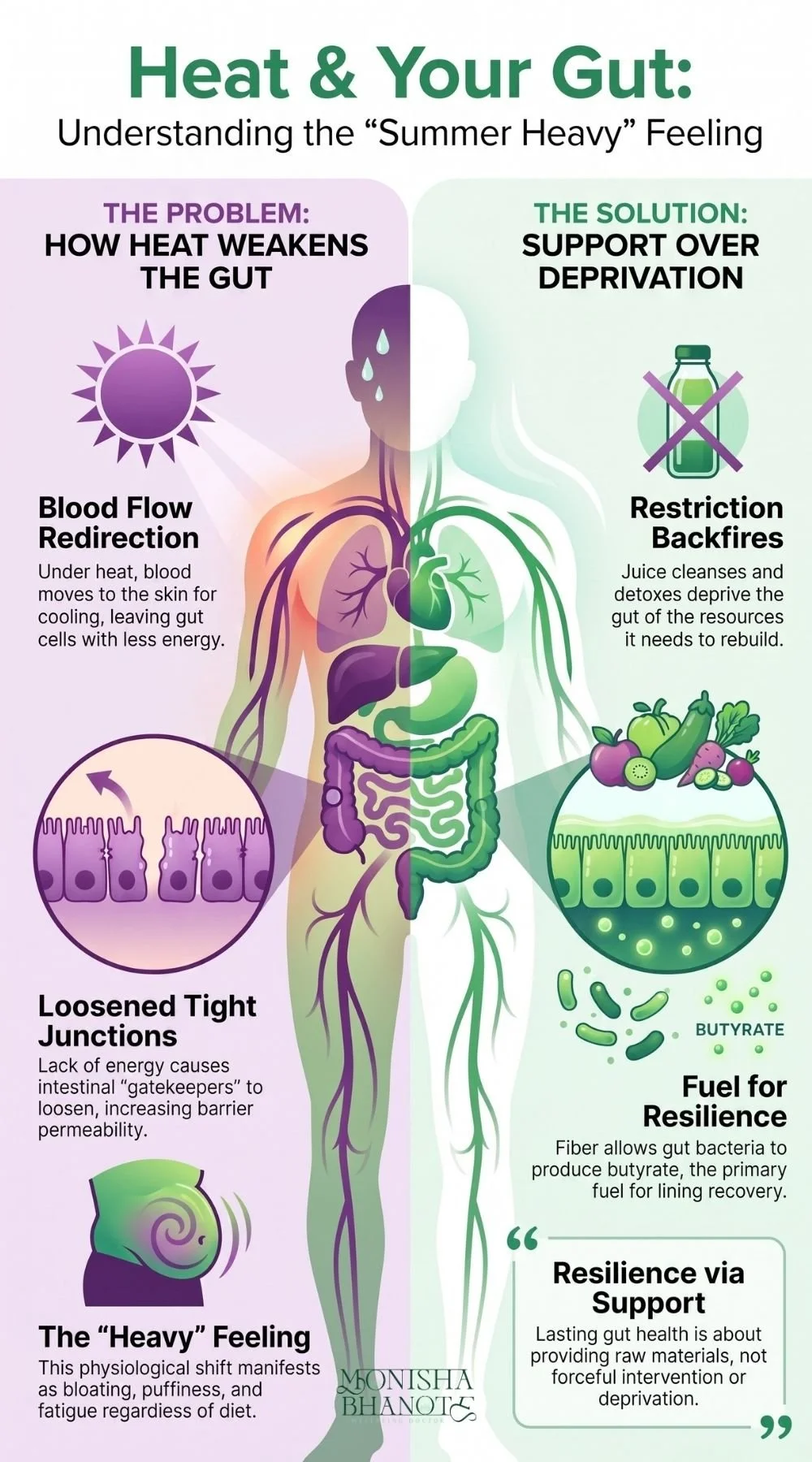
The lining of your small intestine is a single layer of cells, sealed together by structures called tight junctions. These act as gatekeepers, allowing nutrients and water through while keeping undigested particles, bacterial byproducts, and other unwelcome material out. It is precise, elegant architecture, and it is also sensitive to heat.
Research on intestinal physiology has shown that even a modest, physiologically realistic rise in temperature is enough to loosen tight junction permeability in the gut lining. Under sustained heat, whether from summer weather, long days outdoors, or the physiological strain of travel, blood flow is redirected away from the digestive tract toward the skin, in service of cooling the body. That shift can leave the cells of the gut lining working with less energy than they need to maintain their tight junction structure. The result is a temporarily more permeable gut barrier, which can translate to the bloating, puffiness, and low-grade fatigue that so many people notice this time of year, entirely independent of what they have or haven't eaten.
This is worth sitting with, because it reframes the experience entirely. The heaviness is not a sign that something has gone wrong with your discipline. It is your body doing exactly what bodies do under thermal load: prioritizing temperature regulation, even at a small cost to digestive comfort.
Why restriction is the wrong response
The instinct, when the body feels heavy, is often to correct it forcefully: a juice cleanse, a punishing detox, a week of severe restriction. From a cellular standpoint, this tends to make things worse, not better.
A gut lining under thermal and travel stress needs resources to rebuild its tight junction proteins, not the removal of them. Beneficial gut bacteria need dietary fiber to produce short-chain fatty acids like butyrate, the primary fuel source for the cells lining your colon. Strip those inputs away at the exact moment your gut barrier is working hardest, and you deprive the system of what it needs to recover.
At the WELLKULÅ Institute, this is the foundation of #CellCare: the belief that resilience is built through support, not deprivation. Real, lasting gut health is less about intervention and more about giving your body's own intelligence the raw materials to do what it already knows how to do.

The botanicals worth knowing
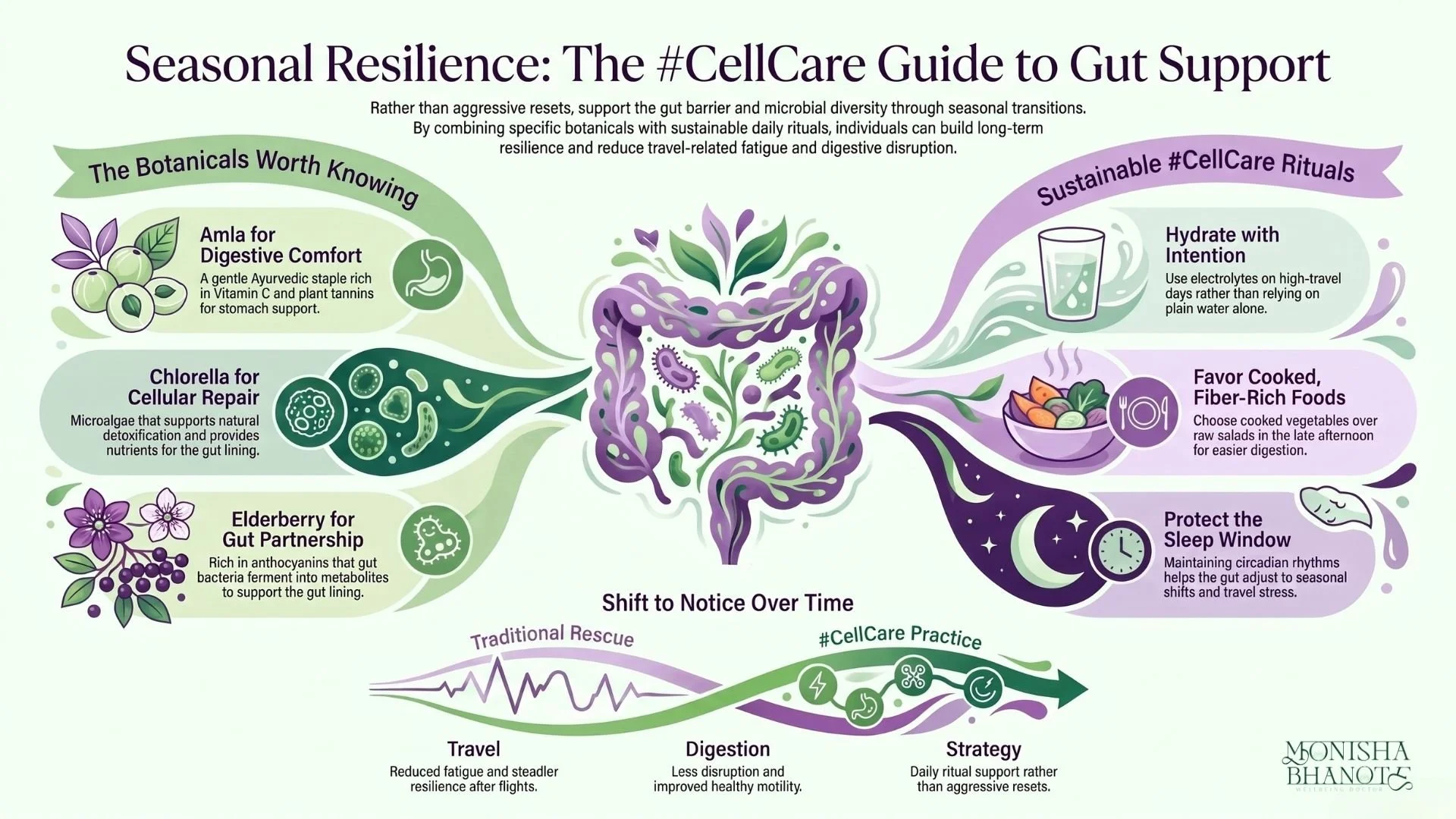
Rather than working against the body during a seasonal transition, functional medicine looks to a small set of well-studied botanicals that support the gut barrier and feed microbial diversity from within.

1. Amla (Indian gooseberry)
A staple of Ayurvedic medicine for centuries, amla is notably rich in vitamin C and plant tannins. It is gentle on the stomach and has long been used to support digestive comfort without the harshness of stronger interventions.
2. Chlorella
This microalgae carries a dense profile of chlorophyll, nucleic acids, and trace minerals. It is often discussed for its role in supporting the body's natural detoxification pathways, offering the gut lining nutrients that assist with cellular repair during periods of environmental stress.
3. Elderberry
Elderberries are especially rich in anthocyanins, a class of polyphenols. Polyphenols are largely metabolized by gut bacteria, and that fermentation process is one of the more elegant examples of the gut-microbe partnership: your beneficial bacteria feed on these compounds and, in turn, produce metabolites that support the gut lining.
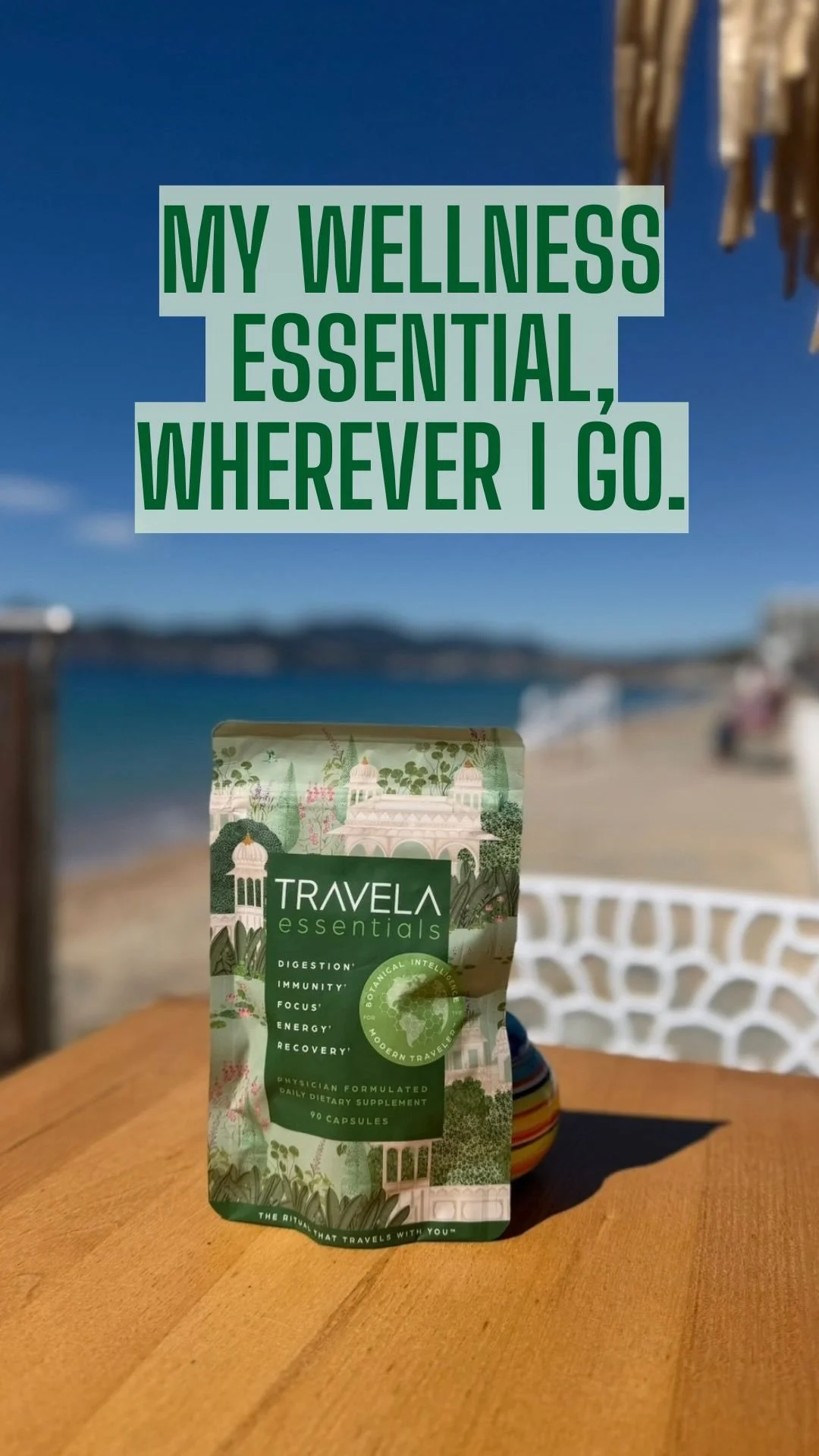
These botanicals form the basis of Travela Essentials, formulated as a daily ritual rather than a rescue remedy, something to travel with you rather than something you reach for only when things go wrong. The most meaningful changes from a practice like this are rarely dramatic. More often, they are the things you gradually stop noticing: less travel fatigue, less digestive disruption after a flight, a steadier sense of resilience through the transitions your body used to struggle with.

What you can do today
A few realistic, sustainable adjustments make more difference during a seasonal transition than any aggressive reset:
Hydrate with intention. Heat-related fluid loss is often underestimated; add electrolytes on especially hot or high-travel days rather than relying on water alone.
Favor cooked, fiber-rich vegetables over large raw salads in the late afternoon, when digestion is naturally slower.
Protect your sleep window, even on travel days. Circadian disruption compounds the gut's seasonal adjustment.
Build in short walks after meals rather than sitting immediately, which supports healthy motility during the transition.
Introduce polyphenol-rich foods, like berries and colorful vegetables, gradually rather than all at once, to give your gut bacteria time to adjust.
None of this requires overhauling your life. It requires noticing that late summer asks something different of your body, and meeting that ask with support instead of suspicion.
#CellCare Reflection
Every season leaves its signature on the body, and late summer's signature happens to live in the gut. This is not a flaw to be corrected. It is information, offered by a system that has been quietly adapting to heat, travel, and light long before you noticed the first sign of it.
Longevity is rarely built in dramatic gestures. It is built in the small, intentional choices made season after season: the walk after dinner, the meal that nourishes rather than punishes, the willingness to trust your body's own intelligence instead of overriding it. As you move through the last weeks of summer, consider where you might offer support rather than restriction.
That single shift, repeated daily, is #CellCare in its truest form.



MAKE A DIFFERENCE BY SHARING THIS ARTICLE WITH OTHERS TO ENCOURAGE WELLBEING ⤵
References:
Davenport, Emily R., Jon G. Sanders, Se Jin Song, Katherine R. Amato, Andrew G. Clark, and Rob Knight. "Seasonal Variation in Human Gut Microbiome Composition." PLOS ONE 9, no. 3 (2014): e90731.
Castonguay-Paradis, Sophie, Élisabeth Demers-Potvin, Gabrielle Rochefort, Sébastien Lacroix, Julie Perron, Cyril Martin, Nicolas Flamand, Frédéric Raymond, Vincenzo Di Marzo, and Alain Veilleux. "Seasonal Variations in Circulating Endocannabinoidome Mediators and Gut Microbiota Composition in Humans." Gut Microbes 17, no. 1 (2025): 2476563.
Dokladny, Karol, Micah N. Zuhl, and Pope L. Moseley. "Intestinal Epithelial Barrier Function and Tight Junction Proteins with Heat and Exercise." Journal of Applied Physiology 120, no. 6 (2016): 692–701.
Dokladny, Karol, Pope L. Moseley, and Thomas Y. Ma. "Physiologically Relevant Increase in Temperature Causes an Increase in Intestinal Epithelial Tight Junction Permeability." American Journal of Physiology-Gastrointestinal and Liver Physiology 290, no. 2 (2006): G204–G212.
Bhanote, Monisha. The Anatomy of Wellbeing: A Physician's Guide to Cellular Resilience and Intentional Living. WELLKULÅ Institute Press, 2024.
The information on this website has not been evaluated by the Food & Drug Administration or any other medical body. We do not aim to diagnose, treat, cure or prevent any illness or disease. Information is shared for educational purposes only. You must consult your doctor before acting on any content on this website, especially if you are pregnant, nursing, taking medication, or have a medical condition. Our content may include products that have been independently chosen and recommended by Dr. Monisha Bhanote and our editors. We may earn a small commission if you purchase something mentioned in this article.
YOU MAY ALSO LIKE:





by Dr. Monisha Bhanote
✅ EVIDENCE-INFORMED REVIEWED ARTICLE