
#CellCare Ritual | The Cognitive Wind-Down Ritual
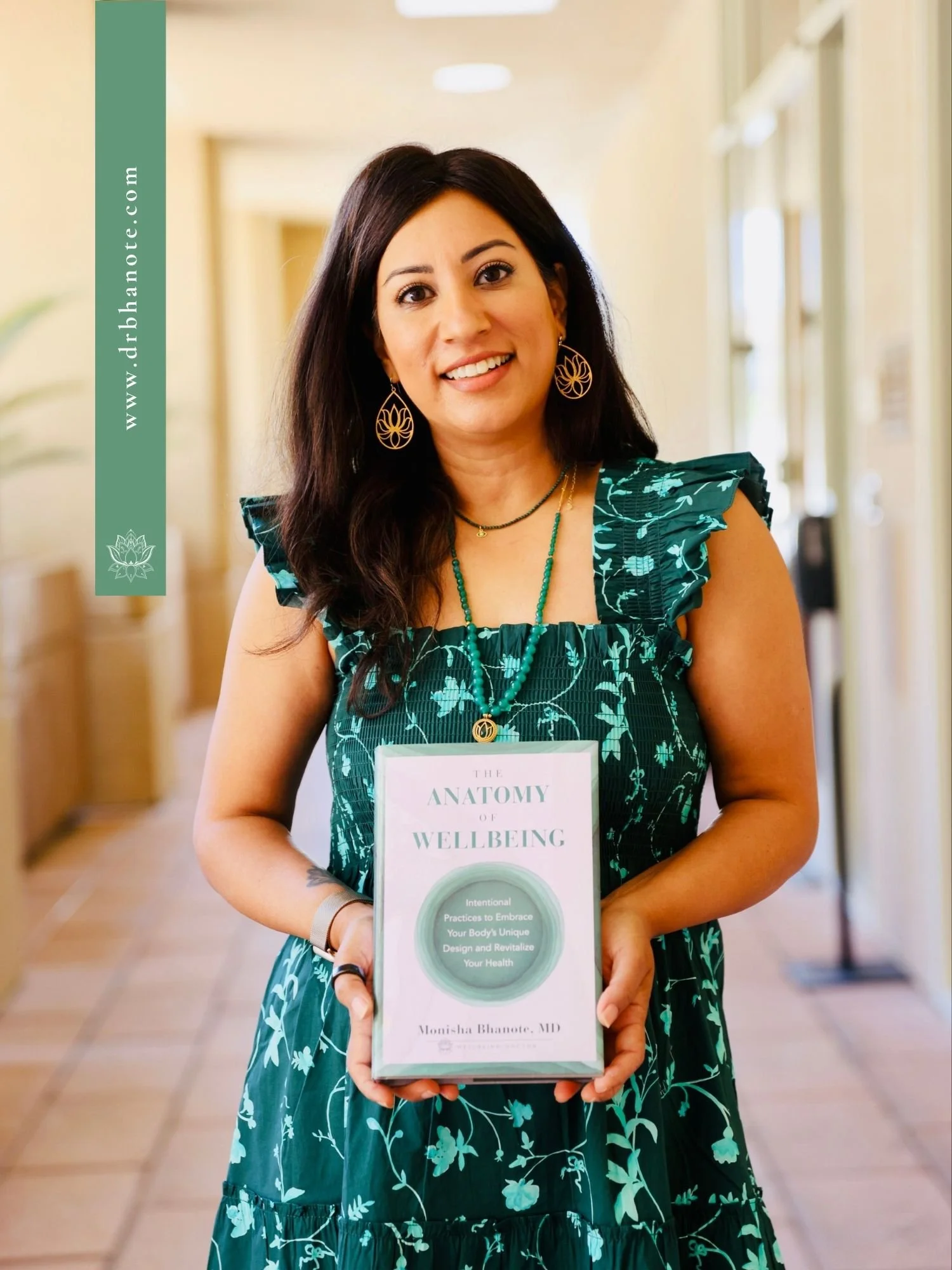
“The day is complete. The body knows what to do.”
~ Dr. Monisha Bhanote, MD
WEEKLY WELLNESS PRACTICE | #CELLCARE RITUAL
Hey there, Wellkulå Friend,
Every week, I invite you to reconnect with your body through a ritual that feels grounded, restorative, and biologically intelligent.
This week’s ritual focuses on something deceptively simple—how you end your day mentally.
This week’s #CellCare Ritual is The Cognitive Wind-Down Ritual.
A gentle, science-backed practice designed to reduce cognitive load, calm the nervous system, and signal safety to your brain before sleep—by replacing screen stimulation with intentional reading.
At the heart of this ritual is a simple swap:
phone → book.
Modern evenings rarely allow the brain to downshift. Endless scrolling, notifications, blue light exposure, and emotional content keep the mind in a state of vigilance—long after the body is asking for rest.
But your brain cannot repair while it is processing novelty.
The Cognitive Wind-Down Ritual interrupts that pattern—not through force or restriction, but through sensory intelligence. When the brain receives predictable, non-stimulating input, the nervous system softens. Cortisol falls. Melatonin rises.
Cells receive the signal: it’s safe to repair now.
So let’s begin.

#HOW TO DO IT | THE COGNITIVE WIND-DOWN RITUAL
This is not a digital detox.
It’s a neurological transition ritual.
The practice takes just 10–20 minutes and is best done 30–60 minutes before sleep. It’s especially powerful during periods of mental fatigue, travel, stress, or poor sleep.
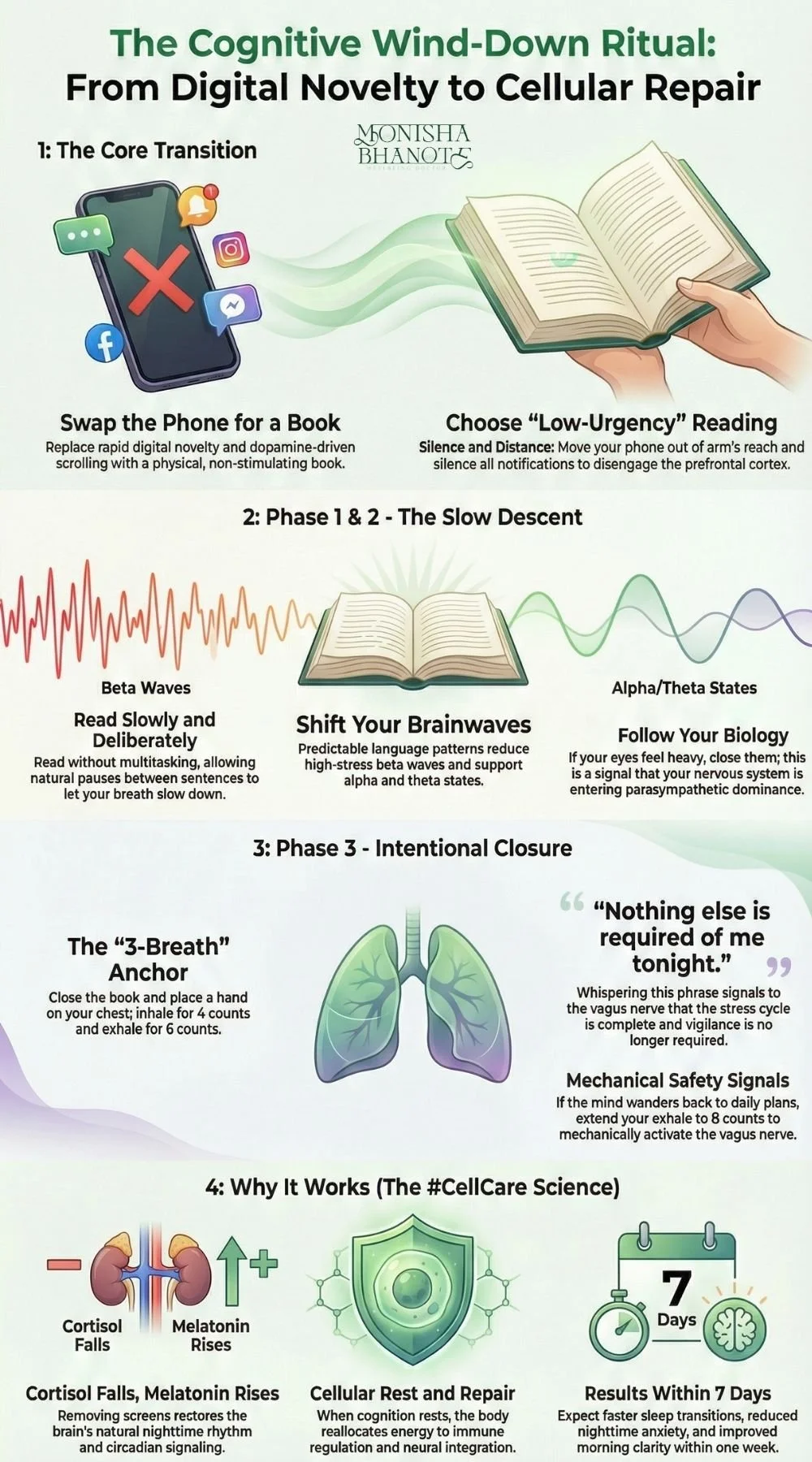
Phase 1: The Phone-to-Book Swap
The Practice:
Choose a consistent time each evening to place your phone away from your body
Silence notifications and physically move the device out of arm’s reach
Replace it with a non-stimulating book:
Short reflections
Poetry
Spiritual or philosophical passage
Or The Anatomy of Wellbeing by Dr. Monisha Bhanote
👉 Book reference:
The Anatomy of the Wellbeing
Cellular Signal:
Removing rapid visual novelty and dopamine-driven input allows the prefrontal cortex to disengage. This reduces cognitive arousal and signals the hypothalamus to initiate the sleep cascade.
Pro Tip:
This ritual works best when the reading has no plot urgency. The goal is nervous system ease—not mental stimulation.
Phase 2: Slow Cognitive Descent
The Practice:
Read slowly, without multitasking
Allow pauses between sentences
Notice your breath naturally slowing
If your mind wanders, gently return to the words
Cellular Signal:
Predictable language patterns reduce beta brainwave activity and support a shift toward alpha and theta states—associated with memory consolidation, emotional regulation, and parasympathetic dominance.
Pro Tip:
If your eyes feel heavy, let them close. This means the ritual is working.
Phase 3: Intentional Closure
The Practice:
Close the book gently
Place one hand on your chest or abdomen
Take three slow breaths: inhale 4, exhale 6
Whisper or think: “Nothing else is required of me tonight.”
Cellular Signal:
This final cue completes the stress cycle. The vagus nerve registers safety, heart rate slows, and the body transitions fully into rest-and-repair mode.
Pro Tip:
If your mind tries to reopen the day—replaying conversations, planning tomorrow, or reaching for stimulation—place both hands over your lower ribs and extend your exhale even longer (inhale 4, exhale 8). This mechanically activates the vagus nerve and signals to the brain that vigilance is no longer required. Repetition trains your nervous system to trust closure.
WHY IT WORKS | THE SCIENCE BEHIND THE COGNITIVE WIND-DOWN RITUAL
Cognitive Load & Nervous System Safety
Your nervous system interprets constant information intake as a demand for action. Without a clear endpoint, the brain stays alert—even when the body is exhausted.
Circadian Rhythm Alignment
Evening screen exposure disrupts melatonin release and delays circadian signaling. Replacing screens with low-stimulation reading restores the brain’s natural nighttime rhythm.
Vagal Tone & Sleep Quality
Predictable, calming sensory input activates vagal pathways that regulate heart rate, digestion, and emotional processing—key components of deep, restorative sleep.
Cellular Repair & Neuroplasticity
When the mind is calm, the body reallocates energy toward cellular repair, immune regulation, and neural integration. Sleep becomes deeper. Healing becomes possible.
REALIZATION | YOUR #CELLCARE TIP OF THE WEEK
Here’s what most people notice within the first week of practicing the Cognitive Wind-Down Ritual:
Faster transition into sleep
Reduced nighttime anxiety and racing thoughts
Improved sleep depth and morning clarity
Less eye strain and nervous system fatigue
A renewed relationship with rest
Not because the ritual is complicated—but because your biology responds immediately to predictable safety cues.
Your Commitment This Week: For the next 7 days:
Practice the Phone-to-Book Swap every evening
Choose reading that soothes rather than stimulates
Observe changes in sleep, digestion, mood, and focus
You don’t need more willpower to rest.
You need better signals of safety.
When the mind softens, the body follows.
When cognition rests, cells remember how to heal.
Until next time,
Dr. Monisha
The information on this website has not been evaluated by the Food & Drug Administration or any other medical body. We do not aim to diagnose, treat, cure or prevent any illness or disease. Information is shared for educational purposes only. You must consult your doctor before acting on any content on this website, especially if you are pregnant, nursing, taking medication, or have a medical condition. Our content may have affiliate links, through which we earn a small commission at no extra cost to you. We only recommend products we sincerely love and believe will benefit your wellbeing. Thank you for supporting #CellCare Wellness!



by Dr. Monisha Bhanote
✅ EVIDENCE-INFORMED REVIEWED ARTICLE