The Summer Gut: Why Amla, Chlorella, and Elderberry Are Your Best Travel Companions

“When you support your gut before stress arrives, your body becomes more adaptable, resilient, and ready to fully experience the journey.”
It's 10:45 p.m. on a balmy Saturday in July. You're seated at a low-lit table on a cobblestone terrace, the air thick with jasmine and wood-fired ovens. In front of you: the remains of a spicy harissa-glazed cauliflower steak, a rich saffron risotto, and perhaps one more glass of chilled rosé than you'd planned on. At the moment, it feels like the pinnacle of summer freedom.
But you already know the morning-after tax.
The heavy, pressurized feeling of "gut regret." The bloating that makes your linen trousers feel two sizes too small. The lethargy that tethers you to the hotel room when you should be exploring the coast. If you've ever wondered why your body seems to "betray" you the moment you step outside your routine, you aren't alone. As a physician, I see this metabolic friction constantly in my most active, high-performing patients. And if you've read my previous piece, you know I'm interested in simplifying what modern wellness has overcomplicated; for many people, that means moving away from an exhausting 30-supplement regimen and toward something more intelligent, targeted, and sustainable.

Your Gut Is a Frontier, Not a Filter
We often treat our digestive systems as passive tubes meant to process fuel. In reality, your gut is closer to a biological border: a sophisticated ecosystem of mucosal barriers, immune sentinels, and trillions of microbes that shape your systemic inflammation, your mood, and — over the long arc of a life — your cellular resilience.
During travel, that border comes under real pressure. We eat later. We cross time zones, which disrupts the circadian signaling that helps regulate digestion. We sample foods with unfamiliar bacterial profiles. And most of us lean into a little more indulgence than usual, because that's part of what travel is for. When people reach for relief, ginger and turmeric are the usual first stops — and they remain genuinely useful. But they're only part of the story. If you want real resilience this season, it's worth understanding three botanical allies you likely know only by reputation: Amla, Chlorella, and Elderberry.
Amla: More Than a Vitamin C Powerhouse

Most wellness enthusiasts know Amla, or Indian gooseberry (Emblica officinalis / Phyllanthus emblica), as an antioxidant heavyweight. Less well known is its emerging role as what researchers are starting to call a prebiotic influence on the gut environment.
An 8-week randomized, open-label comparative study by Chaudhari and colleagues looked at Haritaki and Amalaki (Amla) supplementation in healthy older adults — a population in which gut microbial diversity often naturally declines. The researchers found that supplementation reshaped the overall community structure of the gut microbiome, with shifts toward certain fiber-fermenting and Bifidobacteria-associated groups alongside reductions in others — the kind of complex, favorable remodeling that's typical of a genuine prebiotic effect rather than a simple, single-direction change. Separately, research published in Frontiers in Nutrition on Amla-derived polysaccharides found they can act as a selective fuel source that supports the growth of beneficial Lactobacillus species.
Why does this matter? Fiber-fermenting bacteria are among the primary producers of short-chain fatty acids (SCFAs) like butyrate — the preferred fuel source for the cells that line your colon. Butyrate helps reinforce the "tight junctions" of your gut barrier, which is what keeps the toxins and undigested particles from that late-night meal inside the gut, rather than leaking into the bloodstream and triggering systemic inflammation. Amla isn't just an antioxidant; emerging evidence suggests it may help support the wall itself.
Chlorella: Gut Barrier Support, Beyond the "Green Detox" Label
Chlorella is frequently pigeonholed as a heavy-metal detox or a simple chlorophyll source. But in the context of travel and cellular longevity, its more interesting role may be in supporting a healthier balance of gut bacteria during periods of stress.
When we travel, elevation changes, cabin pressure, and the cortisol spikes that come with logistical chaos can all contribute to increased gut permeability — informally known as "leaky gut." Research using simulated digestion models, published by Bañares and colleagues in the International Journal of Molecular Sciences, found that Chlorella vulgaris increased the production of beneficial short-chain fatty acids while reducing the presence of bacterial groups associated with intestinal imbalance, including Enterobacteriaceae, Enterococcus, and Staphylococcus species.
A separate, small human trial in patients with type-2 diabetes, led by Martins and colleagues, found that daily Chlorella supplementation over 30 days increased several beneficial genera — including Akkermansia muciniphila, often described as a "keystone" mucin-degrading bacterium that helps thicken the gut's protective mucus layer — and was associated with a measurable reduction in participants' perceived stress. Taken together, these findings paint a picture of a gut that doesn't just tolerate travel, but is genuinely more resilient to it.
Elderberry: A Polyphenol Prebiotic, Not Just a Cold-Season Staple
We traditionally reach for elderberry (Sambucus nigra) when a scratchy throat sets in. But recent research suggests it also functions as a meaningful prebiotic — one that appears to communicate with metabolism through the gut.
In a one-week randomized, placebo-controlled crossover trial, Teets and colleagues found that elderberry juice increased populations of Bifidobacterium and shifted the broader gut community, and this was accompanied by a meaningful improvement in post-meal glucose response and a measurable increase in fat oxidation. In plain terms: supporting the gut with elderberry appeared to help the body process the sugars and fats from a rich meal more efficiently — relevant context for anyone navigating an "adventurous" summer plate.
Separately, researchers at the Free University of Bozen-Bolzano (Di Cagno, Polo, Gobbetti, and colleagues) used the SHIME (Simulator of the Human Intestinal Microbial Ecosystem) model to show that elderberry extract produced donor-dependent increases in beneficial short-chain fatty acids — a reminder that individual gut ecosystems respond somewhat differently to the same input, which is itself a useful and humbling piece of context as this research matures.

Why Botanical Synergy Beats a Single Pill

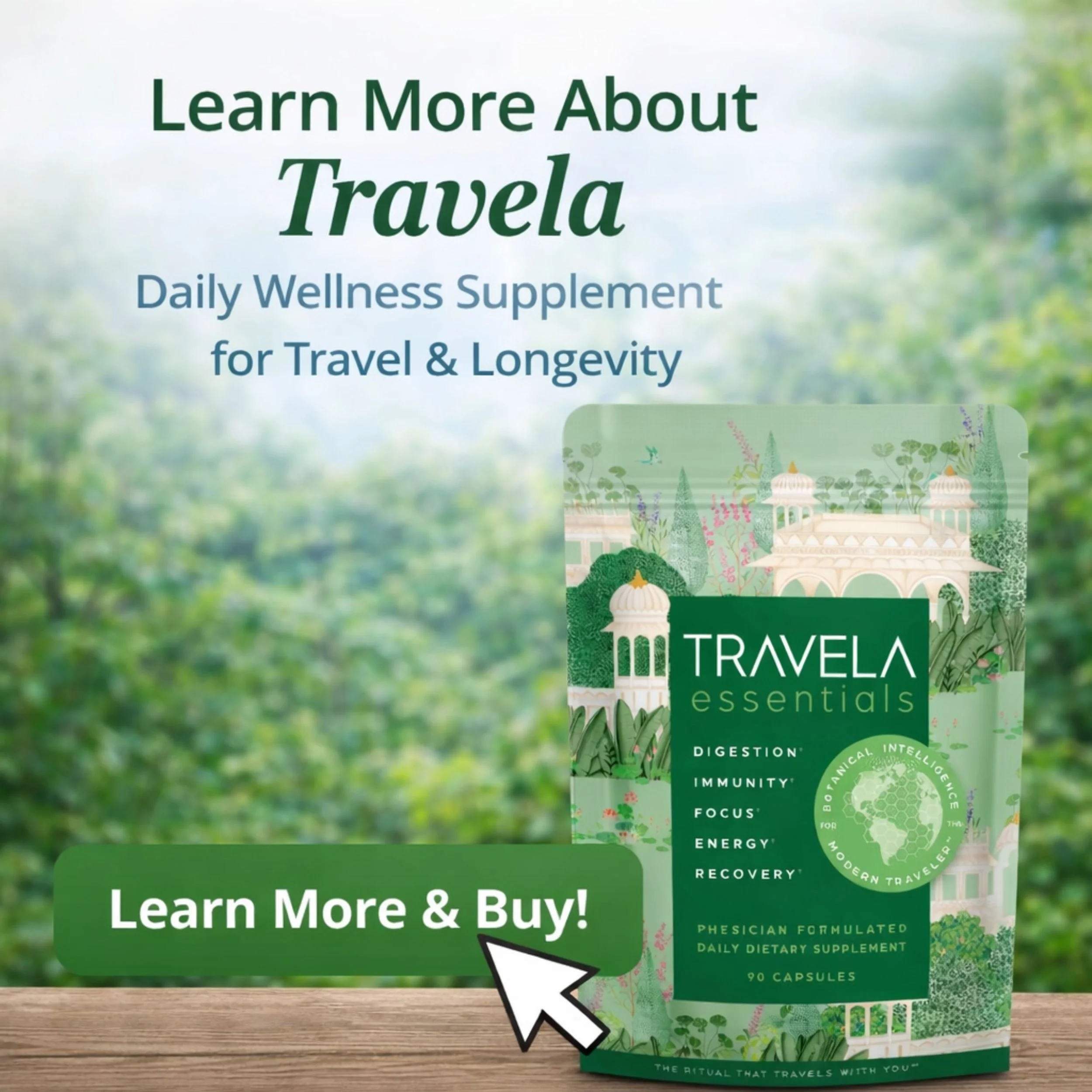
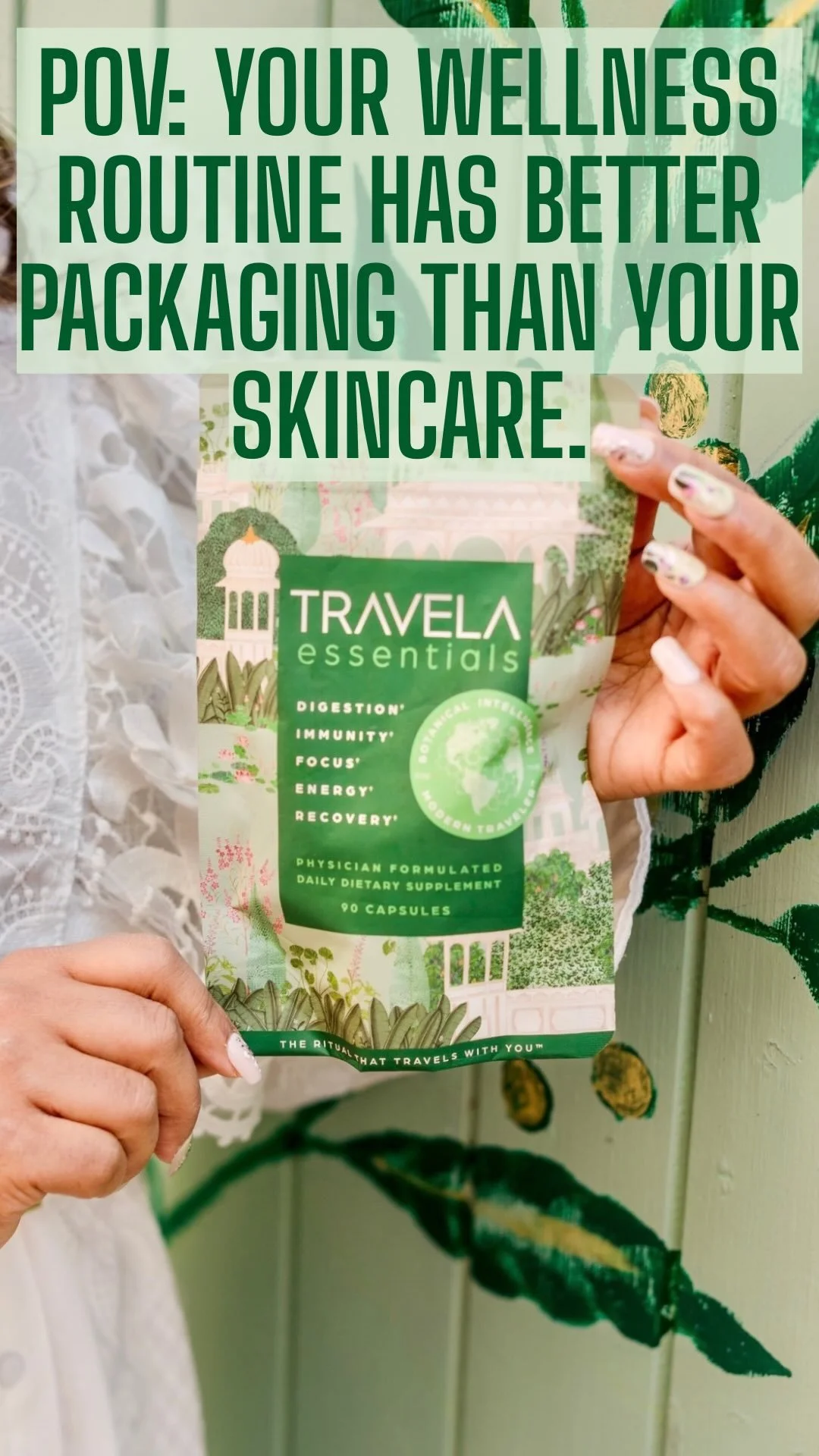
When I formulated the Travel Resilience Complex for Travela Essentials, my goal wasn't to create another single-ingredient "gut supplement." It was to reflect something closer to how these plants actually work — in combination, much like the cells in your own body rarely function in isolation. Amla, Chlorella, and Elderberry act as prebiotic architects, but they benefit from a supporting cast that addresses the physical mechanics of digestion:
Ginger & Turmeric (standardized to 95% curcuminoids): Ginger supports healthy GI motility, helping food move through rather than sit and ferment — a common contributor to afternoon bloat. Turmeric's curcuminoids interact with NF-κB, a protein complex involved in regulating inflammatory signaling in the gut lining.
Holy Basil (Tulsi): An adaptogen with a traditional and growing evidence base around lowering the cortisol response — relevant given how closely stress and gut permeability are linked, especially amid the friction of travel delays and unfamiliar environments.
Gotu Kola & Bacopa: Traditionally used for cognitive support, but in a gut context, Gotu Kola has a history of traditional use around mucosal tissue support, while Bacopa is of interest for gut-nervous-system signaling.
Schisandra & Astragalus: Adaptogens traditionally associated with broader immune resilience, relevant when the body is exposed to new environments and unfamiliar pathogens.
This isn't a random ingredient list; it's designed to address several dimensions of gut health at once — microbiome composition, barrier integrity, motility, and stress response. That said, the research on any single botanical, including the studies cited above, is still early and often based on small trials or in-vitro digestion models rather than large human studies.
What You Can Do Today
Wellness should never feel like a prison, and it shouldn't require saying no to the street food in Mexico City or the late-night pasta in Rome. It should be about building a body resilient enough to say yes — and feel good afterward. Some practical, sustainable places to start:

Hydrate with intent. Add a pinch of sea salt or a splash of citrus to your water, particularly in heat or after air travel, to help support electrolyte balance.
Move after meals. A simple 10-minute walk after a rich dinner can help stimulate healthy gut motility and ease post-meal bloating.
Anchor your circadian rhythm. Try to keep your first and last meals close to a consistent local time, even across time zones — your gut, like the rest of you, runs on rhythm.
Diversify your plants. Farmers' markets abroad are an easy way to widen your fiber and polyphenol intake; microbiome diversity tends to favor variety over any single "superfood."
Build in a nervous-system reset. A few minutes of slow, extended-exhale breathing before a flight or a stressful travel transition can meaningfully lower the cortisol response that otherwise increases gut permeability.
Consider a daily botanical ritual. Some people find it useful to support their gut barrier proactively, well before a big trip, rather than reactively once symptoms appear — this is where a formulation like Travela Essentials can fit in, as one option within a broader lifestyle strategy, not a replacement for the habits above.
If you do explore a targeted botanical approach, it's worth understanding why formulations like this are typically taken as more than a single "one-a-day" pill: the therapeutic amounts used in the studies referenced here are simply larger than what fits into a standard multivitamin dose. And because mucosal barrier reinforcement is a matter of gradual remodeling rather than an overnight fix, most people who try this kind of approach do so well ahead of a big trip rather than the week before. The most meaningful changes here are often the ones you stop noticing — less travel fatigue, less digestive disruption, less afternoon brain fog — rather than a dramatic, immediate shift.

The Longevity Connection
It's worth zooming out from any single trip to the bigger picture. A gut barrier that holds up well under repeated stress — travel, alcohol, irregular sleep, novel foods — is doing more than preventing a bad weekend. Chronic, low-grade gut permeability is one of the quieter contributors to the kind of systemic inflammation that, over years, is linked to accelerated cellular aging and a heavier long-term health burden. Supporting SCFA production, a diverse microbiome, and a resilient mucosal layer isn't just about feeling better on vacation; it's a genuine, if modest, investment in the cellular environment you'll be living in for decades.
This is the heart of #CellCare: small, consistent, evidence-informed choices that support the health of your cells and the ecosystem they live in — not because any single choice is dramatic, but because they compound.
#CellCare Reflection

Travel is more than moving through space; it's a form of self-expansion. Your gut doesn't have to be the thing that keeps you small on the trips you've looked forward to all year. Every meal, every walk after dinner, every slow breath before a flight is a small vote for the kind of cellular resilience that adds up over a lifetime, not just a weekend. This summer, I'd invite you to try just one small shift from the list above — not because it will transform you overnight, but because that's how real, lasting change in the body actually works.



MAKE A DIFFERENCE BY SHARING THIS ARTICLE WITH OTHERS TO ENCOURAGE WELLBEING ⤵
The information on this website has not been evaluated by the Food & Drug Administration or any other medical body. We do not aim to diagnose, treat, cure or prevent any illness or disease. Information is shared for educational purposes only. You must consult your doctor before acting on any content on this website, especially if you are pregnant, nursing, taking medication, or have a medical condition. Our content may include products that have been independently chosen and recommended by Dr. Monisha Bhanote and our editors. We may earn a small commission if you purchase something mentioned in this article.
YOU MAY ALSO LIKE:


by Dr. Monisha Bhanote
✅ EVIDENCE-INFORMED REVIEWED ARTICLE