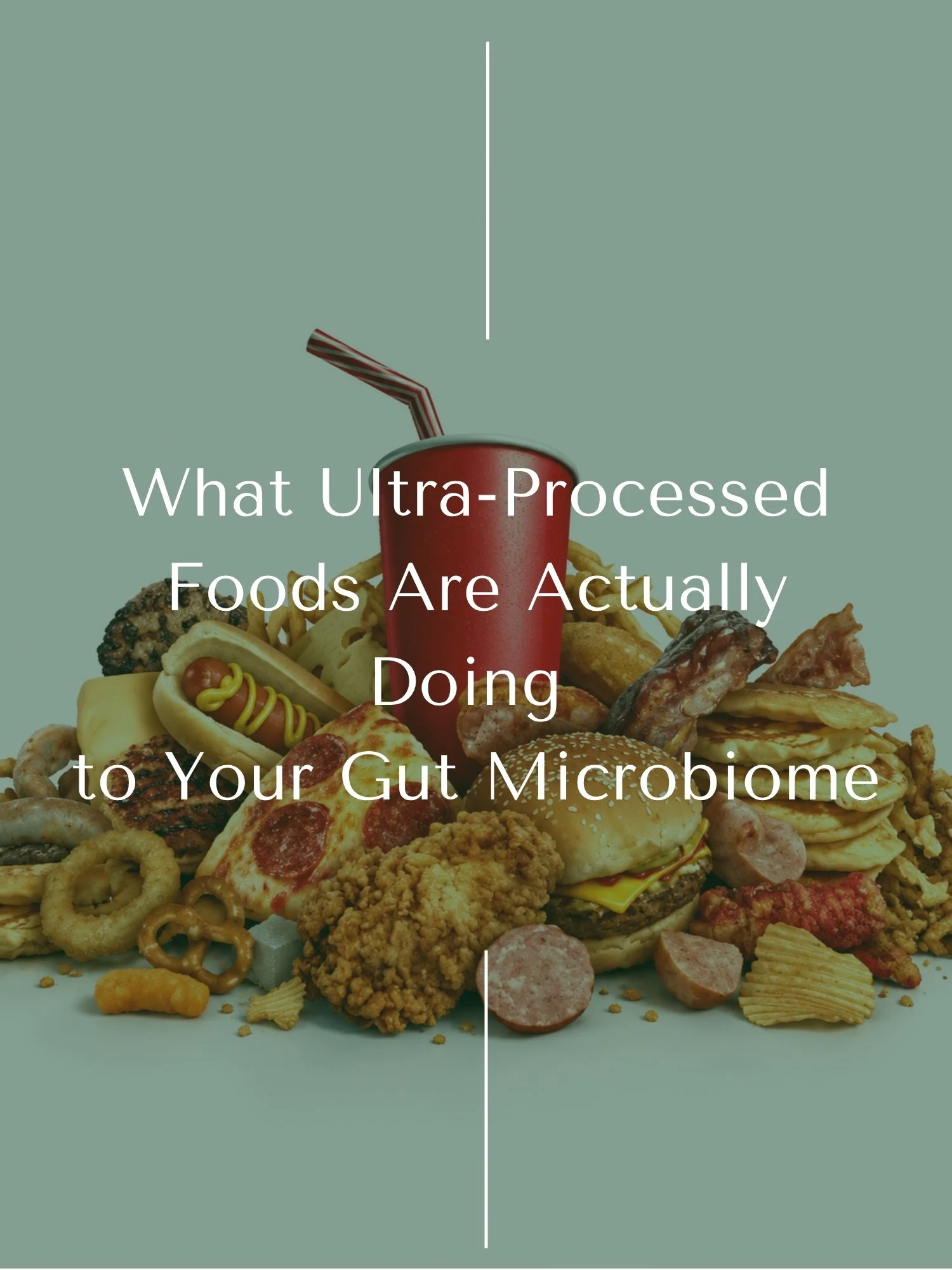
What Ultra-Processed Foods Are Actually Doing to Your Gut Microbiome

“Every meal becomes a message. The question is whether that message strengthens the ecosystem within you or asks it to work harder.”
Camille had been plant-based for six years. She read ingredient labels the way other people read menus, out of habit, without thinking too hard about it. She packed her own snacks for flights, carried dried mango and roasted chickpeas through airport security, and considered herself, reasonably, someone who knew what she was putting in her body.
So when she and her sister sat down at a gate café before a connecting flight and ordered the same oat-milk soft serve, advertised as dairy-free and plant-based, she didn't think twice.
Her sister finished hers in five minutes and went back to her phone. Camille spent the next four hours in and out of the airport bathroom, bloated, foggy, and quietly furious that a dessert made from oats and coconut cream had done what a week of airport food hadn't.
Here's what she didn't know yet: the reason her body reacted and her sister's didn't may have had nothing to do with willpower, and everything to do with the fact that her gut was healthier. A more intact microbiome and a more sensitive mucus lining can make certain food additives feel worse, not better. Feeling it is not a sign that something is wrong with you. It can be a sign that your gut is working the way it's supposed to.
That single distinction, between a food that is simply unhealthy and a food that is actively altering the ecosystem inside you, is the one most people, and most headlines, get wrong about ultra-processed food.

What “Ultra-Processed” Actually Means, and What It Doesn't
The NOVA classification system sorts food by the degree and purpose of its processing, and reserves “ultra-processed” for products built from industrial ingredients you wouldn't find in a home kitchen: protein isolates, modified starches, emulsifiers, and flavor compounds designed to make a shelf-stable product taste and feel like something fresh.
But ultra-processed doesn't automatically mean unhealthy, and unprocessed doesn't automatically mean safe. Lard is not ultra-processed. Eating spoonfuls of it would still raise your LDL cholesterol, the primary driver of heart disease, the leading killer of men and women in this country. Partially hydrogenated vegetable oil, by contrast, is ultra-processed, and does something nearly identical to your cholesterol. Both are bad for you. Only one of them fits the NOVA definition.
This matters because fear of a single word can send people away from foods that genuinely help them and toward a vague, anxious relationship with eating that serves no one. The more useful question isn't whether a food was processed, but what the processing added, and what that addition is doing once it reaches your gut.
The Additive Your Gut Might Not Forgive

Ask which additives deserve real scrutiny, and the research keeps pointing to emulsifiers, the compounds added to keep water and fat from separating in fatty, shelf-stable foods: whipped toppings, creamers, ice creams, dressings, and yes, oat-milk soft serve.
The concern started with a 2015 study published in Nature, in which researchers fed mice two common emulsifiers, carboxymethylcellulose (CMC) and polysorbate-80, and observed the animals develop bacterial overgrowth, thinning of the protective gut mucus layer, and low-grade intestinal inflammation. This was an animal-model study, not a human trial, and the researchers were careful to frame it that way. Since then, additional animal research has linked these emulsifiers to colitis, accelerated type 1 diabetes, and intestinal tumor growth, and even to metabolic and behavioral changes in offspring never directly exposed to the emulsifiers themselves, only to a mother's exposure during pregnancy.
Researchers have traced the mechanism with unusual precision, again in animal models: give mice antibiotics that wipe out their gut bacteria first, and the emulsifiers stop causing harm. Transfer the emulsifier-altered microbiome into a different animal by fecal transplant, and the same problems appear in the new host. The damage runs through the microbiome itself, and through a thinning of the mucus lining that normally keeps gut bacteria at a safe distance from the intestinal wall.
This has since moved into human research. A 2022 randomized, double-blind controlled-feeding study published in Gastroenterology gave healthy adults diets with and without added CMC and found measurable changes to gut microbiota composition and increased abdominal discomfort in the group consuming the emulsifier. A separate 2025 clinical trial, the ADDapt trial, found that people with Crohn's disease who followed a diet lower in emulsifiers were roughly three times more likely to see their symptoms improve than those on a diet containing them. This is why the International Organization for the Study of Inflammatory Bowel Disease now recommends that people with IBD limit CMC, polysorbate-80, and similar emulsifiers, while noting that the strongest evidence still comes from animal and smaller human studies rather than large population trials.
Here is the detail that explains Camille's airport bathroom: this reaction appears to require a functioning, diverse microbiome to happen at all. Someone whose gut ecosystem has been depleted, by heavy antibiotic use or chronic illness, may not react to an emulsifier-laden dessert the way someone with a thriving microbiome will. It isn't that the healthy eater's gut is weak. It's that it still has a mucus lining sensitive enough to notice when something in the food supply is disrupting it.

Where These Additives Hide, Even When the Label Says “Plant-Based”
Emulsifiers concentrate wherever fat and water need to be held together artificially, which means fatty, plant-based convenience foods are just as likely to contain them as their dairy counterparts. Oat-milk whipped cream, dairy-free ice cream, and plant-based creamers are common carriers, added specifically to keep the product from separating on a store shelf. Yogurt is trickier to generalize about, since its texture often comes from bacterial byproducts rather than added emulsifiers, so the ingredient list, not the texture, is the only reliable clue.
Maltodextrin, a bulking agent rather than an emulsifier, shows up across the same category of convenience foods and carries its own associations with intestinal disruption. Artificial colors and flavors round out the list worth a second look, not because any single one is catastrophic, but because a product carrying several of them at once is a reasonable proxy for built to survive a long shelf life, rather than grown.
Some of what concerns researchers most doesn't appear on the label at all. Processing contaminants, including compounds formed during high-heat industrial processing, and packaging chemicals like BPA and phthalates that can leach into food from containers and can linings, aren't ingredients the label is required to disclose. You won't find them listed. You'll find them in the food anyway.
The Leaky Gut Connection

“Leaky gut” has become wellness shorthand for something with a precise clinical name: intestinal permeability. Researchers can measure it directly, by giving someone a compound that should never cross the gut lining into the bloodstream, and then checking whether it shows up there anyway.
Why does it matter whether the gut lining stays sealed? Because the immune system is built to attack anything it recognizes as foreign, and the gut wall is what keeps foreign material on the correct side of that boundary. When the lining becomes permeable, small fragments the immune system doesn't recognize can slip through, and the resulting response doesn't always stay contained to the gut. Some researchers point to this kind of molecular mimicry, the immune system attacking a food fragment and then mistakenly targeting similar tissue elsewhere in the body, as one possible contributor to autoimmune joint pain.
The way to keep that lining intact is almost boringly simple: feed the bacteria that maintain it. Prebiotic fiber, concentrated in whole grains, legumes, and other drier plant foods rather than the water-heavy fruits and vegetables most people think of first when they hear “fiber,” is the raw material your gut bacteria need to keep the mucus barrier strong.
Can Your Body Actually “Detox” From This?
Not through a juice cleanse or a tea. Your body already runs a detoxification system more sophisticated than anything sold in a bottle, distributed across the liver, kidneys, gastrointestinal tract, lungs, and a network of cellular antioxidant pathways that work continuously, whether or not you're paying attention to them.
Not through a juice cleanse or a tea. Your body already runs a detoxification system more sophisticated than anything sold in a bottle, distributed across the liver, kidneys, gastrointestinal tract, lungs, and a network of cellular antioxidant pathways that work continuously, whether or not you're paying attention to them.

Human research shows that oral glutathione supplementation can meaningfully raise the body's own glutathione stores. A randomized, double-blind, placebo-controlled trial published in the European Journal of Nutrition found that adults taking daily oral glutathione for six months saw levels rise significantly across red blood cells, plasma, and immune cells, alongside a marked increase in natural killer cell activity, a marker of immune defense. That is meaningfully different from claiming a supplement pulls a specific chemical, BPA or phthalates included, out of your system. It's evidence that you can support the pathway your body already uses to do that work.
What You Can Do Today
You don't need to eliminate every processed food from your life to protect your gut. The research is more specific, and more forgiving, than that.

Cut the two categories most consistently linked to shorter lifespans across large population studies first: sweetened beverages, sugar and artificially sweetened alike, and ultra-processed animal products like chicken nuggets, hot dogs, and deli meat.
Read labels for carboxymethylcellulose, polysorbate-80, carrageenan, and maltodextrin, especially in fatty convenience foods: creamers, whipped toppings, ice creams, and dressings, plant-based versions included.
Feed your microbiome on purpose. A cup of lentils or a serving of whole grains delivers far more concentrated fiber than the equivalent volume of fruit or vegetables, which are mostly water. Add legumes, beans, and whole grains at meals rather than treating them as an occasional side.
When you travel, remember that the “healthy-looking” grab-and-go option is often the one with the longest ingredient list. A piece of fruit, a handful of nuts, or a can of beans you open yourself will almost always beat a plant-based dessert engineered to survive a shelf.
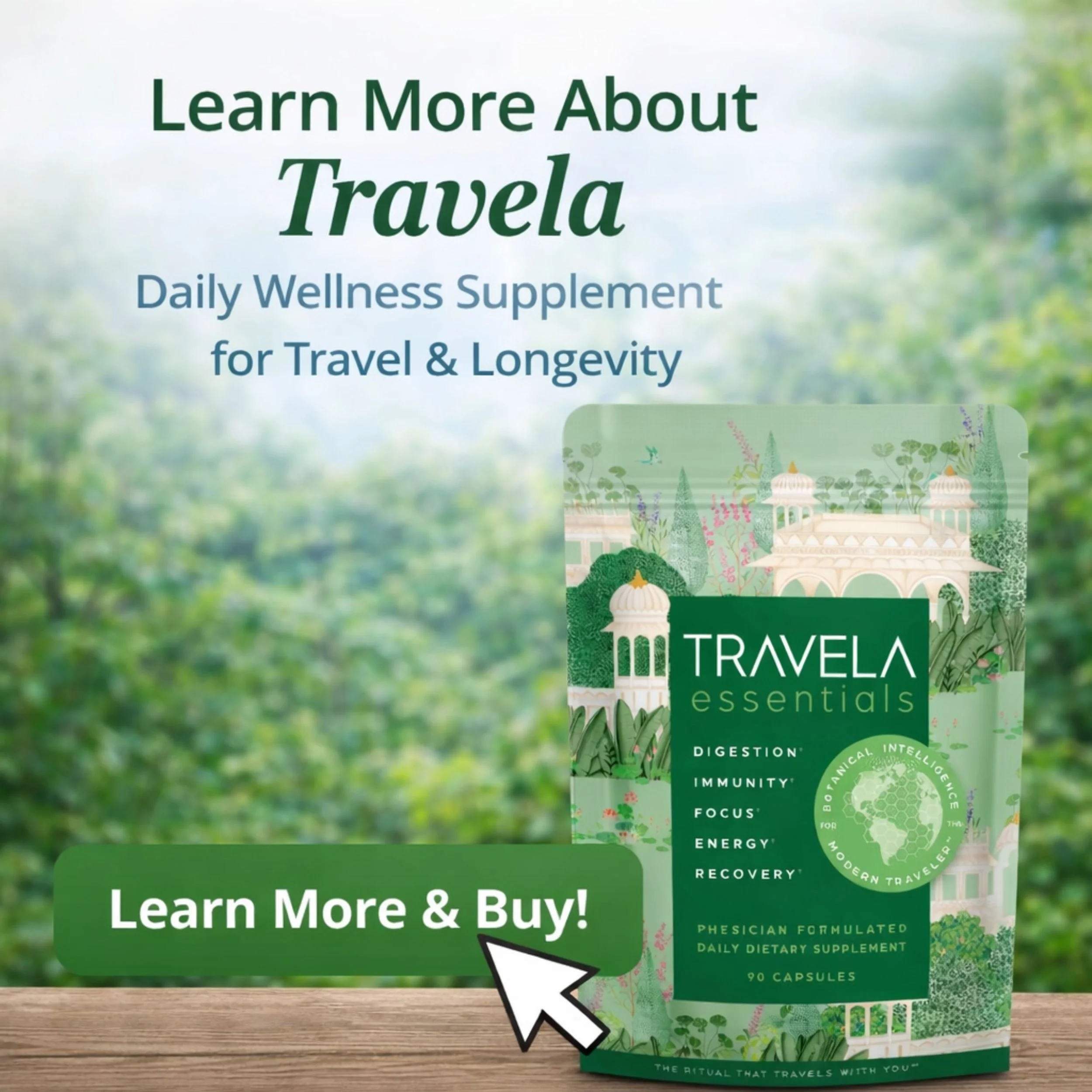
For the days when convenience wins anyway, and it will, supporting your body's own detoxification and antioxidant pathways matters. It's part of why I formulated Travela Essentials around ingredients like Setria glutathione: not to detoxify a specific additive or a specific trip, but to support the cellular pathways your body already relies on to process what it encounters, on the road and at home. The most meaningful changes are often the ones you stop noticing. Less travel fatigue. Less digestive disruption after a meal you didn't fully choose. A daily ritual that travels with you, quietly doing its job in the background.
#CellCare Reflection

Every cell in your body is listening to what you feed it, and your gut microbiome is the translator standing between your fork and your cells. Ultra-processed food isn't a moral failing or a life sentence. It's information about which ingredients your gut can handle and which ones it can't, and that information gets more useful the more attention you pay to it.
You don't have to overhaul your pantry tonight. Pick one thing: read one label before you buy it, swap one sweetened drink for water, add one serving of legumes to dinner. Cellular health is built one choice at a time, and every choice you make today is a form of restoration for the ecosystem that's been carrying you all along.

MAKE A DIFFERENCE BY SHARING THIS ARTICLE WITH OTHERS TO ENCOURAGE WELLBEING ⤵
References:
Bancil, Aaron, et al. “Emulsifier Restriction Is an Effective Therapy for Active Crohn's Disease: The ADDapt Trial, a Multi-Centre, Randomised, Double-Blind, Placebo-Controlled, Re-Supplementation Trial in 154 Patients.” Journal of Crohn's and Colitis 19, Supplement 1 (2025): i262. Presented at the 20th Congress of ECCO, Berlin, Germany, February 19–22, 2025.
Chassaing, Benoit, Omry Koren, Julia K. Goodrich, Angela C. Poole, Shanthi Srinivasan, Ruth E. Ley, and Andrew T. Gewirtz. “Dietary Emulsifiers Impact the Mouse Gut Microbiota Promoting Colitis and Metabolic Syndrome.” Nature 519, no. 7541 (2015): 92–96.
Chassaing, Benoit, Charlene Compher, Brittaney Bonhomme, Qing Liu, Yuan Tian, William Walters, Lisa Nessel, et al. “Randomized Controlled-Feeding Study of Dietary Emulsifier Carboxymethylcellulose Reveals Detrimental Impacts on the Gut Microbiota and Metabolome.” Gastroenterology 162, no. 3 (2022): 743–756.
Richie, John P., Sailendra Nichenametla, Wanda Neidig, Ana Calcagnotto, Jeremy S. Haley, Todd D. Schell, and Joshua E. Muscat. “Randomized Controlled Trial of Oral Glutathione Supplementation on Body Stores of Glutathione.” European Journal of Nutrition 54, no. 2 (2015): 251–263. Published online May 5, 2014.
U.S. Food and Drug Administration. “FDA to Revoke Authorization for the Use of Red No. 3 in Food and Ingested Drugs.” News release, January 15, 2025.
The information on this website has not been evaluated by the Food & Drug Administration or any other medical body. We do not aim to diagnose, treat, cure or prevent any illness or disease. Information is shared for educational purposes only. You must consult your doctor before acting on any content on this website, especially if you are pregnant, nursing, taking medication, or have a medical condition. Our content may include products that have been independently chosen and recommended by Dr. Monisha Bhanote and our editors. We may earn a small commission if you purchase something mentioned in this article.
YOU MAY ALSO LIKE:




by Dr. Monisha Bhanote
✅ EVIDENCE-INFORMED REVIEWED ARTICLE