Queuosine: The ‘Longevity Vitamin’ You’ve Never Heard Of (And Why Your Gut Needs It)

“Healthy aging is not just about avoiding disease. It’s about giving your cells the nutrients they need to function with precision.”
Let me tell you something fascinating: queuosine may be one of the most important longevity nutrients most people—and honestly, most doctors—have never heard of.
It sounds obscure, but biology is anything but. Queuosine, also called queuine, is a micronutrient your body depends on for cellular repair, protein accuracy, and brain chemistry, yet you can’t make it yourself.
You have to get it from your diet and from your gut microbes. Which means your microbiome isn’t just helping you digest food. It’s helping supply a compound that may influence how well you age.
That’s why I think of queuosine as the "longevity vitamin" hiding in plain sight. Once you see how it works, you start looking at gut health very differently.
What Exactly is Queuosine? (Meet "Vitamin Q")
In the world of biochemistry, we usually talk about the "big" vitamins: A, C, D, and the B complex. But Queuosine is a different kind of hero. It is a non-canonical nucleoside, a fancy way of saying it’s a specialized building block that helps your body read its own genetic code.
Here is the catch: Humans cannot synthesize queuosine.
We are entirely dependent on two sources: the microbes living in our gut and the food we eat. This is why I often say that your microbiome isn't just a "digestive aid": it’s a sophisticated manufacturing plant for the very molecules that keep you young at the cellular level.
The 2025 Breakthrough: Why the Science is Exploding Now
For decades, queuosine was a mystery. We knew it existed in our cells, and we knew that when levels were low, health declined. But we didn't know how it actually got into our cells.
That changed with groundbreaking research published in 2025. Scientists finally identified the "gate-keeper" gene: SLC35F2: which acts as the specific transporter for queuosine. This discovery has flipped the script on longevity science. We now understand that queuosine isn't just a bystander; it is a vital nutrient that your cells actively "hunt" for to maintain their resilience.
Why Your Cells are Craving Queuosine
So, what does this "Vitamin Q" actually do once it gets inside your cells? It performs three critical jobs that are foundational to what we call CellCare.
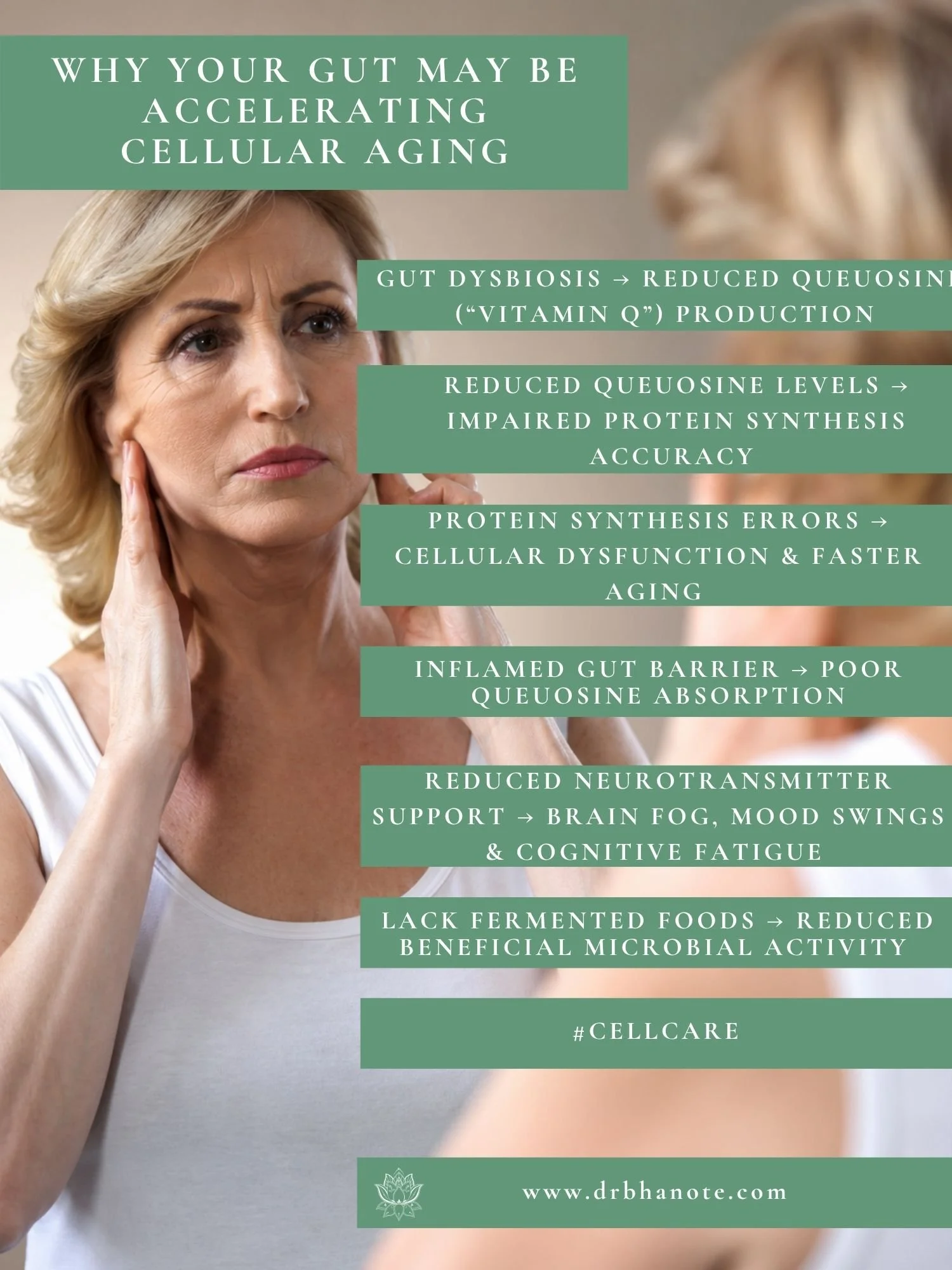
1. The "Editor" of Your Protein Factory
Your body is constantly building proteins: collagen for your skin, enzymes for digestion, and antibodies for your immune system. This happens through a process called protein synthesis.
Queuosine lives inside your tRNA (transfer RNA). Think of tRNA as the "delivery trucks" that bring the right ingredients to the protein factory. Queuosine acts as the editor, ensuring those trucks deliver the right parts at the right time. Without it, your cells start making "typos" in your proteins. Over time, these typos lead to cellular aging and dysfunction.
2. The Brain Health Powerhouse
If you’ve been struggling with mood swings or "brain drain," queuosine might be the culprit. Research suggests it plays a massive role in the synthesis of neurotransmitters like serotonin and dopamine.
It does this by supporting the production of tetrahydrobiopterin (BH4), a critical cofactor for brain function. When queuosine levels drop, your brain's ability to regulate mood and cognitive focus drops right along with it.
3. Cellular Stress Resilience
We live in a world of high stress: oxidative stress, environmental toxins, and the frantic pace of modern life. Queuosine helps "fine-tune" how your body responds to these stressors. It stabilizes your cellular machinery so that even when things get chaotic, your cells can keep performing at their peak.

Is Your Gut Making Enough? The Microbiome Connection
Since you can't make queuosine yourself, your gut health becomes your primary "wealth" for longevity.
When your microbiome is in a state of dysbiosis (an imbalance of "good" vs. "bad" bacteria), your production of queuosine plummets. This creates a vicious cycle: poor gut health leads to low queuosine, which leads to poor cellular repair, which makes it even harder for your gut to heal.
So, what can you do about it?
Think of it as Lifestyle Design. You aren't just eating for calories; you are eating to fuel your internal laboratory.
How to Boost Your "Vitamin Q" Levels Naturally
If you want to optimize your queuosine levels, you need to focus on two things: feeding the microbes that make it and consuming foods that contain it.
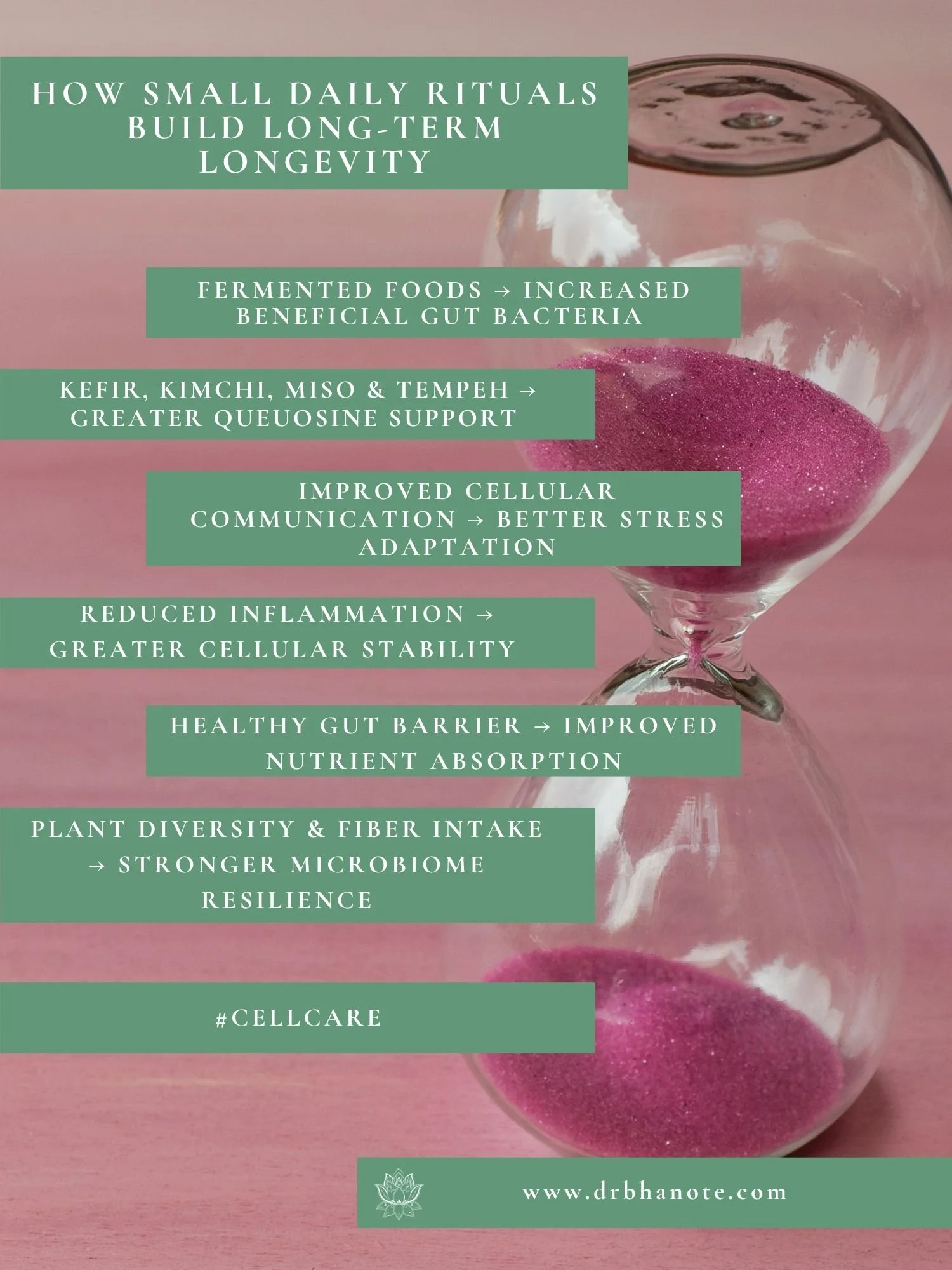
1. Fermented Foods are King: Queuosine is found in high concentrations in traditionally fermented foods.
Kefir & Yogurt: Great for introducing live cultures.
Tempeh & Miso: These are "Queuosine goldmines" because of the specific bacterial fermentation involved.
Sauerkraut & Kimchi: Raw, unpasteurized versions are best.
2. Plant-Forward Fiber: Feed your "queuosine-producers" by eating a diverse range of plant fibers. Aim for 30 different plants a week: it’s easier than you think!
3. Support the Gut Barrier: Your gut can't absorb queuosine if it’s inflamed. The goal is to reduce the friction: less inflammation, better absorption, and a healthier microbial ecosystem.

Take Control of Your Cellular Future
At the WELLKULÅ Institute, we teach that CellCare is the new self-care. Understanding the role of micronutrients like queuosine moves you from being a passive observer of your health to an active designer of your longevity.
The discovery of the "Longevity Vitamin" reminds us that health is often found in the things we can't see: the microscopic interactions happening inside your cells right now.

Your next steps:
Incorporate one fermented food daily. Whether it’s a scoop of kimchi on your bowl or a glass of kefir, make it a non-negotiable ritual.
Listen to your gut. If you’re experiencing persistent bloating or fatigue, don't ignore it. It’s your body’s way of saying the factory is understaffed.
Go deeper. If you want to learn the science of how to rewire your nervous system and support cellular transformation, explore our Cell Revive Program.
Let’s stop settling for "feeling okay" and start aiming for cellular excellence. Your gut is ready to build your longevity: you just have to give it the right tools.


MAKE A DIFFERENCE BY SHARING THIS ARTICLE WITH OTHERS TO ENCOURAGE WELLBEING ⤵
The information on this website has not been evaluated by the Food & Drug Administration or any other medical body. We do not aim to diagnose, treat, cure or prevent any illness or disease. Information is shared for educational purposes only. You must consult your doctor before acting on any content on this website, especially if you are pregnant, nursing, taking medication, or have a medical condition. Our content may include products that have been independently chosen and recommended by Dr. Monisha Bhanote and our editors. We may earn a small commission if you purchase something mentioned in this article.
YOU MAY ALSO LIKE:


by Dr. Monisha Bhanote
✅ EVIDENCE-INFORMED REVIEWED ARTICLE