
The Invisible Impact of Brain Injury and What the Brain Needs to Recover | Dr. Monisha Bhanote on the Connect My Child's Brain Podcast

There are injuries the world can see.
A broken bone has a cast. A surgical incision leaves a scar. A sprain changes the way we walk.
Then there are injuries that alter nearly everything about how a person experiences the world while remaining largely invisible to everyone else.
For Dr. Monisha Bhanote, that distinction became deeply personal after an unexpected traumatic brain injury changed her speech, memory, balance, focus, energy, sleep, and relationship with the world around her.
Recently, Dr. Bhanote joined Dr. Laura Hanson on the Connect My Child's Brain Podcast for a conversation about traumatic brain injury, neuroinflammation, nervous system regulation, childhood brain development, cellular health, and what it means to build resilience over time.
As a quintuple board-certified physician who spent decades diagnosing disease under the microscope, Dr. Bhanote was accustomed to studying cells after something had gone wrong.
Her own experience led her toward another question:
How do we create the conditions that help our cells function well when the body is being asked to adapt?
Listen to the full episode here or find the Connect Your Child’s Brain Podcast on your preferred podcast platform.
In This Episode, We Cover:
The Invisible Biology of Brain Injury
One of the most challenging aspects of a brain injury is that outward appearance may reveal very little about what is happening internally.
After Dr. Bhanote's injury, she experienced difficulty speaking and writing, impaired balance, memory and focus changes, chronic fatigue, sleep disruption, pain, tinnitus, and heightened sensitivity to light and sound. Yet to someone looking at her, she could appear perfectly well.
That experience changed the way she thinks about resilience.
The brain does not function in isolation. An injury can influence inflammation, energy production, sensory processing, sleep, movement, digestion, and the nervous system. Supporting recovery therefore requires looking beyond a single symptom and considering the biological systems surrounding it.
For Dr. Bhanote, this is also why understanding the body matters so deeply. When we become more familiar with our own baseline, subtle changes become easier to recognize—and worth paying attention to.
The Brain, Gut, and Mitochondria Are in Constant Conversation
During her recovery, Dr. Bhanote became particularly attentive to two areas she had spent years studying: the gut microbiome and cellular energy.
The connection is important.
Inflammatory activity in one system can influence others, while the gut microbiome participates in immune signaling and communication along the gut-brain axis. At the cellular level, mitochondria provide the energy required for tissues—including the brain—to perform their everyday work.
Dr. Bhanote experienced this relationship personally when her previous four- and five-mile walks became difficult to imagine and simply walking to the mailbox could exhaust her.
Rather than viewing nutrition, sleep, movement, supplementation, and nervous system regulation as unrelated strategies, she began approaching them as parts of the same cellular environment.
It is a perspective that now shapes her broader work in longevity:
Health is rarely the result of one intervention. It is the cumulative expression of the conditions we repeatedly create for our cells.
A Regulated Nervous System Begins With Understanding the Environment
The conversation also turns toward children—and what adults sometimes interpret as difficult behavior may actually reveal about an overwhelmed nervous system.
Consider an airport, a crowded store, a road trip, or even an unusually busy afternoon.
There may be unfamiliar sounds, bright lighting, new smells, crowds, altered meal times, dehydration, disrupted routines, physical discomfort, and constant sensory input arriving simultaneously.
For a developing brain, that can be an extraordinary amount of information to process.
Dr. Bhanote encourages parents to consider what may be happening beneath the behavior rather than simply reacting to it.
Quiet time matters. Movement matters. Time away from constant screens and stimulation matters. So does allowing children opportunities to use their hands, interact physically with their environment, spend time outside, and learn to recognize what their bodies may need.
The lesson extends well beyond childhood.
Adults benefit from these pauses, too.
From Personal Recovery to #CellCare and Travela Essentials
Dr. Bhanote's experience ultimately deepened a philosophy that had been developing throughout her career:
#CellCare is self-care.
After decades of examining cells under the microscope, her focus increasingly moved upstream—from identifying disease to asking how nutrition, movement, sleep, stress regulation, and other daily inputs influence cellular function over time.
Her recovery also required an extensive supplement regimen. At one point, she describes taking approximately 30 supplements as part of the broader protocol she had developed for herself.
That complexity eventually became part of the inspiration behind Travela Essentials.
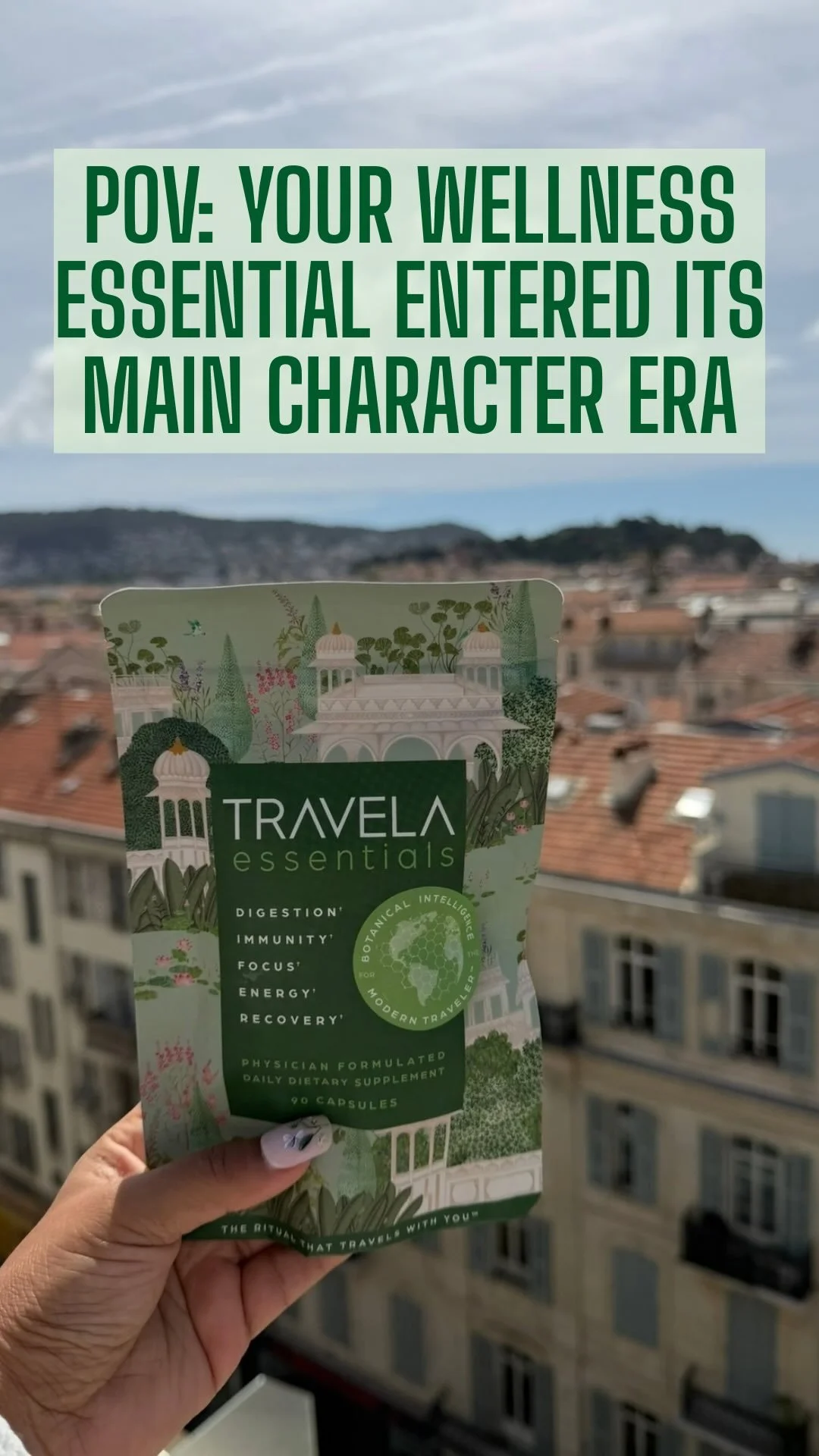
Created through Travela Wellness, Travela Essentials brings together Dr. Bhanote's interest in botanical intelligence and modern longevity science within a more streamlined daily ritual designed around the interconnected needs of modern life.
It does not replace the fundamentals.
Food matters. Sleep matters. Movement matters. Nature matters. Nervous system regulation matters.
The larger idea is to support those foundations consistently—before life asks more of us than usual.
Final Thoughts
Perhaps the most important lesson from Dr. Bhanote's experience is that resilience does not necessarily mean returning to exactly who we were before something changed.
Sometimes it means learning the body again.
What gives you energy now? What overwhelms your nervous system? What helps you sleep? How does your digestion respond to stress? When does your brain need quiet rather than another demand?
These questions are not reserved for people recovering from an injury.
They belong in everyday life.
Dr. Bhanote's #CellCare philosophy asks us to become more attentive to the environments we create for our cells through nourishment, movement, sleep, nature, stress regulation, and intentional daily rituals.
Resilience is rarely built in a single dramatic moment.
More often, it is cultivated quietly—one supportive choice at a time.
Continue Your Wellness Journey

For readers interested in exploring cellular health, gut health, nervous system regulation, plant-based nutrition, and longevity more deeply, the WELLKULÅ Institute brings Dr. Bhanote's philosophy together through education and intentional lifestyle practices.
Her work continues through The Anatomy of Well-Being, educational blogs, speaking engagements, global Longevity Retreats, and the #CellCare Wellness Newsletter.
Through Travela Wellness, that philosophy also extends into life on the move. Travela Essentials was created as a physician-formulated daily wellness ritual inspired in part by Dr. Bhanote's own experience of simplifying the many elements she had incorporated into her cellular wellness routine.
The purpose is not to replace the foundations of wellbeing, but to complement the practices that support us wherever life happens to take us.
Listen to the Full Episode
Hear the complete conversation between Dr. Monisha Bhanote and Dr. Laura Hanson on the Connect My Child's Brain Podcast for a deeper discussion of traumatic brain injury, neuroinflammation, the gut-brain connection, nervous system regulation, childhood development, cellular health, and the daily rituals that helped reshape Dr. Bhanote's understanding of resilience.
Listen to the full episode here or listen on your preferred podcast platform.
The brain's resilience is connected to far more than what happens inside the skull. By supporting the gut, nervous system, cellular energy, movement, sleep, and the rhythms of everyday life, we can create a stronger foundation for lifelong brain and cellular wellbeing.
ARTICLE CONTINUES BELOW

More Resources from Dr. Bhanote
Signup for our #CellCare Wellness Newsletter
Attend One of Our Longevity Retreats
Learn more about Travela Wellness Supplements
Download our Removing Toxins & Optimizing Gut Health Guide
Get Your Copy of Dr. Bhanote’s Book,The Anatomy of Wellbeing (now available on audiobook)


Connect with Dr. Bhanote
Instagram https://www.instagram.com/drbhanote/
Pinterest https://www.pinterest.com/drbhanote/
Facebook https://www.facebook.com/drbhanote
Personalized Solutions
Cell Revive Program | Restore Your Cellular Health | Schedule Your New Patient Discovery Call

MAKE A DIFFERENCE BY SHARING THIS ARTICLE WITH OTHERS TO ENCOURAGE WELLBEING ⤵
The information on this website has not been evaluated by the Food & Drug Administration or any other medical body. We do not aim to diagnose, treat, cure or prevent any illness or disease. Information is shared for educational purposes only. You must consult your doctor before acting on any content on this website, especially if you are pregnant, nursing, taking medication, or have a medical condition. Our content may include products that have been independently chosen and recommended by Dr. Monisha Bhanote and our editors. We may earn a small commission if you purchase something mentioned in this article.
YOU MAY ALSO LIKE:





by Dr. Monisha Bhanote
✅ EVIDENCE-INFORMED REVIEWED ARTICLE