
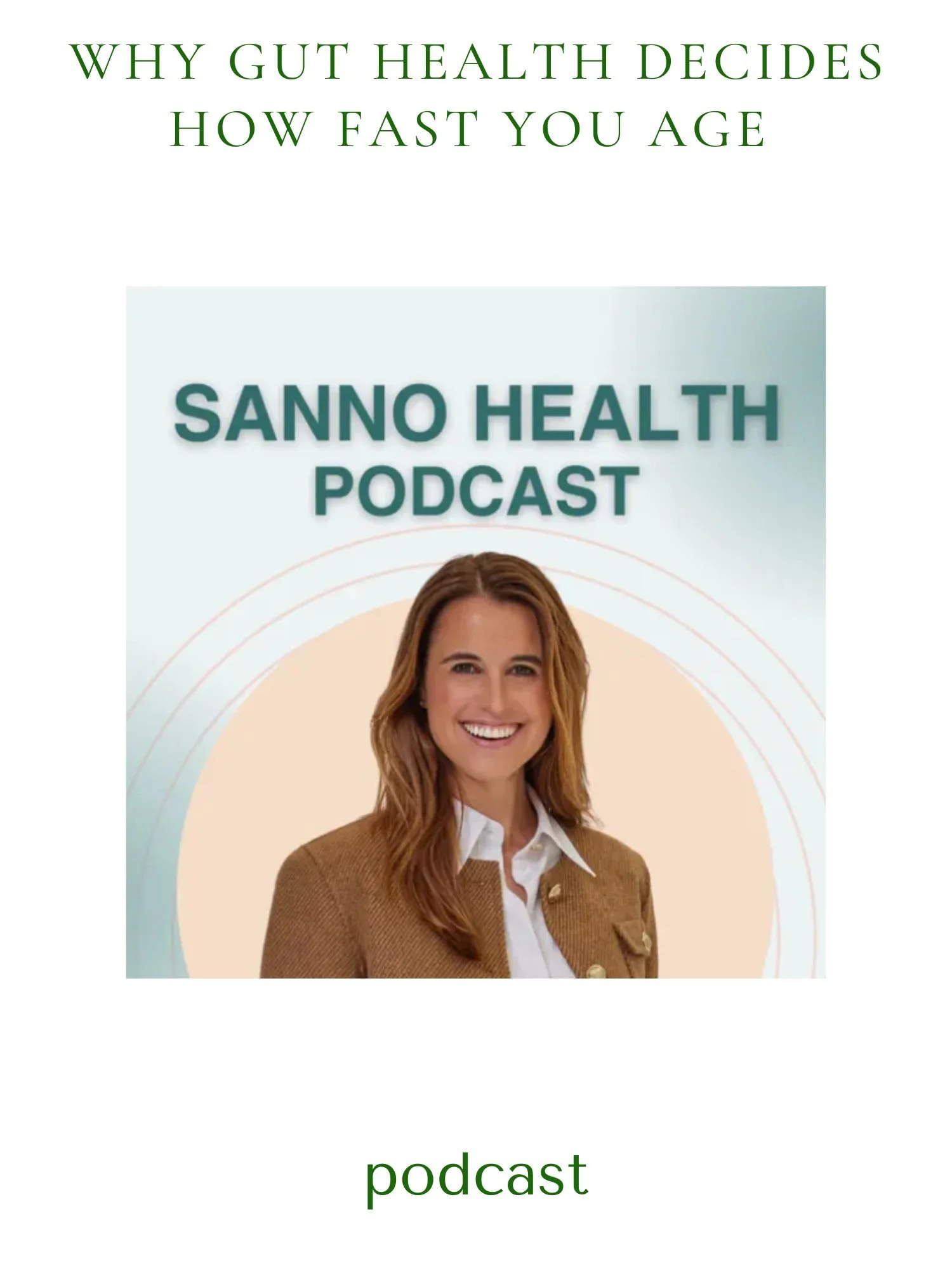
Why Gut Health Decides How Fast You Age | Dr. Monisha Bhanote on The SANNO Health Podcast
Two people can celebrate their sixtieth birthday on the same day, yet their bodies may be aging differently. One may feel energetic and resilient, while the other experiences fatigue, disrupted sleep, or slower recovery.
Their chronological age is identical, but the biological processes influencing their health may tell different stories.
On the SANNO Health Podcast, Dr. Monisha Bhanote, MD, discusses how cellular health, the gut microbiome, stress, and nutrition influence the aging process. A quintuple board-certified physician in Anatomic Pathology, Clinical Pathology, Cytopathology, Integrative Medicine, and Culinary Medicine, Dr. Bhanote is also the founder of the WELLKULÅ Institute, creator of #CellCare, and author of The Anatomy of Well-Being.
Drawing on decades of experience examining human tissue, she explains why understanding what happens beneath the surface can help us make more informed decisions about long-term health
Listen to the full episode here or find the SANNO Health Podcast on your preferred podcast platform.
In This Episode, We Cover:
Biological Age: What Your Cells Reveal About Aging
Chronological age measures the years since birth. Biological age attempts to estimate how aging-related processes are progressing within the body.
Researchers use measurements such as DNA methylation patterns to study biological aging. Although these tests offer interesting insights, they are not definitive predictions of an individual's future health.
Dr. Bhanote emphasizes that cellular aging is influenced by multiple factors, including nutrition, sleep, physical activity, and environmental exposures.
She also discusses telomeres, protective structures at the ends of chromosomes that generally shorten as cells divide. Telomere biology is complex, but it offers another window into the processes associated with aging.
The important lesson is not to chase a younger biological-age score. It is to create conditions that support cellular function throughout life.
Why Cellular Changes Can Begin Before Symptoms Appear
As a pathologist, Dr. Bhanote has observed how tissues change over time.
During the interview, she describes how prolonged acid reflux can contribute to changes in the esophageal lining, sometimes leading to Barrett's esophagus, a condition requiring appropriate medical evaluation and surveillance.
This example illustrates an important distinction: symptoms do not always reflect the full extent of changes occurring within tissues.
Cellular health is therefore about more than responding to discomfort. It involves understanding risk factors, recognizing persistent symptoms, and participating in recommended preventive care.
Nutrition and lifestyle choices can support overall health, but they complement rather than replace medical screening and treatment.
The Gut Microbiome: Why Plant Diversity Matters
One of Dr. Bhanote's most practical recommendations is to increase the variety of plant foods consumed throughout the week.
She discusses the 30-plants-per-week concept, encouraging readers to look beyond vegetables and fruit to include legumes, whole grains, nuts, seeds, herbs, and spices.
Different plants provide different fibers and phytochemicals that interact with the gut microbiome.
Certain microorganisms ferment dietary fibers into short-chain fatty acids, including butyrate, which supports the cells lining the colon.
Dr. Bhanote also recommends considering fermented foods, such as sauerkraut, kimchi, miso, and other plant-based options containing live cultures.
Rather than approaching nutrition through restriction, her philosophy emphasizes what we can add.
Try rotating your breakfast grains, introducing a new legume, or including several herbs in a favorite meal. These small additions make dietary diversity more approachable.
Stress, the Nervous System, and the Foundations of Longevity
Stress affects more than our emotional state. Prolonged stress can influence sleep, hormonal signaling, immune function, and digestive comfort.
Dr. Bhanote discusses research examining relationships between chronic stress and telomere length, while emphasizing the importance of supporting the body's foundational needs.
Her perspective also incorporates Ayurveda, the traditional Indian system of medicine, which emphasizes individualized approaches to nourishment and daily living.
Modern microbiome research and traditional wellness frameworks offer different ways of considering individual variation, although their methods and evidence are not interchangeable.
A consistent sleep schedule, mindful meals, regular movement, and intentional moments of rest can help support nervous system resilience.
These rituals form the foundation upon which more specialized longevity approaches can be considered.
The Philosophy Behind Travela Essentials

Dr. Bhanote's understanding of cellular resilience became personal following a traumatic brain injury that affected her energy, focus, and everyday functioning.
During her recovery, she revisited botanical traditions and contemporary research while working with medical professionals to address her health concerns.
Her extensive international travel also highlighted the difficulty of maintaining complicated supplement routines while moving between countries and time zones.
These experiences contributed to the development of Travela Essentials™, a physician-formulated daily supplement from Travela Wellness.
Combining botanical ingredients inspired by Ayurveda and traditional wellness practices with selected bioactive nutrients, the formulation was designed around five areas: digestion, immunity, focus, energy, and recovery.
Its underlying philosophy reflects Dr. Bhanote's broader message: foundational nutrition and lifestyle rituals remain essential, while thoughtfully selected supplements may play a complementary role.
Final Thoughts
Longevity is not simply about adding years to life. It is about supporting the cellular and physiological functions that contribute to quality of life.
Dr. Bhanote's conversation reminds us that sophisticated testing and emerging technologies cannot replace the fundamentals of wellbeing.
A diverse plant-based eating pattern, restorative sleep, movement, stress regulation, and appropriate preventive care remain important foundations.
The most meaningful approach to healthy aging begins with understanding your biology and making intentional choices that support it.
Continue Your Wellness Journey
Through the WELLKULÅ Institute, Dr. Bhanote shares education on cellular health, gut health, plant-based nutrition, lifestyle medicine, and longevity.
Readers can continue learning through The Anatomy of Well-Being, the #CellCare Wellness Newsletter, and her Global Longevity Retreats, which integrate education, mindful movement, and intentional living.
Dr. Bhanote’s work with Travela Essentials further reflects her heart for botanical intelligence and practical daily wellness rituals.
Listen to the Full Episode
Hear the complete conversation between Dr. Monisha Bhanote and Ariadna Masó on the SANNO Health Podcast. The complete episode explores biological aging, telomeres, cellular changes, gut microbiome diversity, botanical science, and additional practical strategies to support long-term wellbeing.
Listen to the full episode here, or listen on your preferred podcast platform.
ARTICLE CONTINUES BELOW

More Resources from Dr. Bhanote
Signup for our #CellCare Wellness Newsletter
Attend One of Our Longevity Retreats
Learn more about Travela Wellness Supplements
Download our Removing Toxins & Optimizing Gut Health Guide
Get Your Copy of Dr. Bhanote’s Book,The Anatomy of Wellbeing (now available on audiobook)



Connect with Dr. Bhanote
Instagram https://www.instagram.com/drbhanote/
Pinterest https://www.pinterest.com/drbhanote/
Facebook https://www.facebook.com/drbhanote
Personalized Solutions
Cell Revive Program | Restore Your Cellular Health | Schedule Your New Patient Discovery Call

MAKE A DIFFERENCE BY SHARING THIS ARTICLE WITH OTHERS TO ENCOURAGE WELLBEING ⤵
The information on this website has not been evaluated by the Food & Drug Administration or any other medical body. We do not aim to diagnose, treat, cure or prevent any illness or disease. Information is shared for educational purposes only. You must consult your doctor before acting on any content on this website, especially if you are pregnant, nursing, taking medication, or have a medical condition. Our content may include products that have been independently chosen and recommended by Dr. Monisha Bhanote and our editors. We may earn a small commission if you purchase something mentioned in this article.
YOU MAY ALSO LIKE:



by Dr. Monisha Bhanote
✅ EVIDENCE-INFORMED REVIEWED ARTICLE