Hashimoto's and Gut Health: When Your Thyroid Labs Look Normal and You Still Don't Feel Like Yourself

“Your thyroid, gut, and immune system are in constant conversation. Understanding their signals is where more personalized care begins.”
Dana reads the lab report in the parking garage before she starts the car. TSH: 2.8. Within normal limits. It is the third year in a row she has seen that phrase, and the third time she has driven home wondering why normal feels like walking through wet sand.
She is 52. She eats well, walks most mornings, and is in bed by ten. She still needs two alarms. Her hair comes out in the shower in amounts that worry her, and by three in the afternoon she reads the same email four times. Her doctor is kind and busy, and the explanation is always some mix of perimenopause, stress, and getting older.
Any of those could be part of it. But nobody has checked her thyroid antibodies.
So many of my patients and readers are living some version of Dana's story, and many of them have Hashimoto's thyroiditis. That is why I brought this conversation to the Gut Health & Longevity Summit, where I sat down with Dr. Bojana Jankovic Weatherly, a double board-certified internist and integrative physician who has spent her career finding the root causes beneath a thyroid diagnosis. Here is what we want you to understand.

What Hashimoto's Actually Is
Hashimoto's and hypothyroidism get used as if they were the same thing. They describe two different layers of the same story.
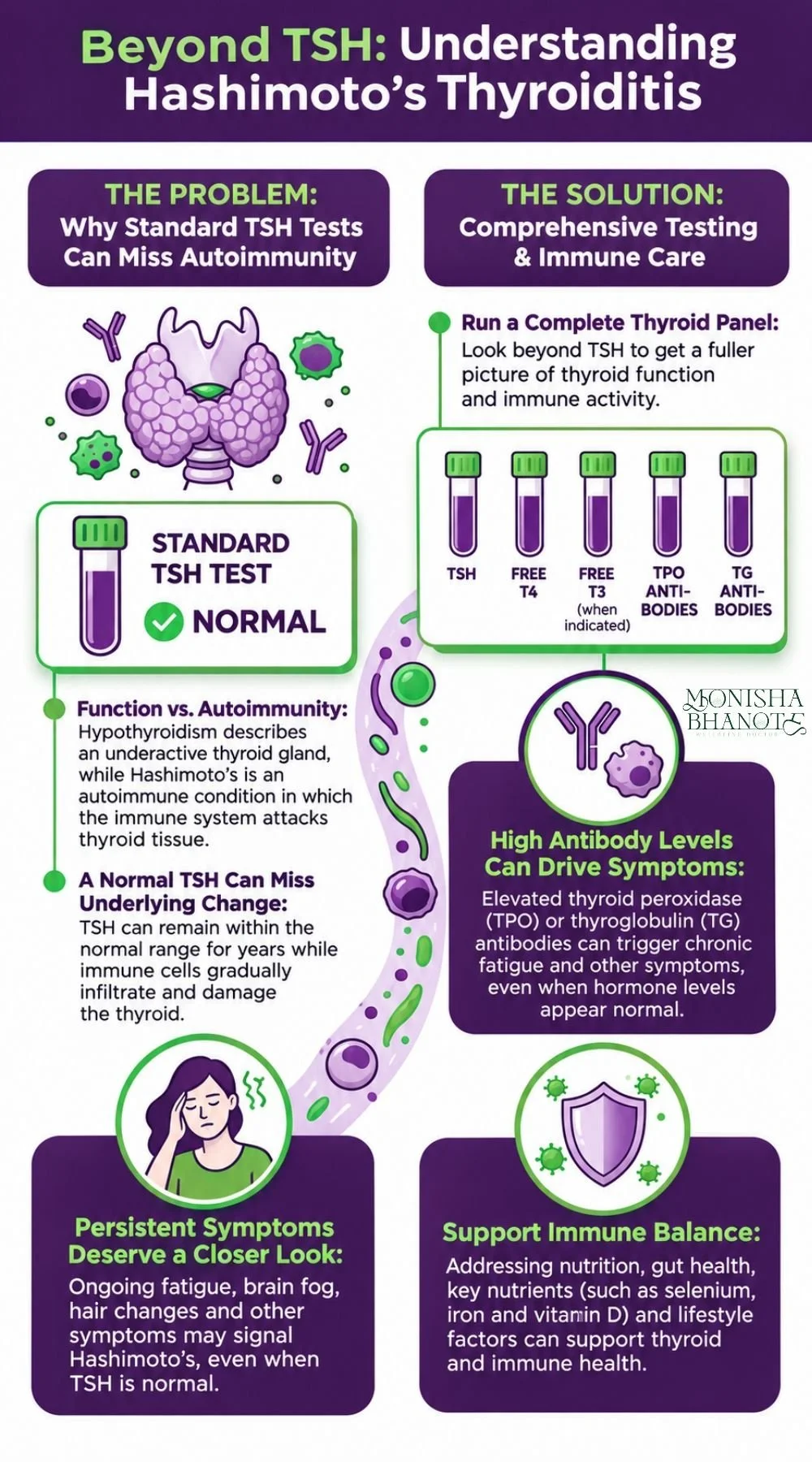
Hypothyroidism means the thyroid is underactive. It is a description of function. Hashimoto's thyroiditis is an autoimmune condition, and it describes a cause: the immune system begins treating the thyroid as foreign tissue and slowly attacks it. As the gland is damaged, it can lose its ability to make enough hormones, and that is the point where hypothyroidism appears.
Some people live with Hashimoto's for years, even for life, without their thyroid ever becoming underactive. Others discover it only once the fatigue, weight changes, and brain fog arrive. In countries with adequate iodine, Hashimoto's is the most common reason a thyroid becomes underactive, which is exactly why the two words get blurred.
What I Saw Under the Microscope
Long before integrative medicine, I trained as a pathologist. At NYU, our fine-needle aspiration clinic saw eight to ten patients a day with thyroid nodules or something unusual on imaging. We would draw a small sample of cells and study them under the microscope, and over the years I came to know the look of Hashimoto's at the cellular level.
A healthy thyroid is soft and full of colloid, the protein-rich substance where thyroid hormone is made and stored, held inside neat little follicles. In Hashimoto's, lymphocytes move in. These immune cells infiltrate the gland and crowd out the follicles that do the work. Over years, a soft, full gland can become firm and shrunken, more immune tissue than thyroid.
That process is gradual. It can be well under way while blood work still looks unremarkable, which is one reason so many people feel unwell long before anyone names it.
Why a Normal TSH Can Miss Hashimoto's
TSH, or thyroid-stimulating hormone, is made by the pituitary gland at the base of the brain. It is the messenger that tells the thyroid to produce hormones. When the thyroid falls behind, the pituitary sends more TSH, the way you might raise your voice to wake someone who is sleeping through an alarm.
That makes TSH a useful screening test for thyroid function. It tells us nothing directly about autoimmunity. Standard practice is often to check TSH, see a normal number, and stop. The point my guest and I kept returning to at the summit is that a person with a clear set of symptoms deserves a fuller look.
A complete picture usually includes TSH, free T4, and free T3, the more active form of thyroid hormone, along with two antibody tests: thyroid peroxidase antibodies (TPO) and thyroglobulin antibodies (Tg). Antibodies are raised in the large majority of people with Hashimoto's, and they are a simple blood draw.
Classic thyroid symptoms such as fatigue, hair loss, and low mood also overlap with iron deficiency, so a thoughtful workup looks at both.
When Antibodies Are High but Hormones Look Normal
Many people are told that high TPO antibodies are nothing to worry about as long as their thyroid hormones are in range. The research suggests the antibodies deserve more respect than that.
In a study of 426 women whose thyroid function was normal at the time, those with high TPO antibodies were significantly more likely to report chronic fatigue, dry hair, irritability, and nervousness, and they scored lower on quality of life. The inflammation itself appears to carry a symptom burden, even before hormone levels change.
I think of every lab value as a message from your cells. You can choose to ignore it. You are far better served by listening early, while there is still the most room to make a difference.

Why Some People Still Feel Unwell on Levothyroxine
Levothyroxine works well for many people. Yet a Mayo Clinic review of real-world patients found that about one in four people taking it, with a normal TSH, still reported persistent or new hypothyroid symptoms. Fatigue was the most common.
Reasons range from how well the body converts T4 into active T3 to nutrient gaps and other conditions. One reason often goes unaddressed. Levothyroxine replaces the hormone the gland can no longer make. The immune activity underneath is a separate process, and from my years at the microscope, I know those lymphocytes do not simply leave because a number on a lab report has improved. That immune activity deserves its own attention.
The Gut-Thyroid Connection
How could a gland in your neck be shaped by your intestines? The link runs through your immune system.
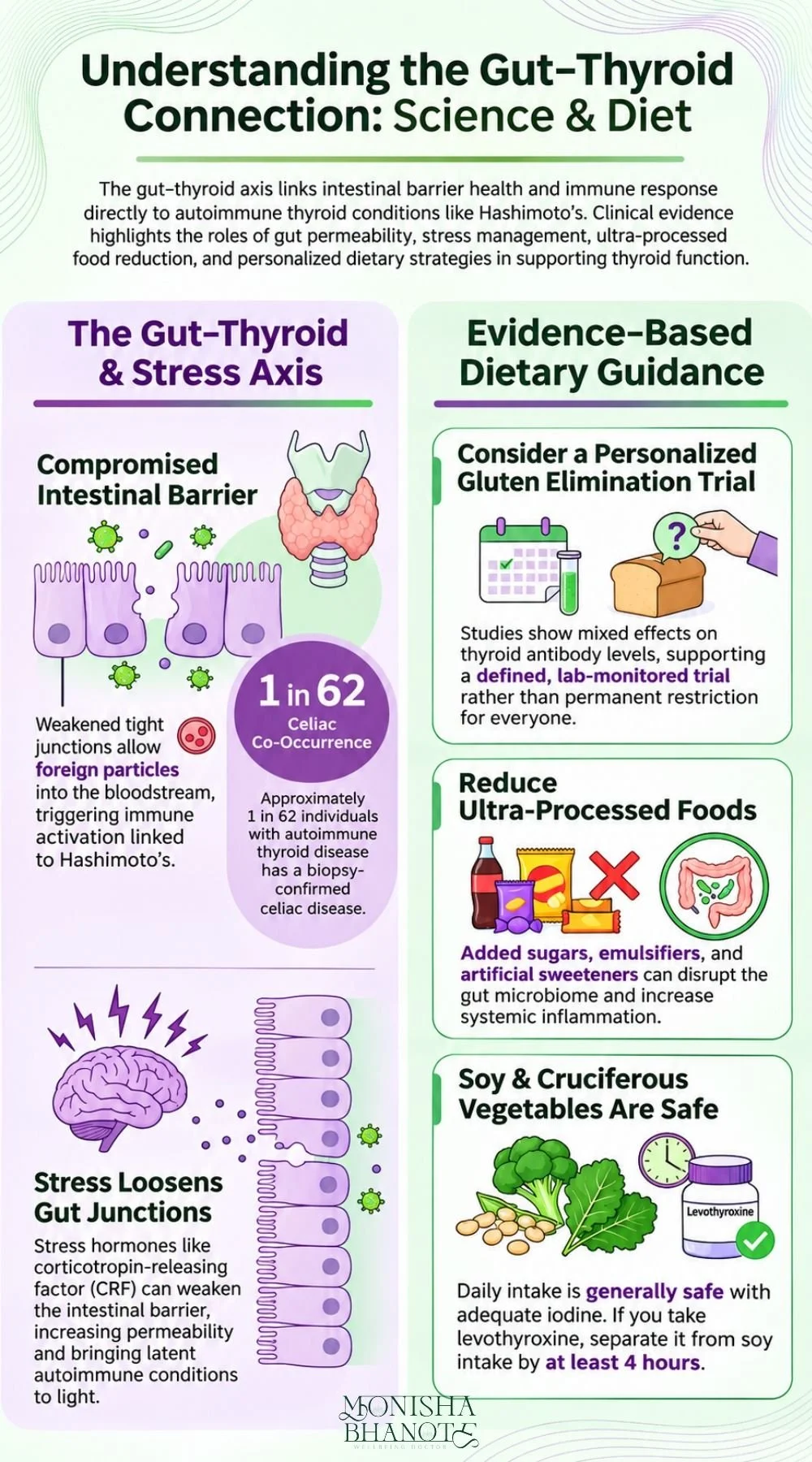
The lining of your gut is a single layer of cells. Those cells are stitched together by structures called tight junctions, and together with the microbes that live alongside them, they keep the barrier selectively permeable: nutrients pass through, and most everything else stays out. A large share of your immune system sits right beneath that layer, watching.
When the barrier is compromised, fragments of food, bacteria, and other particles can slip through and meet immune cells they would not normally encounter. The immune system responds, inflammatory messengers circulate, and in a person who is genetically predisposed, that steady activation may help tip the balance toward autoimmunity elsewhere in the body. Researchers now describe a thyroid-gut axis, with studies linking Hashimoto's to changes in the gut microbiome and to increased intestinal permeability.
Genetics loads the system, and the environment does much of the rest. Hashimoto's also tends to travel with other autoimmune conditions. About 1 in 62 people with autoimmune thyroid disease has biopsy-confirmed celiac disease, which is why screening for celiac is a sensible step after Hashimoto's diagnosis. I have written more about how autoimmune health connects to travel and cellular resilience if you want to go further.
Where Stress Fits
So many people tell me their diagnosis arrived during one of the hardest seasons of their lives. Stress can bring a quietly building autoimmune condition to the surface.
Animal research offers a plausible mechanism: a stress hormone called corticotropin-releasing factor can loosen the intestinal barrier. In people, the evidence is still developing, so I hold this lightly. Still, calming the nervous system is one of the kindest things you can do for your gut, and I share a simple nervous system reset that many of my readers use every day.
What the Evidence Says About Food
Gluten: A Personal Experiment, Guided by Labs
Gluten comes up in nearly every Hashimoto's conversation. The first step is to rule out celiac disease, which requires avoiding gluten completely.
Beyond celiac, the research is genuinely promising and genuinely small. In a six-month trial, women with Hashimoto's who also carried a celiac-related antibody, without celiac symptoms, saw their thyroid antibodies fall on a gluten-free diet. A twelve-month randomized trial found TSH improved on a gluten-free diet, while antibody levels did not differ between groups. A 2023 meta-analysis of four studies, 87 patients in total, found lower TSH and higher free T4, with a trend toward lower antibodies that did not reach statistical significance. The benefit was clearest in people with some form of gluten sensitivity.
That is enough to justify a thoughtful, personal trial. It falls short of a reason for everyone with Hashimoto's to give up bread forever. The approach I favor, and the one my summit guest uses in her own practice, is a defined gluten-free period with symptoms and antibodies checked before and after. If nothing changes, a slice of freshly baked sourdough can stay on the table.
And if you have ever felt fine eating pasta in Italy and puffy after a sandwich at home, you are not imagining it. No one fully knows why. Fermentation, preparation, additives, and individual sensitivity likely all play a part.
Ultra-Processed Foods
The clearest dietary pattern to step away from is the ultra-processed one: added sugar, sugary drinks, artificial sweeteners in diet sodas, and additives such as emulsifiers. I have written about what ultra-processed foods do to your gut microbiome, and the thyroid is one more reason to care.
I think of a woman who came to me after being told she had Hashimoto's and possibly a second autoimmune condition. She was frightened, facing a months-long wait to see a specialist, and drinking several diet sodas a day. No one had asked about her stress, her sleep, or her food. We started with those foundations, one at a time. By the day of her specialist appointment, she had more energy and a much clearer understanding of her own body.
Soy and Cruciferous Vegetables
For plant-forward eaters, this is the question I hear most. Soy and cruciferous vegetables such as broccoli, kale, and cauliflower have been labeled goitrogenic, meaning they could interfere with how the thyroid uses iodine.
The human evidence is reassuring. A review of fourteen clinical trials found little evidence that soy harms thyroid function in people with adequate iodine. A 2024 systematic review reached a similar conclusion for brassica vegetables, finding that eating them daily, with adequate iodine, poses no adverse effects on thyroid function.
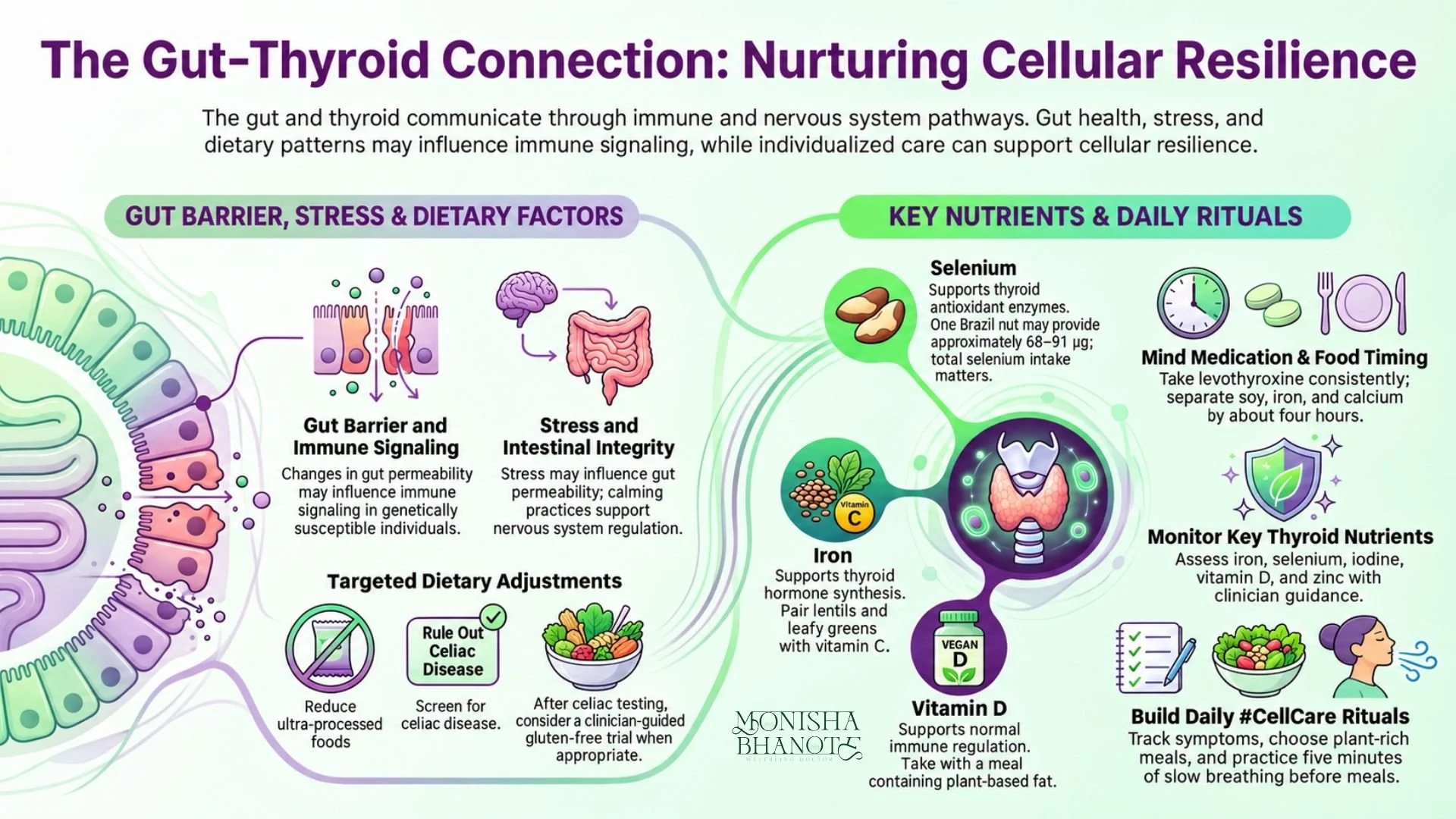
One practical note: soy can reduce the absorption of levothyroxine, so take your medication several hours apart from soy foods, and keep your timing consistent so your clinician can adjust your dose if needed. Enjoy your smoky tempeh wrap and your roasted broccoli.

The Nutrients That Matter Most
Iron
Iron is essential for making thyroid hormone, and low iron stores are common in women, especially before menopause. In a large study of adults without thyroid disease, people with ferritin below 30 had nearly twice the odds of low free T3 compared with those with higher stores. Iron deficiency is easily missed when someone is not anemic. Lentils, white beans, and leafy greens are good plant sources, eaten with vitamin C for better absorption. My mini lentil patties and a quick spinach and garlic saute are easy places to start.
Selenium
Selenium is built into antioxidant enzymes that protect the thyroid during hormone production, and supplementation trials in Hashimoto's have shown reductions in TPO antibodies. It also has a narrow window. Adults need about 55 micrograms a day, and a single Brazil nut contains roughly 68 to 91. The upper limit is 400 micrograms in the United States and 255 in Europe. One Brazil nut most days is plenty. If you also take a supplement with selenium, ask your clinician to check your level before adding more.
Iodine
Iodine is a true double-edged nutrient. Your thyroid cannot make hormones without it, yet a large study in China found that rates of hypothyroidism and autoimmune thyroiditis rose as iodine intake rose. Most adults need 150 micrograms a day, an amount found in many multivitamins and in iodized salt. If you have Hashimoto's, avoid high-dose iodine or kelp supplements unless your clinician has tested your levels and recommends them.
Vitamin D
Vitamin D helps regulate the immune system, including the cells that calm an overactive response. A meta-analysis of eight trials found that vitamin D supplementation for more than three months lowered TPO antibodies. Ask to have your level measured, supplement to the target your clinician recommends, and take it with a meal that contains some fat.
Zinc
Zinc helps convert T4 into active T3, and correcting a true deficiency has been shown to improve T3. Too much can deplete copper, so test rather than guess.

What You Can Do Today
You do not need to change everything this week. Choose one or two of these and begin.
Write your symptoms down. Keep a list on your phone, with dates. Then ask for a full thyroid panel with TPO and thyroglobulin antibodies, plus ferritin, vitamin D, and B12.
Make one food change. Swap one ultra-processed snack or diet soda for something whole, or add one plant-rich meal. More plants, less perfection is a good guide.
Give your nervous system five minutes. Slow breathing before dinner or a short walk after a meal tells your body it is safe, and your gut listens.
Mind your medication timing. If you take levothyroxine, take it the same way each day and keep soy foods several hours away.
Plan a gluten trial with your clinician. Rule out celiac first, then set a defined period and recheck symptoms and antibodies.
A Daily Ritual for the Gut-Stress Connection
Stress and the gut are in constant conversation, and travel turns up the volume. Food, sleep, and nervous system practices come first. Alongside them, I formulated Travela Essentials as a daily ritual that travels with you, with ingredients chosen for this exact connection. Ginger and turmeric have long been studied for digestive comfort and inflammatory balance. Holy basil is an adaptogen traditionally used to support the stress response. Magnesium glycinate supports a calmer nervous system, and glutathione is one of the body's central cellular antioxidants.
#CellCare Reflection
At the close of our summit conversation, I left our audience with one thought: a normal lab value is not the same as a healed body. If you are still struggling, that is information, and it deserves your attention.
Your thyroid, your gut, and your immune system are speaking to one another all day long, and every choice you make adds to that conversation. The lentils on your plate, the five slow breaths before dinner, the question you finally ask at your next appointment: each one is a small act of #CellCare, and small acts, repeated, are how cellular resilience is built.



MAKE A DIFFERENCE BY SHARING THIS ARTICLE WITH OTHERS TO ENCOURAGE WELLBEING ⤵
References:
EFSA Panel on Nutrition, Novel Foods and Food Allergens (NDA), Dominique Turck, Torsten Bohn, et al. "Scientific Opinion on the Tolerable Upper Intake Level for Selenium." EFSA Journal 21, no. 1 (2023): e07704.
Galanty, Agnieszka, Marta Grudzińska, Wojciech Paździora, Piotr Służały, and Paweł Paśko. "Do Brassica Vegetables Affect Thyroid Function? A Comprehensive Systematic Review." International Journal of Molecular Sciences 25, no. 7 (2024): 3988.
Hidalgo, Jessica, Bryan A. Vallejo, Cristian Soto Jacome, Ivan N. Ayala, Sandra Cordova, Mayra Duran, Elizabeth Golembiewski, David Toro-Tobon, and Juan P. Brito. "Real Practice Assessment of Persistent Symptoms After Initiation of Levothyroxine." Endocrine Practice 30, no. 2 (2024): 95-100.
Knezevic, Jovana, Christina Starchl, Adelina Tmava Berisha, and Karin Amrein. "Thyroid-Gut-Axis: How Does the Microbiota Influence Thyroid Function?" Nutrients 12, no. 6 (2020): 1769.
Krysiak, Robert, Witold Szkróbka, and Bogusław Okopień. "The Effect of Gluten-Free Diet on Thyroid Autoimmunity in Drug-Naïve Women with Hashimoto's Thyroiditis: A Pilot Study." Experimental and Clinical Endocrinology & Diabetes 127, no. 7 (2019): 417-422.
La Torre, Danique, Lukas Van Oudenhove, Tim Vanuytsel, and Kristin Verbeke. "Psychosocial Stress-Induced Intestinal Permeability in Healthy Humans: What Is the Evidence?" Neurobiology of Stress 27 (2023): 100579.
Maldonado-Araque, Cristina, Sergio Valdés, Ana Lago-Sampedro, et al. "Iron Deficiency Is Associated with Hypothyroxinemia and Hypotriiodothyroninemia in the Spanish General Adult Population: Di@bet.es Study." Scientific Reports 8 (2018): 6571.
Messina, Mark, and Geoffrey Redmond. "Effects of Soy Protein and Soybean Isoflavones on Thyroid Function in Healthy Adults and Hypothyroid Patients: A Review of the Relevant Literature." Thyroid 16, no. 3 (2006): 249-258.
Nishiyama, S., Y. Futagoishi-Suginohara, M. Matsukura, T. Nakamura, A. Higashi, M. Shinohara, and I. Matsuda. "Zinc Supplementation Alters Thyroid Hormone Metabolism in Disabled Patients with Zinc Deficiency." Journal of the American College of Nutrition 13, no. 1 (1994): 62-67.
Ott, Johannes, Regina Promberger, Friedrich Kober, Nikolaus Neuhold, Maria Tea, Johannes C. Huber, and Michael Hermann. "Hashimoto's Thyroiditis Affects Symptom Load and Quality of Life Unrelated to Hypothyroidism: A Prospective Case-Control Study in Women Undergoing Thyroidectomy for Benign Goiter." Thyroid 21, no. 2 (2011): 161-167.
Piticchio, Tommaso, Francesco Frasca, Pasqualino Malandrino, Pierpaolo Trimboli, Nunzia Carrubba, Andrea Tumminia, Federica Vinciguerra, and Lucia Frittitta. "Effect of Gluten-Free Diet on Autoimmune Thyroiditis Progression in Patients with No Symptoms or Histology of Celiac Disease: A Meta-Analysis." Frontiers in Endocrinology 14 (2023): 1200372.
Pobłocki, Jakub, Tamara Pańka, Małgorzata Szczuko, Arkadiusz Telesiński, and Anhelli Syrenicz. "Whether a Gluten-Free Diet Should Be Recommended in Chronic Autoimmune Thyroiditis or Not? A 12-Month Follow-Up." Journal of Clinical Medicine 10, no. 15 (2021): 3240.
Rodiño-Janeiro, Bruno K., Carmen Alonso-Cotoner, Marc Pigrau, Beatriz Lobo, María Vicario, and Javier Santos. "Role of Corticotropin-Releasing Factor in Gastrointestinal Permeability." Journal of Neurogastroenterology and Motility 21, no. 1 (2015): 33-50.
Roy, Abhik, Monika Laszkowska, Johan Sundström, Benjamin Lebwohl, Peter H. R. Green, Olle Kämpe, and Jonas F. Ludvigsson. "Prevalence of Celiac Disease in Patients with Autoimmune Thyroid Disease: A Meta-Analysis." Thyroid 26, no. 7 (2016): 880-890.
Teng, Weiping, Zhongyan Shan, Xiaochun Teng, et al. "Effect of Iodine Intake on Thyroid Diseases in China." New England Journal of Medicine 354, no. 26 (2006): 2783-2793.
Wichman, Johanna, Kristian Hillert Winther, Steen Joop Bonnema, and Laszlo Hegedüs. "Selenium Supplementation Significantly Reduces Thyroid Autoantibody Levels in Patients with Chronic Autoimmune Thyroiditis: A Systematic Review and Meta-Analysis." Thyroid 26, no. 12 (2016): 1681-1692.
Zhang, Jingwen, Yuting Chen, Hongyan Li, and Hong Li. "Effects of Vitamin D on Thyroid Autoimmunity Markers in Hashimoto's Thyroiditis: Systematic Review and Meta-Analysis." Journal of International Medical Research 49, no. 12 (2021): 3000605211060675.
The information on this website has not been evaluated by the Food & Drug Administration or any other medical body. We do not aim to diagnose, treat, cure or prevent any illness or disease. Information is shared for educational purposes only. You must consult your doctor before acting on any content on this website, especially if you are pregnant, nursing, taking medication, or have a medical condition. Our content may include products that have been independently chosen and recommended by Dr. Monisha Bhanote and our editors. We may earn a small commission if you purchase something mentioned in this article.
YOU MAY ALSO LIKE:


by Dr. Monisha Bhanote
✅ EVIDENCE-INFORMED REVIEWED ARTICLE