What the Research Actually Shows About Seed Oils, Soy, Protein, and Oatmeal
“Nutrition should be guided by evidence, not fear. Clear information helps you make choices your cells can benefit from consistently.”
It is 11:04 on a Tuesday night, and Priya is still holding her phone.
She is 54, and three weeks ago a video convinced her to pour a nearly full bottle of canola oil down the kitchen sink. Last spring it was tofu. A woman with a ring light and a soothing voice explained that soy feeds breast cancer, and Priya, who sat beside her aunt through chemotherapy, quietly stopped buying it.
Tonight the video is about oatmeal. A man in a gym holds a glucose monitor up to the camera and says her breakfast spikes blood sugar the same way a can of soda does. Priya thinks about the bowl she ate this morning, warm, with blueberries and a spoonful of ground flax, and feels a small, familiar wave of guilt about a meal she used to feel good about.
Then the app serves her the next one.
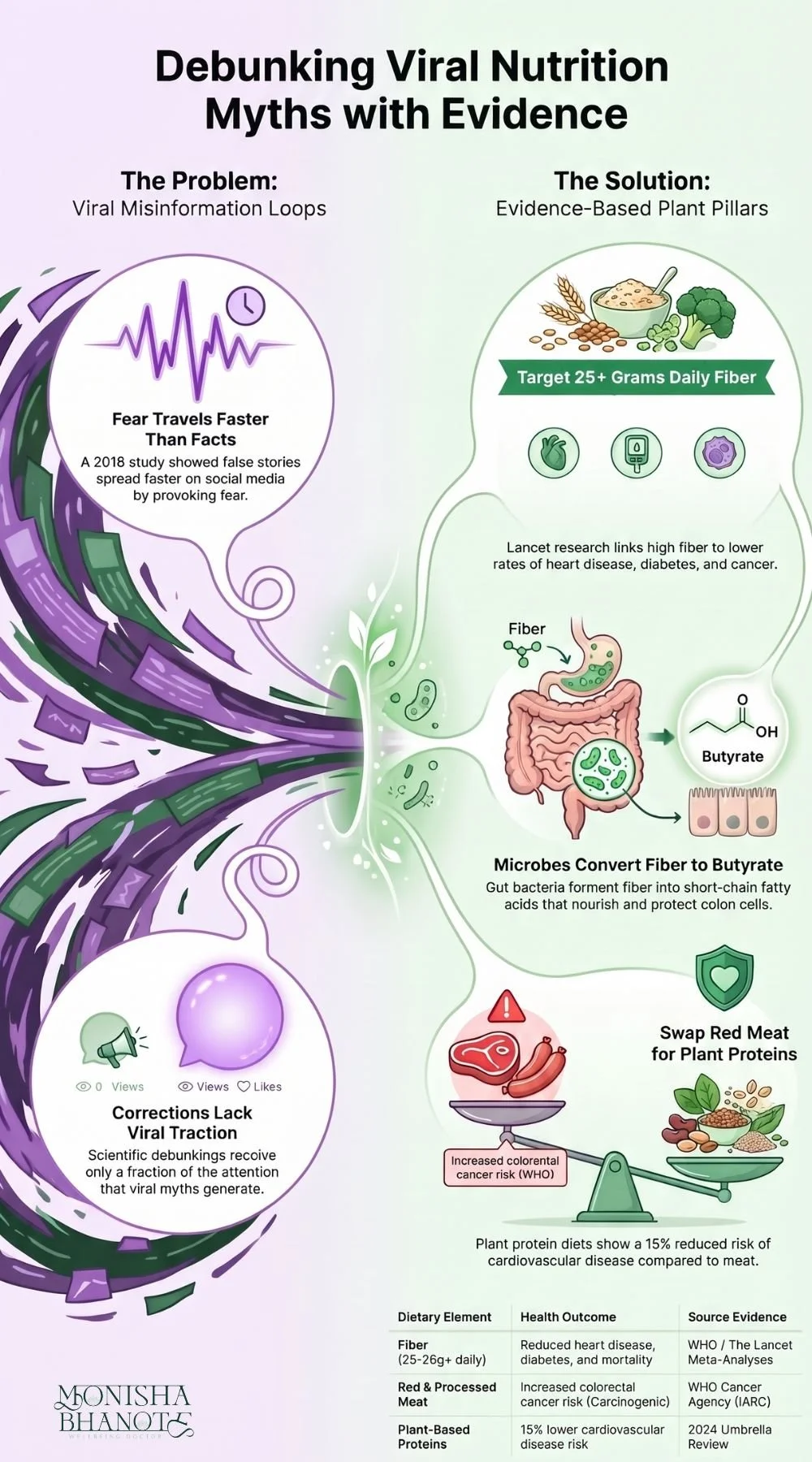
I hear some version of Priya's night in my clinic every week. Careful, smart women, many in their fifties, arrive having already cut foods with decades of human research behind them, because someone sounded certain. A 2018 study in Science followed roughly 126,000 stories shared on Twitter and found that false ones traveled farther and faster than true ones, largely because they felt new and provoked fear or surprise.
When I interviewed Dr. Matthew Nagra, a Vancouver-based naturopathic doctor known for checking viral nutrition claims against the published evidence, for the Gut Health & Longevity Summit, he described the loop in one line. A correction, he said, “tends to get a fraction of the traction that the misinformation did.” Nobody stops scrolling for “vegetables are healthy.”
Years as a pathologist, looking at more colorectal cancers under the microscope than I care to count, left me with one habit: look at the specimen before you believe the story about it. So let’s look at five of them.

Start With Fiber
If I had to defend plant-forward eating with a single nutrient, I would pick fiber, and Dr. Nagra said nearly the same thing. You find it in almost every whole plant food and almost nowhere else.
Meta-analyses commissioned by the World Health Organization and published in The Lancet. People eating the most fiber had meaningfully lower rates of heart disease, stroke, type 2 diabetes, colorectal cancer, and death from any cause, with benefits building at 25 to 29 grams a day and beyond.
Part of the reason sits in your gut, where microbes ferment fiber into short-chain fatty acids such as butyrate that fuel the cells lining your colon. If your plate looks healthy but your fiber count is low, this is the place to start.
The second strong move is swapping some animal protein for plant protein, especially red and processed meat. Red meat is rich in heme iron, which may promote the formation of compounds that damage the cells lining the colon, and its saturated fat raises LDL cholesterol. In 2015 the World Health Organization’s cancer agency classified processed meat as carcinogenic to humans and red meat as probably carcinogenic, based largely on colorectal cancer. A 2024 umbrella review linked vegetarian eating with about 15 percent lower risk of developing cardiovascular disease. Trade a few servings of meat a week for lentils, tofu, or tempeh, and fiber comes along for free. (More on that in my piece on the gut-heart axis.)
Myth 1: Seed Oils Are Quietly Inflaming Your Body
The theory: canola, corn, soybean, and sunflower oils are rich in an omega-6 fat called linoleic acid, which your body can convert into arachidonic acid, which can feed inflammatory signaling. Therefore seed oils inflame you.
Every link in that chain contains a “could.” Dr. Nagra calls this mechanistic speculation: a pathway that looks convincing on a whiteboard, assumed to play out in a living person. Researchers have tested it in humans, many times.
Raising dietary linoleic acid as much as sixfold did not meaningfully change arachidonic acid in the blood. A systematic review of randomized trials in healthy adults found virtually no evidence that linoleic acid raises inflammatory markers, and a later meta-analysis of 30 trials agreed, with one caveat: very large jumps in intake may nudge C-reactive protein up.
Meanwhile, replacing butter, ghee, or tallow with liquid plant oils lowers LDL cholesterol, and coconut oil belongs with that first group because of its saturated fat. Long-term trials pooled by Cochrane found that cutting saturated fat reduced cardiovascular events, especially when polyunsaturated fat took its place.
The Real Issue Is the Pour
The one fair concern with any oil is calorie density, roughly 120 calories per tablespoon whether it came from olives or canola.
Not long ago, during a stretch when my assistant was preparing some of my meals, we went through a bottle of olive oil a month. On my own, one bottle lasts me six months to a year, because I use about a teaspoon every couple of days. My cholesterol and LDL have been reliably excellent for years. Then my labs moved in the wrong direction. I eat a whole-food, plant-based diet, and the only thing that had changed was the oil, poured generously into the pan so nothing would stick.
It was good oil. There was simply too much of it. Choose olive oil if you love it or canola if you want something neutral and affordable. Then measure with a spoon.
Myth 2: Soy Raises Estrogen and Breast Cancer Risk
This is my favorite myth, because I have been answering it for about 25 years, usually with a tofu scramble from breakfast still keeping me company.
Soy contains isoflavones, plant compounds often called phytoestrogens, and the word “estrogen” does all the damage. Isoflavones are selective estrogen receptor modulators. They act differently in different tissues and preferentially bind estrogen receptor beta, which behaves differently from the alpha receptor behind much of estrogen’s action in breast tissue. Think of a dimmer that responds to the room it sits in.
Much of the fear traces back to rodent studies, in which animals given very high doses of isoflavones developed tumors. Those animal findings translate poorly: rodents process isoflavones differently and end up with far higher levels of the active form in their blood than people do.
Human data tell a calmer story. A meta-analysis of 47 clinical trials found no significant change in estradiol or estrone in postmenopausal women eating soy or taking isoflavones. In men, an updated meta-analysis found no effect on testosterone or estrogen at any dose or study length. And across cohort studies, including one of 300,000 Chinese women, each additional 10 milligrams of isoflavones a day was linked with about 3 percent lower risk of breast cancer.
For women in midlife, there may be a bonus. In a 12-week randomized trial, postmenopausal women who ate a low-fat vegan diet with half a cup of cooked soybeans daily saw moderate-to-severe hot flashes fall by 84 percent. The trial had only 38 women and the whole diet changed, so soy cannot take full credit, but it fits earlier research showing soy eases hot flashes. Your gut shapes estrogen too, which I explore in Your Gut Is Writing Your Estrogen Story.
Myth 3: Plant Protein Cannot Build Muscle
The fitness world has leaned on whey and steak for generations. The trials have not backed that up.
In a 12-week study of young men lifting twice a week, vegans and omnivores eating the same amount of protein, about 1.6 grams per kilogram of body weight, gained the same leg muscle, muscle fiber size, and strength. A 10-week trial of men and women training five days a week on roughly 2 grams per kilogram found the same: comparable gains in lean mass, thigh muscle volume, and strength whether the protein came from animals or entirely from plants.
That 1.6 figure is roughly where muscle gains level off in the wider research, about 110 grams a day for a 150-pound person. The catch is what replaces the meat. Swap chicken for white rice and protein drops. Swap it for tofu, tempeh, seitan, lentils, or edamame and it holds.
Most of these trials studied younger adults, and the added effect of extra protein shrinks with age. If you are in your fifties or beyond, the lifting matters at least as much as the menu. More on building cellular health after 40.

Do You Need to Combine Proteins?
The idea that rice and beans must share a plate grew from a nugget of truth. Every protein-containing plant food carries all nine essential amino acids, in proportions that even out across a varied day. A review of protein in vegetarian diets concluded that concern about amino acid deficiency has been “substantially overstated.” Real shortfalls show up mainly under severe food insecurity, when one staple makes up nearly the whole diet.
Does Timing Matter?
Very little. Once total daily protein was accounted for, a meta-analysis found that eating it around a workout made no significant difference to strength or size. For my older patients who manage only one real meal a day, getting enough across the day matters far more than the clock.
Myth 4: Oatmeal Spikes Your Blood Sugar Like Sugar Does
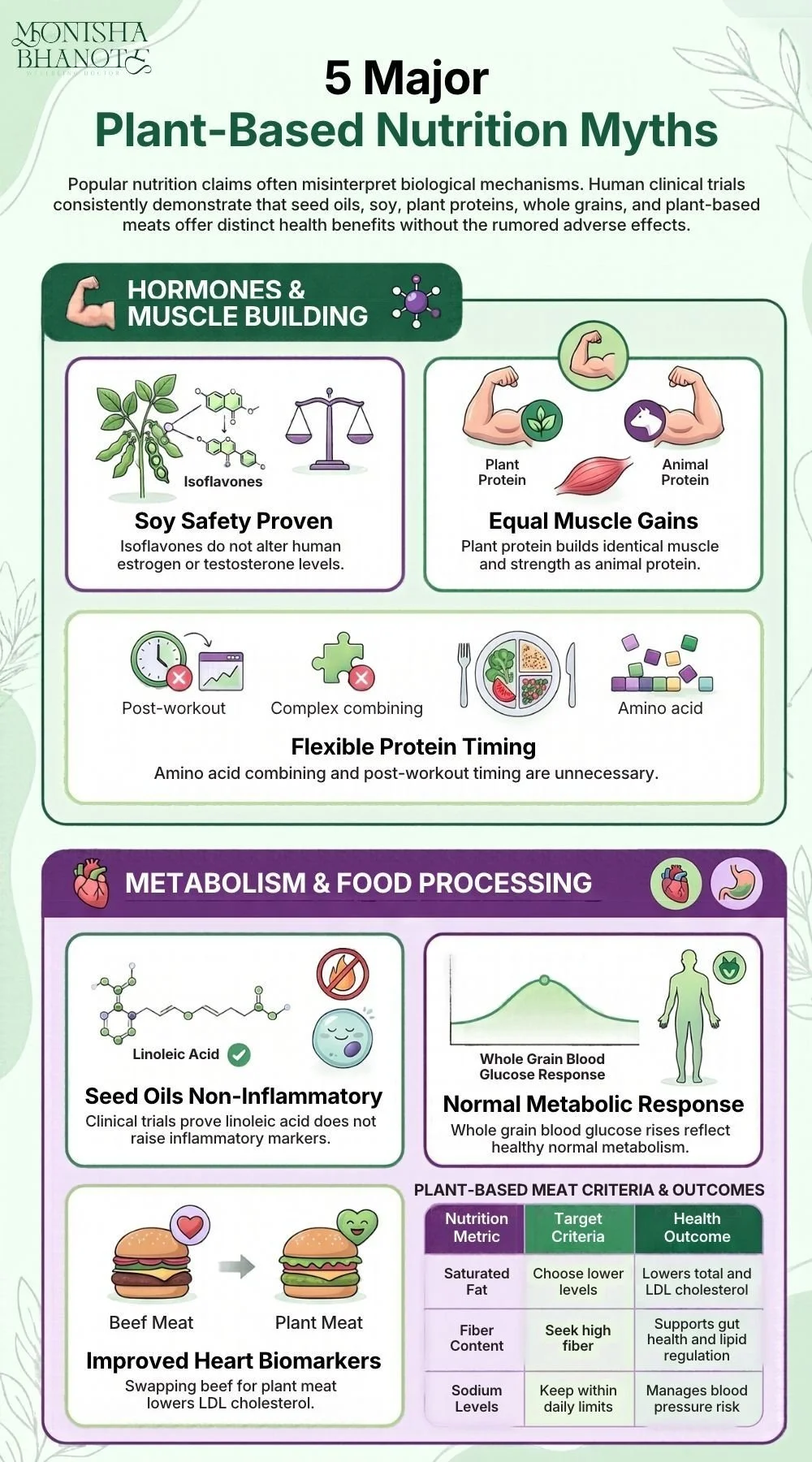
Eat carbohydrates and your blood glucose rises. It is supposed to. In a healthy person it climbs, then comes back down. That is metabolism doing its job.
Dr. Nagra offered the comparison I keep coming back to. During exercise, your blood glucose rises too. So do your heart rate and blood pressure, and markers of inflammation can stay high for hours afterward. Nobody concludes that exercise is harmful. We judge it by long-term outcomes: lower rates of heart disease and diabetes. Whole grains earn the same verdict: in the large Lancet analysis, higher whole grain intake tracked with lower risk of heart disease, type 2 diabetes, and colorectal cancer.
Treating a normal response as a disease creates two problems. It sells supplements built to fix something that was working fine, and it nudges people toward foods like bacon that barely move glucose. Processed meat sits in the same cancer category as tobacco smoke, a ranking based on how strong the evidence is.
The exception matters. If you live with diabetes, especially if you use insulin, monitoring and managing those rises is essential medical care. If you are simply curious, try a glucose monitor for a couple of weeks. I wore one for two weeks and realized I had been worrying about something that needed no worry. Pair your oats with berries or ground flax, and enjoy them.
Myth 5: Plant-Based Meats Are Junk Because They Are Ultra-Processed
“Ultra-processed” covers sausages, soda, and pastries, and also many whole grain breads and fortified plant milks. A label that broad cannot tell you whether a specific food helps or harms you.
I have written about what the worst ultra-processed foods do to your gut microbiome, and that concern stands. Plant-based meats still deserve to be judged on their own evidence. A 2024 review in the Canadian Journal of Cardiology, led by Dr. Nagra with colleagues at the University of British Columbia, found that compared with meat, these products are generally lower in saturated fat and higher in polyunsaturated fat and fiber. In randomized trials, swapping meat for them lowered total and LDL cholesterol, apolipoprotein B, and body weight. The reviewers found no evidence that processing or sodium cancelled those benefits, though trials tracking heart attacks and strokes have yet to be done.
The useful question is always “compared to what?” A plant-based burger in place of a beef burger sits on the healthier side. In place of a bowl of black beans, it sits on the other. Products vary, so read the panel:
Saturated fat. Some patties carry as much as a beef patty, others a fraction of it. Choose the lower end.
Protein. A product standing in for meat should deliver meat-level protein.
Sodium. It ranges widely between brands, and some single servings use up a large share of a day’s limit.
Fiber. A helpful tie-breaker.

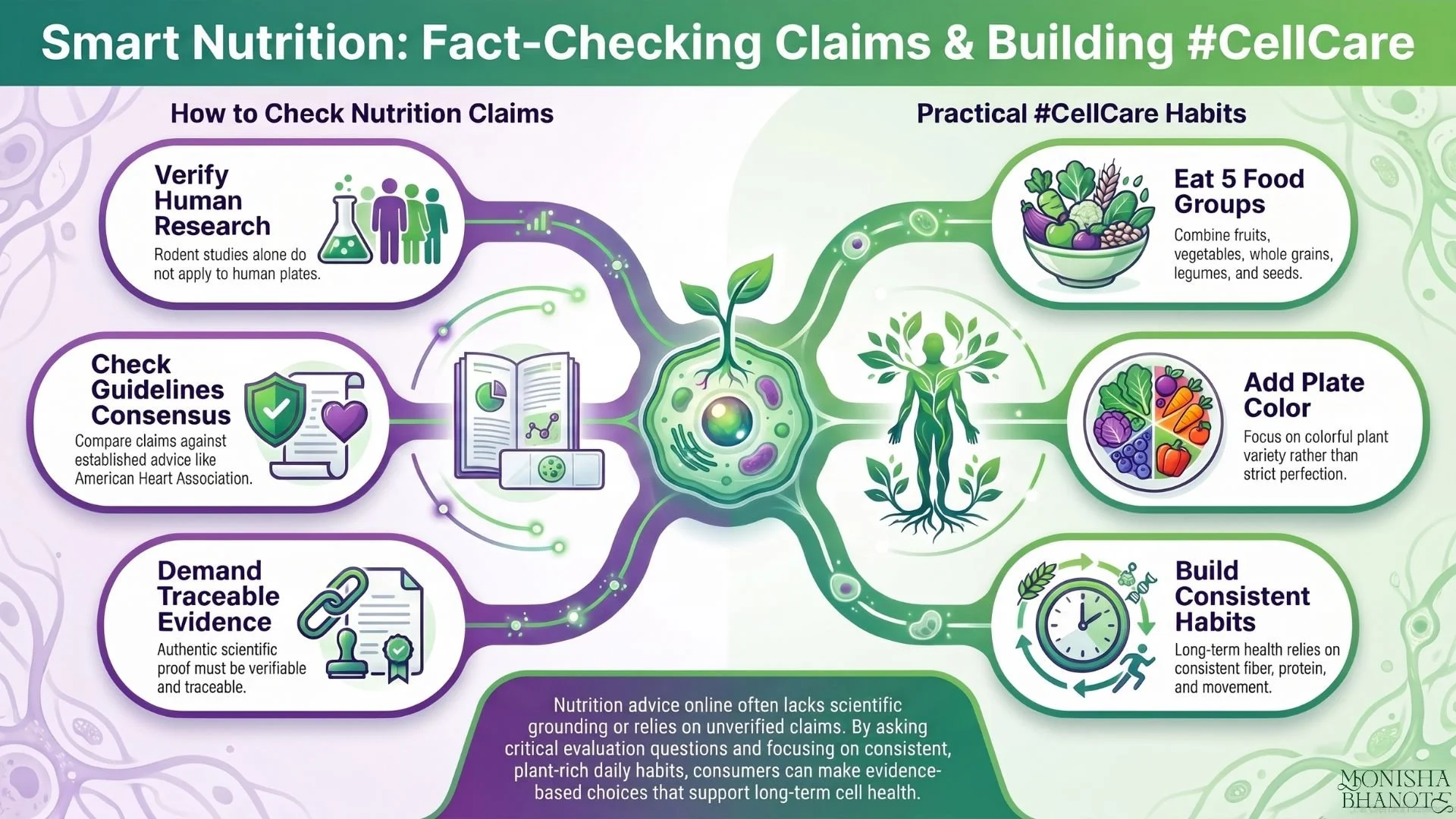
How to Check a Nutrition Claim Before You Believe It
Dr. Nagra suggested a few quick questions, and I added one.
Is there a reference? Many confident claims come with none.
Was the study done in humans? A rodent study alone tells you very little about your plate.
How does the creator handle pushback? Thoughtful engagement is a good sign. Insults are a warning.
Does it roughly match major guidelines? A claim that leafy greens or beans are dangerous for healthy people sits far outside the American Heart Association’s advice.
Who is in the comments? Algorithms gather like-minded people, so a wall of agreement proves little.
I once replied to a post claiming that a biopsy spreads cancer through the body. The author said 50 research papers proved it. I asked to see them. As a pathologist, I have followed tissue through entire mastectomy and colon specimens, where a biopsy site is often tattooed so we can find it again. Evidence is something you can trace.
What You Can Do Today

Aim to fit five groups into your day: fruits, vegetables, whole grains, legumes, and nuts and seeds.
Breakfast: oatmeal with berries and a tablespoon of ground flax covers three groups before your first meeting.
Lunch or dinner: a lentil curry with a whole grain and greens, or lentil pasta with a vegetable-heavy sauce.
Swap two or three servings of red or processed meat a week for beans, tofu, or tempeh.
Lift at least twice a week and build meals around protein-rich plants.
Look down at your plate and ask where you can add color. I call this my best friend Roy G. Biv: red, orange, yellow, green, blue, indigo, violet.
Dr. Nagra told me he believes a high-quality diet that is about 90 percent plants likely delivers health outcomes comparable to a fully plant-based one, and that his own reasons for going all the way are ethical. If cheese is the hardest thing for you to give up, leave it for later and start somewhere easier. One meal at a time counts. More plants, less perfection is a good next read.
#CellCare Reflection
Picture Priya again, a week from now. The canola oil is back in the pantry with a measuring spoon beside it. There is a block of tofu in the fridge. Her oatmeal is just breakfast again.
What she has now is a question she asks before she lets a stranger rewrite her kitchen. Your cells respond to what you do consistently, over years: the fiber feeding your microbes, the fats shaping your cholesterol, the protein and movement keeping your muscle. That is #CellCare, built from ordinary choices made with clear information.
The voice worth following is the one willing to show you the research and change its mind when the research changes. If you want more of that in your inbox, join the #CellCare Wellness Newsletter.
Pick one myth you have been living by, and test it this week.




MAKE A DIFFERENCE BY SHARING THIS ARTICLE WITH OTHERS TO ENCOURAGE WELLBEING ⤵
References:
Barnard, Neal D., Hana Kahleova, Danielle N. Holtz, Fabiola del Aguila, Maggie Neola, Lelia M. Crosby, and Richard Holubkov. “The Women’s Study for the Alleviation of Vasomotor Symptoms (WAVS): A Randomized, Controlled Trial of a Plant-Based Diet and Whole Soybeans for Postmenopausal Women.” Menopause 28, no. 10 (2021): 1150-56.
Bouvard, Véronique, Dana Loomis, Kathryn Z. Guyton, Yann Grosse, Fatiha El Ghissassi, Lamia Benbrahim-Tallaa, Neela Guha, Heidi Mattock, and Kurt Straif. “Carcinogenicity of Consumption of Red and Processed Meat.” Lancet Oncology 16, no. 16 (2015).
Hevia-Larraín, Victoria, Bruno Gualano, Igor Longobardi, Saulo Gil, Alan L. Fernandes, Luiz A. R. Costa, Rosa M. R. Pereira, Guilherme G. Artioli, Stuart M. Phillips, and Hamilton Roschel. “High-Protein Plant-Based Diet Versus a Protein-Matched Omnivorous Diet to Support Resistance Training Adaptations: A Comparison Between Habitual Vegans and Omnivores.” Sports Medicine 51, no. 6 (2021).
Hooper, Lee, Nicole Martin, Oluseyi F. Jimoh, Christian Kirk, Eve Foster, and Asmaa S. Abdelhamid. “Reduction in Saturated Fat Intake for Cardiovascular Disease.” Cochrane Database of Systematic Reviews, no. 8 (2020).
Hooper, Lee, Jon J. Ryder, Mindy S. Kurzer, Johanna W. Lampe, Mark J. Messina, William R. Phipps, and Aedín Cassidy. “Effects of Soy Protein and Isoflavones on Circulating Hormone Concentrations in Pre- and Post-Menopausal Women: A Systematic Review and Meta-Analysis.” Human Reproduction Update 15, no. 4 (2009): 423-40.
Johnson, Guy H., and Kevin Fritsche. “Effect of Dietary Linoleic Acid on Markers of Inflammation in Healthy Persons: A Systematic Review of Randomized Controlled Trials.” Journal of the Academy of Nutrition and Dietetics 112, no. 7 (2012)
Landry, Matthew J., Katelyn E. Senkus, A. Reed Mangels, Nanci S. Guest, Roman Pawlak, Sudha Raj, Deepa Handu, and Mary Rozga. “Vegetarian Dietary Patterns and Cardiovascular Risk Factors and Disease Prevention: An Umbrella Review of Systematic Reviews.” American Journal of Preventive Cardiology 20 (2024).
Makki, Kassem, Edward C. Deehan, Jens Walter, and Fredrik Bäckhed. “The Impact of Dietary Fiber on Gut Microbiota in Host Health and Disease.” Cell Host & Microbe 23, no. 6 (2018): 705-15.
Mariotti, François, and Christopher D. Gardner. “Dietary Protein and Amino Acids in Vegetarian Diets: A Review.” Nutrients 11, no. 11 (2019): 2661. https://doi.org/10.3390/nu11112661.
Messina, Mark. “Soy and Health Update: Evaluation of the Clinical and Epidemiologic Literature.” Nutrients 8, no. 12 (2016).
Monteyne, Alistair J., Mariana O. C. Coelho, Andrew J. Murton, D. R. Abdelrahman, J. R. Blackwell, C. P. Koscien, et al. “Vegan and Omnivorous High Protein Diets Support Comparable Daily Myofibrillar Protein Synthesis Rates and Skeletal Muscle Hypertrophy in Young Adults.” Journal of Nutrition 153, no. 6 (2023).
Morton, Robert W., Kevin T. Murphy, Sean R. McKellar, Brad J. Schoenfeld, Menno Henselmans, Eric Helms, Alan A. Aragon, et al. “A Systematic Review, Meta-Analysis and Meta-Regression of the Effect of Protein Supplementation on Resistance Training-Induced Gains in Muscle Mass and Strength in Healthy Adults.” British Journal of Sports Medicine 52, no. 6 (2018).
Nagra, Matthew, Felicia Tsam, Shaun Ward, and Ehud Ur. “Animal vs Plant-Based Meat: A Hearty Debate.” Canadian Journal of Cardiology 40, no. 7 (2024).
Reed, Katharine E., Juliana Camargo, Jill Hamilton-Reeves, Mindy Kurzer, and Mark Messina. “Neither Soy nor Isoflavone Intake Affects Male Reproductive Hormones: An Expanded and Updated Meta-Analysis of Clinical Studies.” Reproductive Toxicology 100 (2021).
Rett, Brian S., and Jay Whelan. “Increasing Dietary Linoleic Acid Does Not Increase Tissue Arachidonic Acid Content in Adults Consuming Western-Type Diets: A Systematic Review.” Nutrition & Metabolism 8 (2011).
Reynolds, Andrew, Jim Mann, John Cummings, Nicola Winter, Evelyn Mete, and Lisa Te Morenga. “Carbohydrate Quality and Human Health: A Series of Systematic Reviews and Meta-Analyses.” Lancet 393, no. 10170 (2019).
Schoenfeld, Brad Jon, Alan Albert Aragon, and James W. Krieger. “The Effect of Protein Timing on Muscle Strength and Hypertrophy: A Meta-Analysis.” Journal of the International Society of Sports Nutrition 10, no. 1 (2013).
Setchell, Kenneth D. R., Nadine M. Brown, Xueheng Zhao, Stephanie L. Lindley, James E. Heubi, Eileen C. King, and Mark J. Messina. “Soy Isoflavone Phase II Metabolism Differs Between Rodents and Humans: Implications for the Effect on Breast Cancer Risk.” American Journal of Clinical Nutrition 94, no. 5 (2011).
Su, Hang, Ruijie Liu, Ming Chang, Jianhua Huang, and Xingguo Wang. “Dietary Linoleic Acid Intake and Blood Inflammatory Markers: A Systematic Review and Meta-Analysis of Randomized Controlled Trials.” Food & Function 8, no. 9 (2017).
Vosoughi, Soroush, Deb Roy, and Sinan Aral. “The Spread of True and False News Online.” Science 359, no. 6380 (2018).
Wei, Yuxia, Jun Lv, Yu Guo, Zheng Bian, Meng Gao, Huaidong Du, Ling Yang, et al. “Soy Intake and Breast Cancer Risk: A Prospective Study of 300,000 Chinese Women and a Dose-Response Meta-Analysis.” European Journal of Epidemiology 35, no. 6 (2020).
The information on this website has not been evaluated by the Food & Drug Administration or any other medical body. We do not aim to diagnose, treat, cure or prevent any illness or disease. Information is shared for educational purposes only. You must consult your doctor before acting on any content on this website, especially if you are pregnant, nursing, taking medication, or have a medical condition. Our content may include products that have been independently chosen and recommended by Dr. Monisha Bhanote and our editors. We may earn a small commission if you purchase something mentioned in this article.
YOU MAY ALSO LIKE:




by Dr. Monisha Bhanote
✅ EVIDENCE-INFORMED REVIEWED ARTICLE